Venice; The Dogana and Santa Maria della Salute — History & Facts
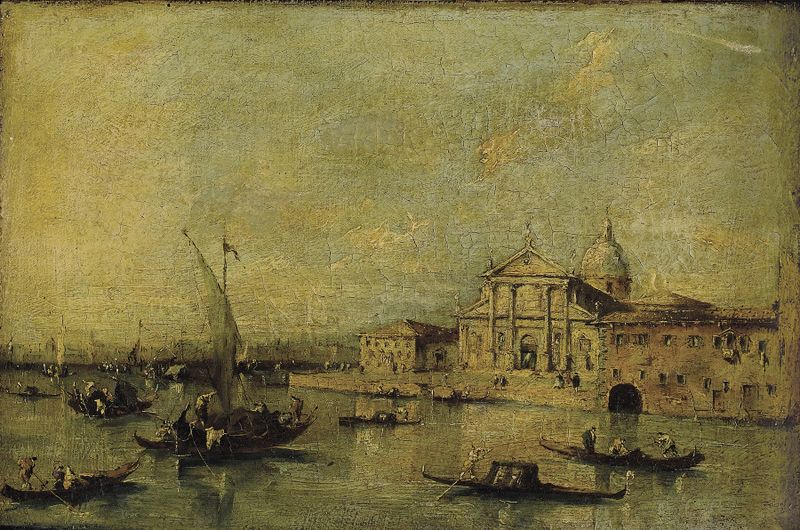
Can beauty exist without sorrow? The ethereal city of Venice dances at the edge of a dream, where its shimmering canals pulse with whispers of longing and nostalgia. Look to the foreground where boats gently float, their sails catching the soft light of dawn. The silvery hues of the water contrast beautifully with the warm golden glow emanating from the iconic Dogana and the domed silhouette of Santa Maria della Salute. Notice how the brushwork captures a sense of movement, each stroke alive with the promise of a new day.
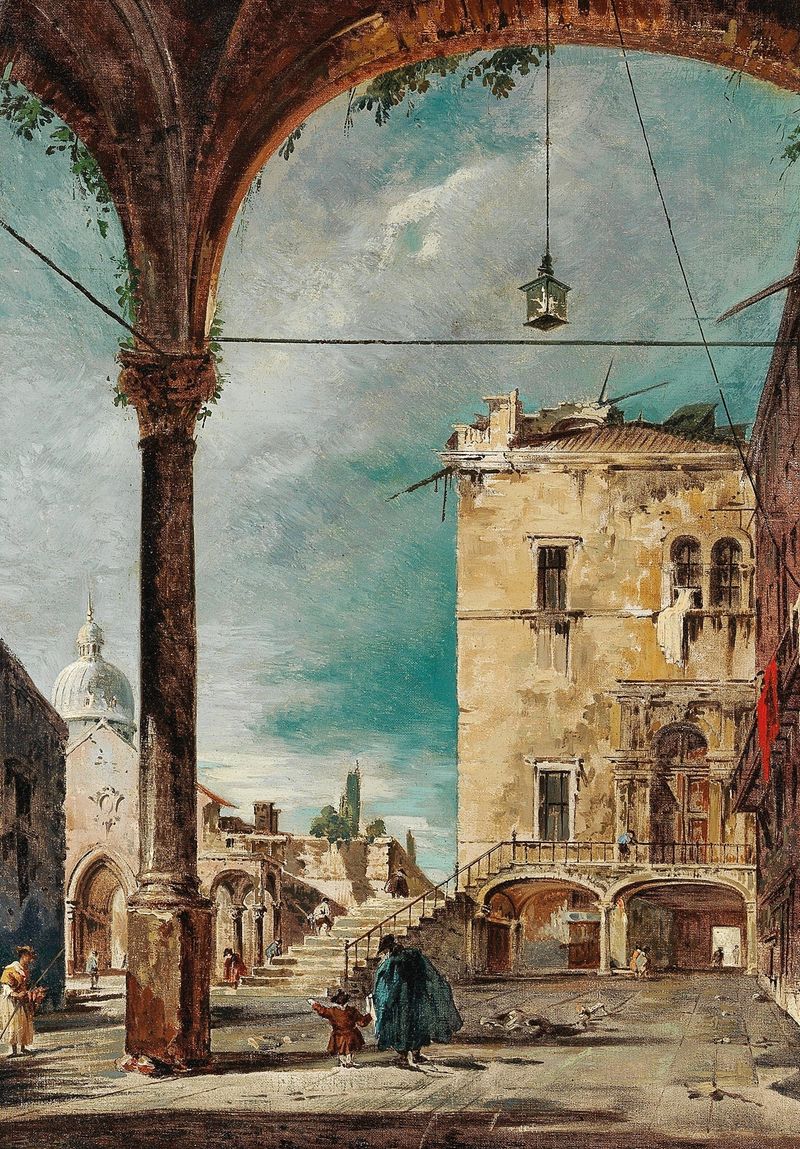
The fluidity of the scene draws the eye upwards, inviting you to lose yourself in the shifting reflections and the interplay of light and shadow. Yet within this idyllic panorama lies a poignant tension: the boats—symbols of freedom—are anchored, resting against the vibrant backdrop of a city that speaks both of grandeur and decay. The clouds above, heavy yet beautiful, suggest a fleeting moment, as if time itself teeters on the brink of melancholy. Each element, from the delicate architecture to the textured skies, serves as a reminder of Venice's impermanence, infusing the work with an emotional depth that resonates deeply. Created in an unspecified period by the workshop of Francesco Guardi, this painting reflects the artist's immersion in the Venetian landscape during a time of artistic transition.
Guardi, known for his enchanting views of the city, was part of the late Baroque movement in the 18th century, a period marked by a fascination with light and atmosphere. The workshop's collective effort aimed to capture the essence of Venice, a city at once vibrant and fading, echoing the sentiments of both its inhabitants and the artists who sought to immortalize its beauty.