Venus, Cupid and Ceres — History & Facts
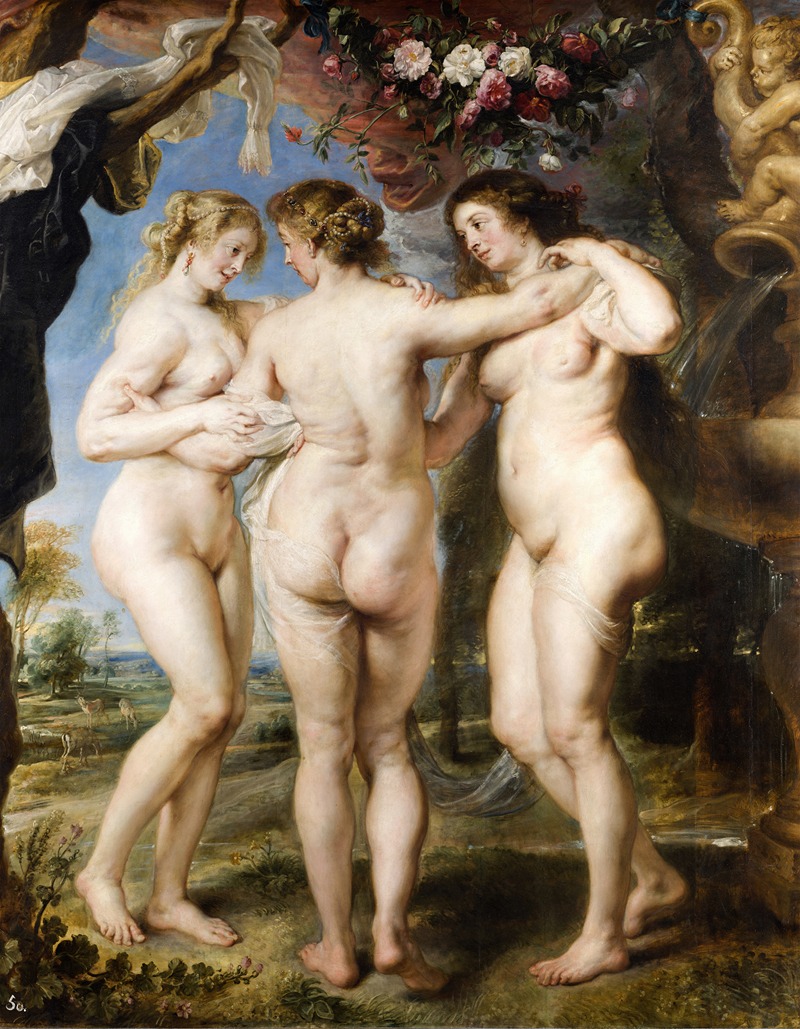
Could beauty survive in a century of chaos? This poignant question lingers in the air as we gaze upon the harmonious composition of Venus, Cupid and Ceres. The silence within this artwork speaks volumes, bridging the celestial and earthly realms, inviting the viewer to contemplate the delicate balance of love and nature amidst the turmoil of the time. Look closely at the tender interaction between Venus and Cupid on the left, their forms draped in soft fabrics that seem to flow with emotion. Notice how the light gracefully illuminates their faces, casting gentle shadows that evoke both intimacy and longing.
The vibrant hues of the surrounding flora contrast beautifully with the muted tones of the figures, drawing your eye to the lush, ripe fruits held by Ceres on the right, emphasizing the abundance of nature intertwined with love. Delve deeper into the symbolism woven into the scene. The figure of Ceres, embodying agriculture, stands as a reminder of sustenance and fertility amid potential desolation. The juxtaposition of Venus’s ethereal beauty with Cupid’s playful mischief suggests the fragility of love, highlighted by the tranquil yet tense expressions that seem to reflect an unspoken dialogue.
This layered narrative invites us to ponder the complexities of desire, nourishment, and emotional sustenance in an era marked by instability. Cornelis Cornelisz. painted Venus, Cupid and Ceres in 1604, a time when Europe was grappling with social and political upheaval. Living in the Dutch Republic, he was influenced by the Mannerist style that emphasized elegance and idealism while navigating the shifting tides of the art world.
The work reflects not only the artist's personal exploration of myth and beauty but also a collective yearning for harmony amid the chaos of his time.