
Veue du Trianon de Versailles — History & Facts
What if silence could speak through light? In the stillness of a grand garden, the beauty of nature unfolds, revealing secrets whispered only to those who pause and listen. Look to the center of the canvas, where the Trianon stands majestically, framed by lush greenery that seems to cradle it like a cherished memory. Notice how the sunlight filters through the leaves, casting dappled patterns across the pathways, inviting one to wander through the tranquil grounds. The soft pastel hues create a harmonious blend, a delicate balance between the man-made elegance of the architecture and the wild, unrestrained spirit of nature. The composition speaks volumes about the tension between opulence and simplicity.
The Trianon, a symbol of royal indulgence, contrasts starkly with the surrounding flora, which flourishes in its unpretentious beauty. This juxtaposition evokes a sense of introspection, prompting viewers to reflect on the ephemeral nature of beauty—how it can be both extravagant and natural, a fleeting moment captured forever in paint. Observing the shadows and highlights, one senses the stillness of the scene, an invitation to pause and appreciate the quiet splendor of this idyllic escape. Gabriel Pérelle created Veue du Trianon de Versailles in the early 18th century, during a time when France was steeped in the grandeur of the Baroque and Rococo artistic movements.
Working in the Parisian art scene, he was influenced by the cultural emphasis on beauty and nature inherent in the royal gardens of Versailles. This period saw a flourishing of landscape painting, a genre that Pérelle masterfully contributed to, allowing his vision of elegance and tranquility to resonate through the ages.
More Artworks by Gabriel Pérelle
Browse all →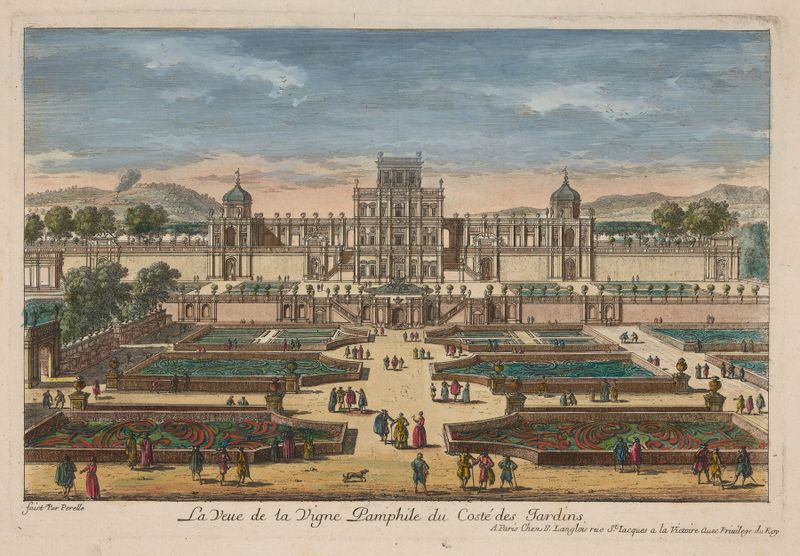
More Architecture Art
Browse all →
The statue of Liberty
Frédéric Auguste Bartholdi

View of Houses in Delft, Known as ‘The Little Street’
Johannes Vermeer

View of Houses in Delft, Known as ‘The Little Street’
Johannes Vermeer

The Cathedral in Rouen. The portal, Grey Weather
Claude Monet

The yellow house
Vincent van Gogh

The Church in Auvers-sur-Oise, View from the Chevet
Vincent van Gogh