
Via Appia — History & Facts
Where does light end, and longing begin? In the delicate interplay of clarity and chaos, the line blurs, revealing the human heart's deepest yearnings. Focus on the luminous path cutting through the verdant foliage, a ribbon of muted earth tones that guides the eye into the distance. Notice how warm sunlight breaks through the leaves, casting dappled shadows that dance upon the cobblestones and whisper of journeys past. The layers of color—rich greens against the warm browns—create a tension between nature's serenity and the silent chaos of memories that linger in the air. Within this composition lies a poignant contrast: the tranquil beauty of the Italian countryside juxtaposed with the echoes of history that haunt its roads.
The winding path symbolizes the eternal search for meaning, while the encroaching shadows hint at forgotten stories and unfulfilled desires. Small details, like the distant figures strolling along the Via Appia, invite contemplation of their narratives—who they are, where they come from, and the madness of aspirations that accompany each step. In 1850, Albert Flamm was deep into a phase of his career marked by a fascination with light and landscape. Working in Italy, he found himself captivated by the ancient roads that once connected Rome to its empire, reflecting a world teetering between nostalgia and modernity.
This period was a time of artistic exploration, as Romanticism began to give way to Realism, challenging him to find a balance between idealized beauty and the rawness of life’s impermanence.
More Artworks by Albert Flamm
Browse all →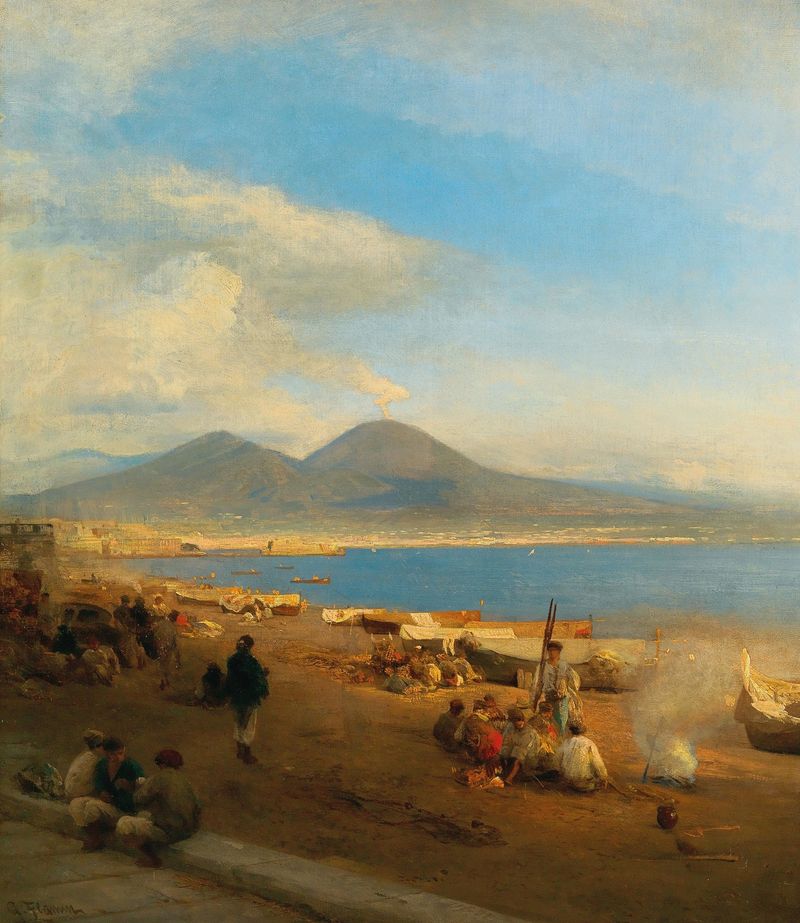
A view of the Gulf of Naples from Posilippo
Albert Flamm
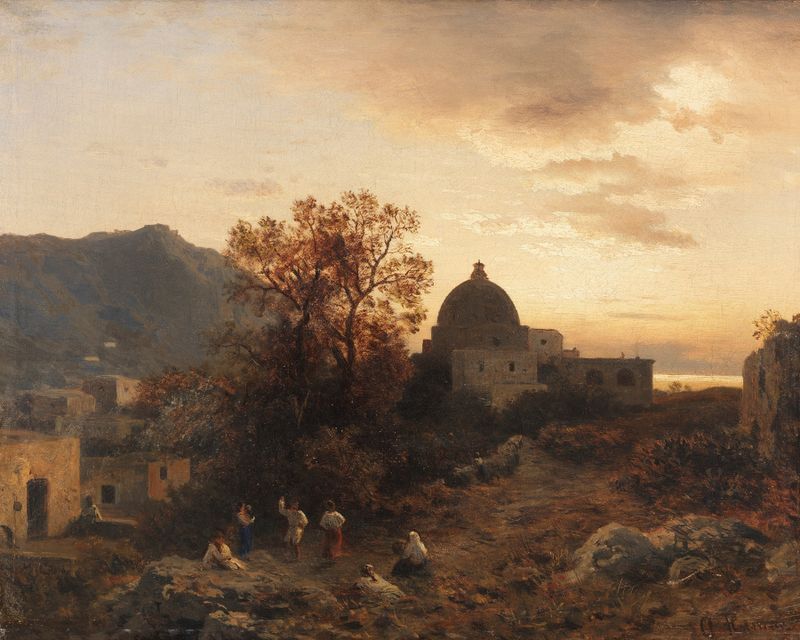
Abendstimmung an der italienischen Küste mit tanzenden Figuren
Albert Flamm
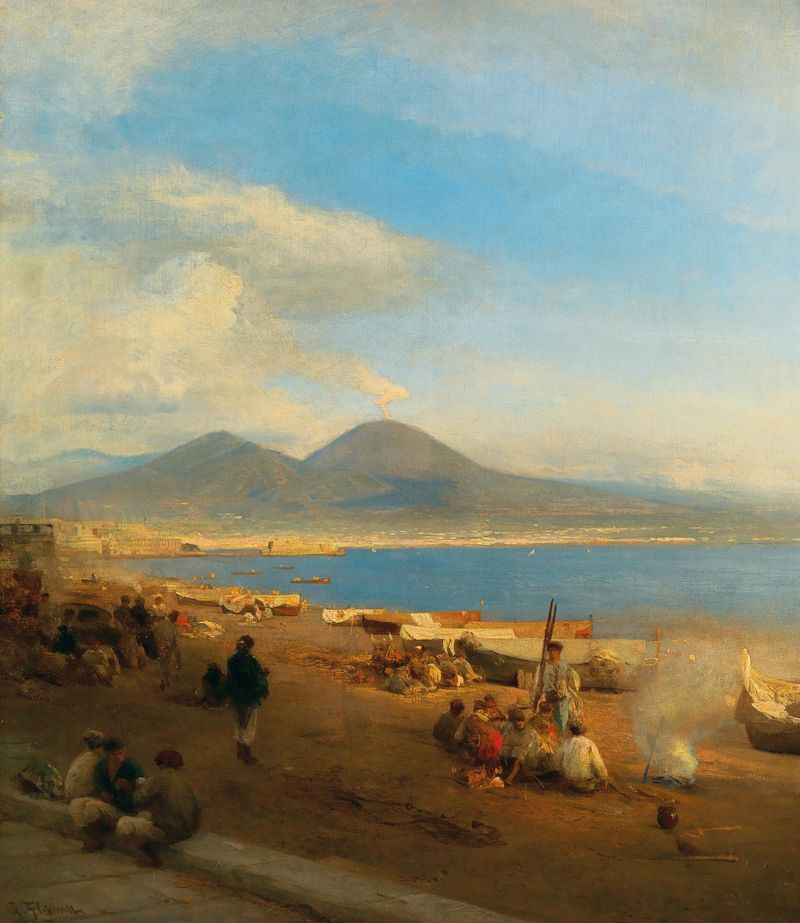
A View Of The Gulf Of Naples From Posilippo
Albert Flamm

Abendstimmung am Rhein
Albert Flamm

Badende Frauen am Golf von Neapel
Albert Flamm
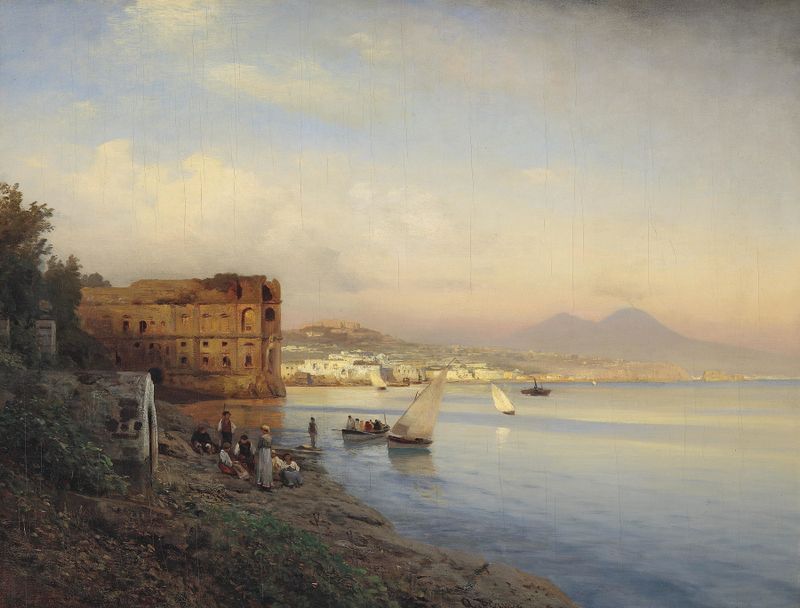
Blick auf die Bucht von Neapel
Albert Flamm

Crab Fishermen On The Beach
Albert Flamm
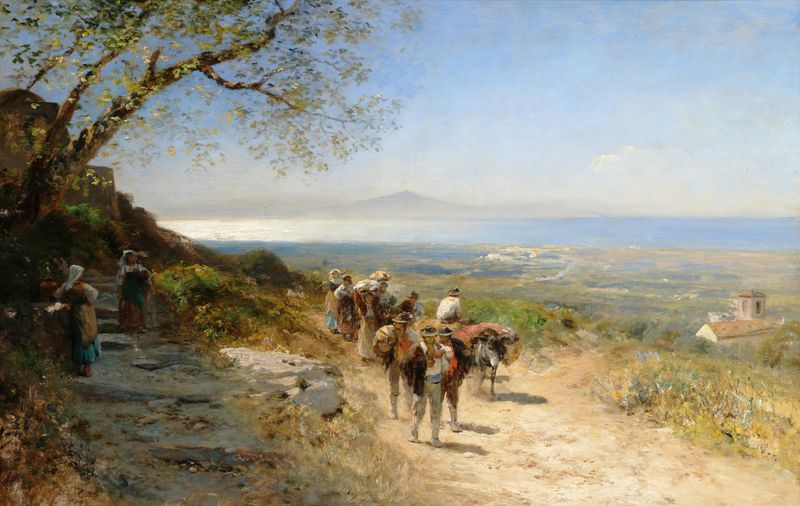
Homecoming of the Field Workers
Albert Flamm
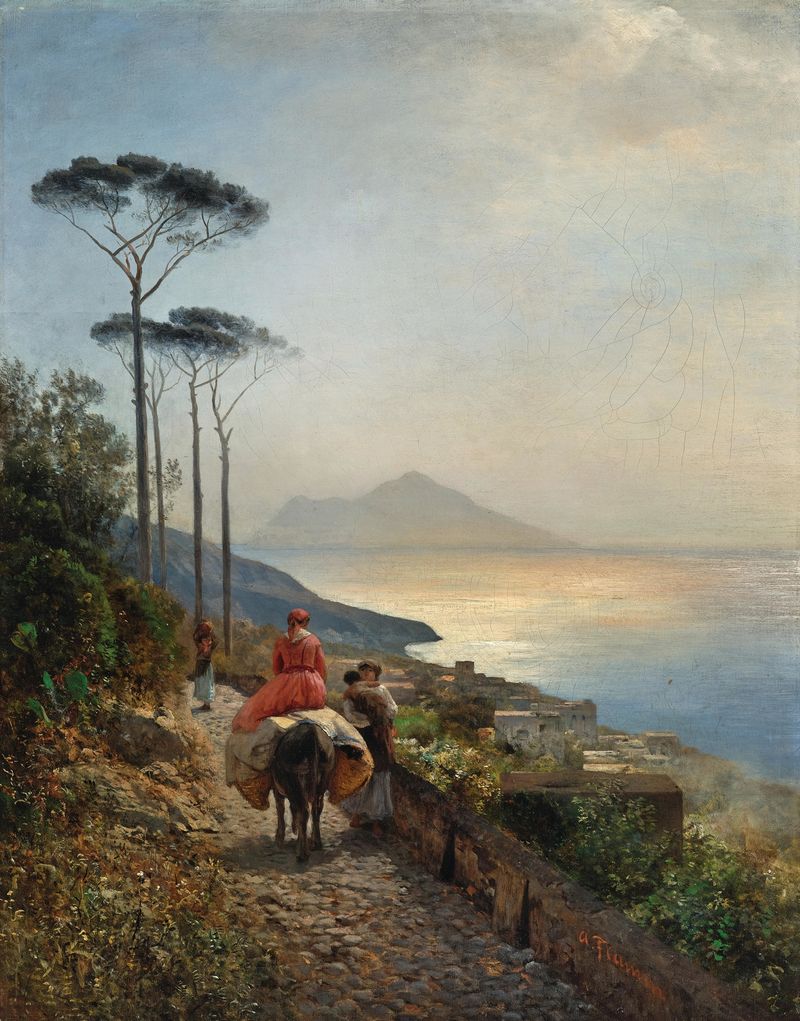
Sunset at the Bay of Naples
Albert Flamm
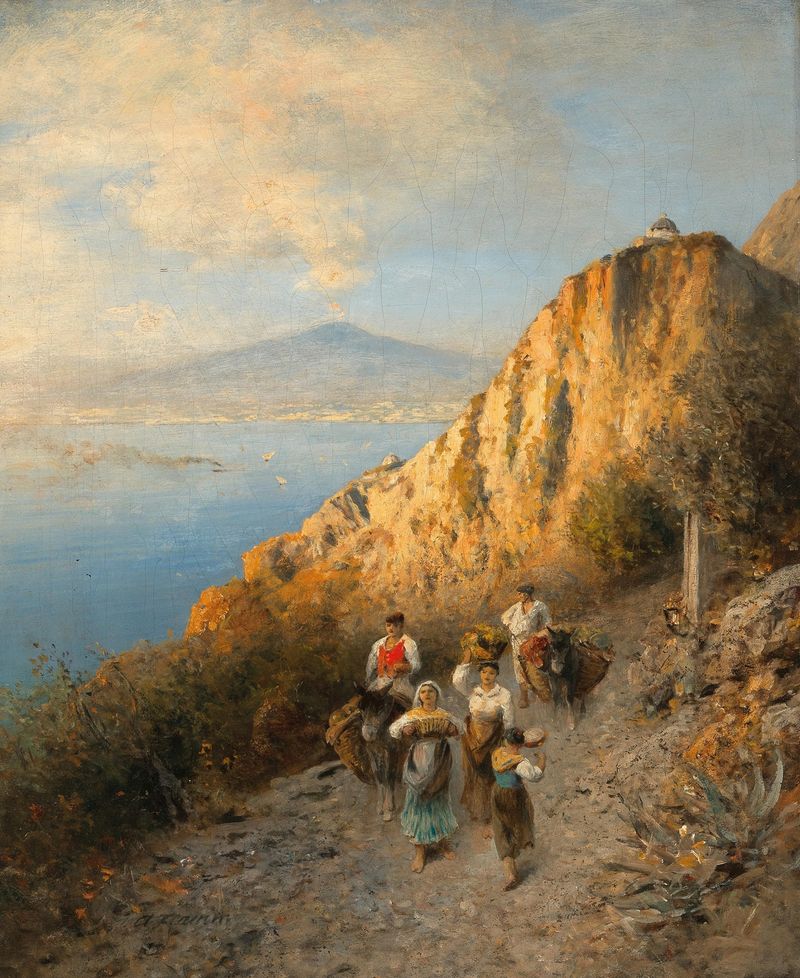
Returning Home from the Market, with Vesuvius in the Background
Albert Flamm





