Victorian Rural Train Station and Railroad Crossing — History & Facts
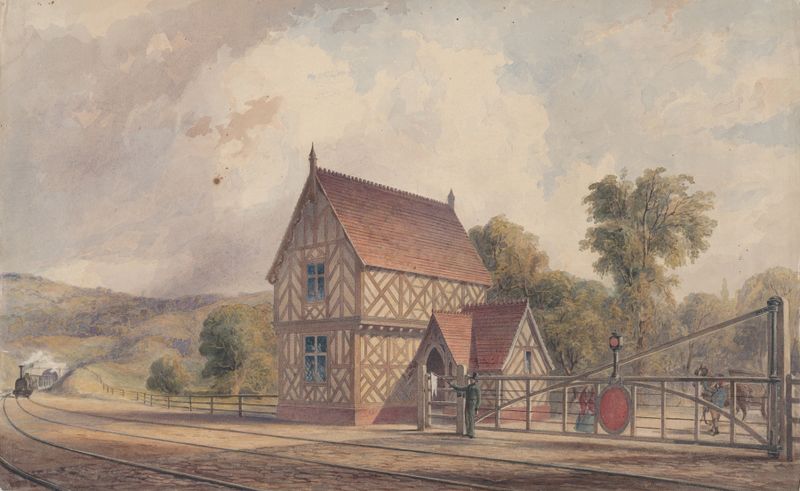
Can beauty exist without sorrow? In Victorian Rural Train Station and Railroad Crossing, a serene yet poignant moment unfolds, capturing the intersection of progress and nostalgia. Look to the left at the verdant fields, where the gentle curves of the landscape cradle the station, a quaint embodiment of Victorian charm. Notice how the light filters through the soft clouds, casting delicate shadows that dance across the wooden structures and the gleaming tracks. The muted colors of the scene—a blend of earthy greens and warm browns—invite a sense of calm, while the meticulously painted details of the train station evoke a cherished simplicity, contrasting against the advancing machinery of modernity. Delve deeper into the scene, where an underlying tension lies in the juxtaposition of human presence and industrial progress.
The figures waiting by the tracks emanate a collective anticipation, their expressions ranging from hope to wistfulness, suggesting an emotional gravity that speaks to both departure and arrival. The railroad, a symbol of innovation, concurrently embodies the inevitability of change, making viewers reflect on what is left behind in pursuit of the future. John Connell Ogle painted this piece between 1844 and 1877, a period marked by rapid industrialization across Britain. As railroads transformed landscapes and communities, Ogle sought to capture the essence of rural life amidst these sweeping changes.
Working during a time when the art world was increasingly fascinated by the interplay of nature and technology, he crafted a scene that resonates with both the beauty of the past and the shadow of inevitable progress.