Viehtreiber in Bayerischer Landschaft mit Blick auf eine Burg — History & Facts
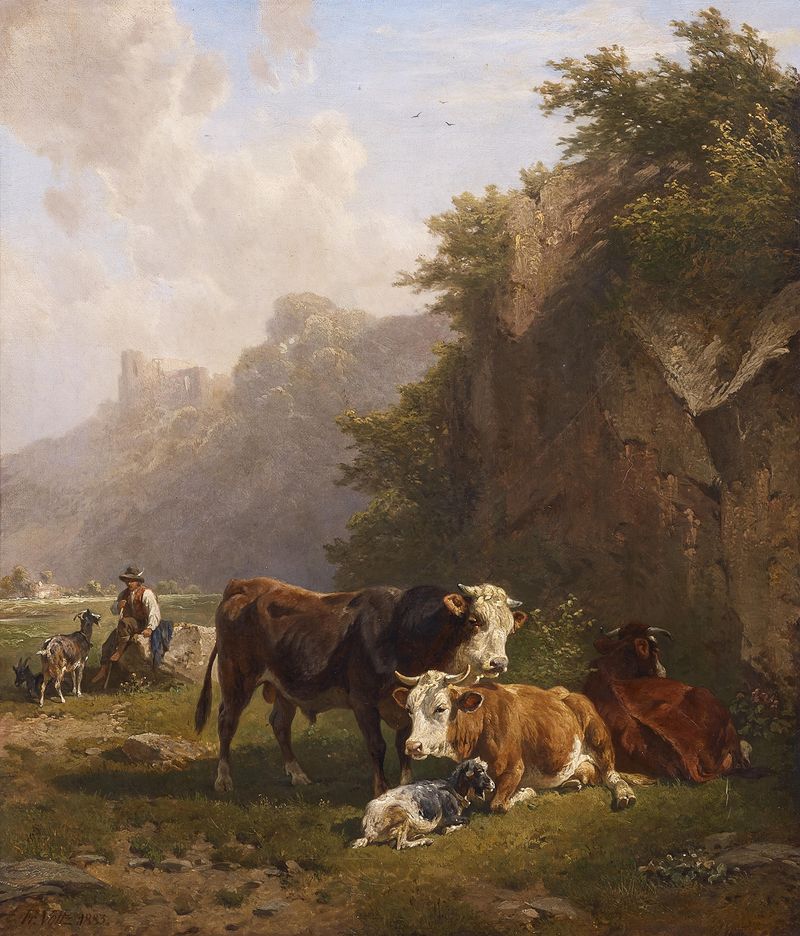
What if beauty was never meant to be finished? In Viehtreiber in Bayerischer Landschaft mit Blick auf eine Burg, the fine line between serenity and madness is vividly explored through the lush Bavarian landscape and its inhabitants. Look to the left at the herdsman guiding a group of cattle across the verdant fields, his form a study in restraint against nature’s overwhelming splendor. Notice how the rolling hills unfurl like a green tapestry, each fold dancing harmoniously with dappled sunlight. The castle, a distant sentinel looming against the azure sky, contrasts sharply with the warm earth tones of the foreground, grounding the pastoral scene in an enchanting tension between the wild and the cultivated. Here, the interplay of light and shadow suggests a deeper narrative lurking beneath the surface.
The herdsman, with his furrowed brow and focused gaze, embodies the struggle against the chaos of nature—a reflection of humanity's quest for order amid beauty's untamed chaos. The castle stands firm yet distant, perhaps symbolizing the unattainable ideals we chase, while the gentle stream meanders through the landscape, whispering secrets of solace found in simple tasks. In 1881, Johann Friedrich Voltz created this piece in Germany, a time when Romanticism was evolving into a more intimate exploration of the natural world. He was deeply influenced by the pastoral tradition, capturing rural life’s essence with a distinctive emotional depth that resonated with the societal shifts of his era.
As the world around him became increasingly industrialized, his work served as a poignant reminder of the beauty and complexities found within the pastoral landscape.