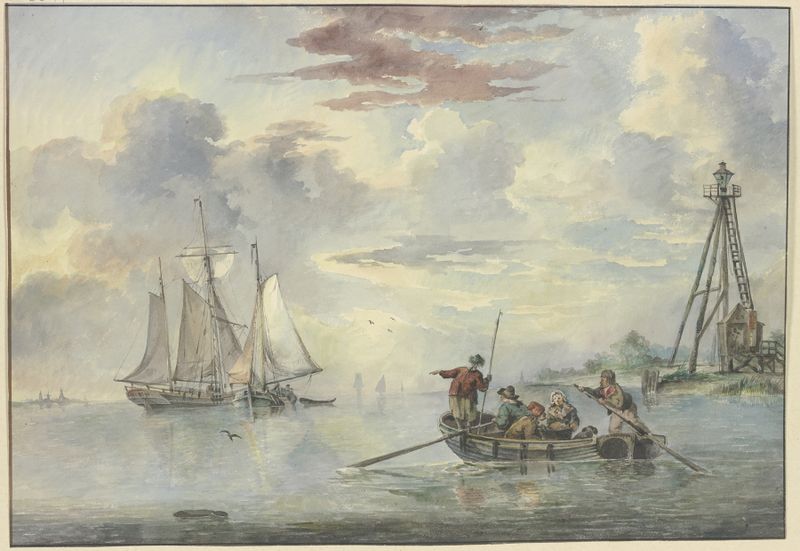
Viele Schiffe, rechts am Strand eine Frau und zwei Männer, von denen einer ein Sprachrohr in der Hand hält — History & Facts
Who listens when art speaks of silence? In the stillness captured upon the canvas, the echoes of legacy unfold, inviting us to explore the whispers of history and humanity. Look to the left at the gentle curve of the shoreline, where the subtle play of light dances upon the water. Notice how the artist has skillfully employed a palette of muted hues that blend seamlessly into the landscape, creating an atmosphere of tranquility. The figures, a woman and two men, are poised at the edge of the scene, their gestures subtly framing the composition, drawing the viewer’s gaze toward their interaction as one man holds a speaking tube, symbolizing communication and connection amidst the vastness of nature. Delve deeper into the details: the woman’s posture suggests a moment of contemplation, while the men’s expressions hint at a conversation filled with unspoken tension.
The contrast between their vibrant clothing and the earth-toned surroundings conveys a sense of urgency against a backdrop of stillness, revealing the emotional undercurrents at play. This tension between the figures and their setting raises questions about the nature of dialogue — both human and artistic — and how legacies are formed and communicated. Leendert de Koningh painted this work during a period marked by the exploration of landscape and figure in Dutch art. Although the exact date remains unknown, it is likely created in the late 17th century when artists were increasingly focused on capturing the essence of everyday life and the relationship between humanity and nature.
This painting reflects a time of shifting artistic priorities, where the portrayal of intimate scenes began to take center stage, highlighting the enduring legacy of human interaction and the stories it tells.