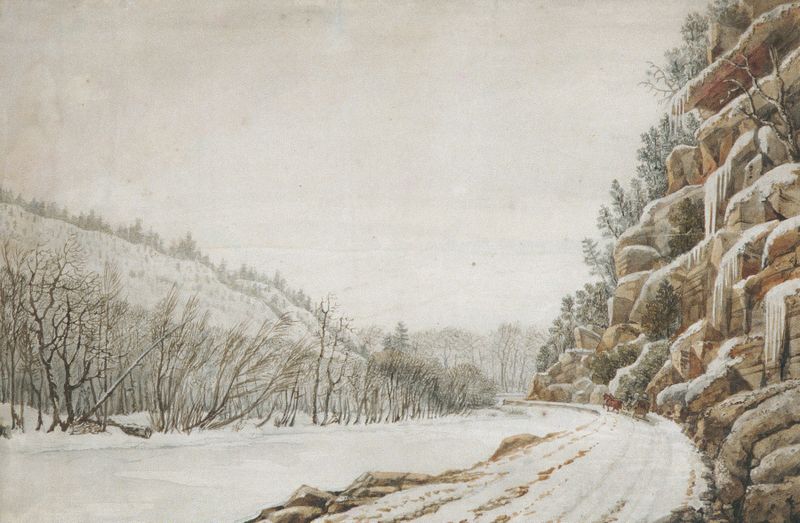
View from the Packet Wharf at Frenchtown Looking down Elk Creek — History & Facts
When did color learn to lie? A fleeting memory can embody truth and artifice in equal measure, capturing moments that both shimmer with life and fade into stillness. Look to the right at the gentle curve of Elk Creek as it winds through the landscape, a soft ribbon of blue and green that draws the eye deeper into the scene. Notice how the play of light dances across the water's surface, creating an illusion of movement that contradicts the tranquility of the setting. The foliage, rich in deep greens and dappled sunlight, invites you into a world where nature serves as both backdrop and protagonist, while the distant hills stand as solemn witnesses to the passage of time. Yet, beneath this serene exterior lies a profound tension.
The juxtaposition of vibrant colors against the muted browns of the packet wharf hints at a transient human presence, evoking the bittersweet nature of memory itself. Each brushstroke carries the weight of nostalgia, suggesting that what we see is not merely a snapshot but a complex interplay of recollections, emotions, and the impermanence of life. The calm water reflects both the beauty of the moment and the inevitability of change, inviting contemplation on the ephemeral nature of experience. In 1806, Benjamin Henry Latrobe painted this piece while living in the young nation of America, a time when artists were beginning to carve their identities apart from European influences.
As an architect and painter, Latrobe faced the challenge of conveying the American landscape's beauty, merging the ideals of classicism with the rawness of nature. This work emerged amidst a burgeoning sense of nationalism, reflecting a deepening connection to the land and its memories, both personal and collective.