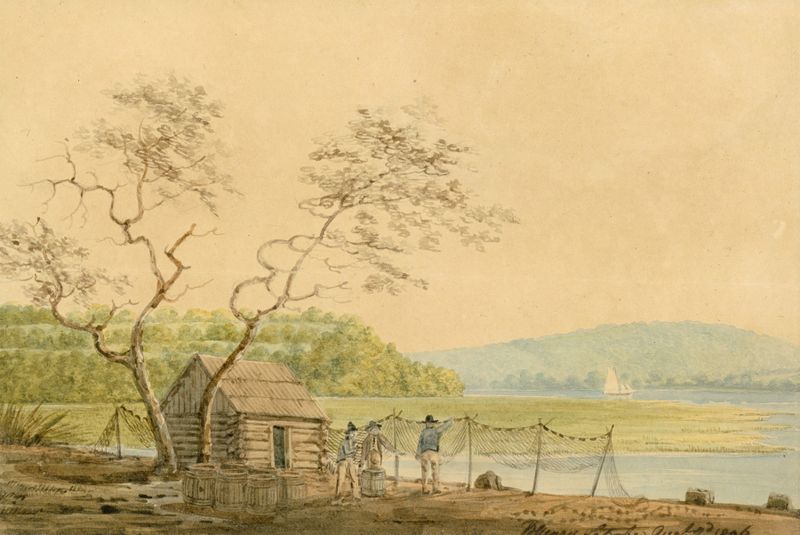
View on the New Turnpike Road, on the Margin of the Juniata, with a Distant View of the Warrior Mountain — History & Facts
In the heart of a vast, undulating landscape, an ecstatic tension simmers just beneath the surface. Nature’s majesty evokes both wonder and introspection, reminding us of our place within its grandeur—vulnerable yet alive. Look to the center of the canvas, where the winding turnpike leads the eye into the depths of the scene. The road, a delicate ribbon of gray, contrasts vividly with the lush greens and browns of the surrounding terrain.
Notice how the light bathes the distant Warrior Mountain in ethereal hues, creating a sense of calm that counters the road's promise of journey and adventure. Latrobe’s meticulous brushwork captures the interplay of shadow and illumination, inviting viewers to explore both the physical and emotional landscapes before them. Hidden within this tranquil vista lies a juxtaposition of serenity and chaos. The road symbolizes the pursuit of progress, yet it also whispers of the sacrifices and struggles that accompany such journeys.
The subtle variations in color and texture reveal a tension between the beauty of nature and the encroachment of human creation, suggesting an underlying ache that resonates with the viewer. This duality encapsulates the ecstasy and despair inherent in the quest for fulfillment. In 1820, while residing in Pennsylvania, the artist painted this work during a time of rapid economic and technological change in America. Latrobe, known for his architectural achievements and keen observations of the landscape, found inspiration in the evolving environment around him.
The work reflects not only a personal exploration of the American landscape but also an era in which the natural world was continually reshaped by human ambition.