View near Auckland: Evening-Trees and Ferns — History & Facts
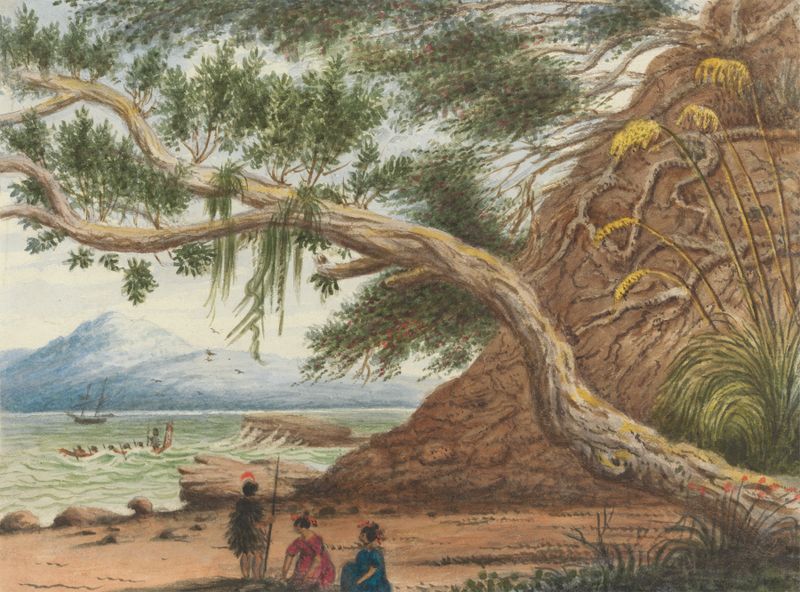
What if silence could speak through light? In the stillness of twilight, the world seems to pause, allowing the whispers of nature to resonate in soft hues. Look to the foreground, where the dark silhouettes of trees stand sentinel against the fading sun, their branches delicately reaching out like fingers grasping for the last warmth of day. Notice how the fern fronds unfurl in vibrant greens, their textures alive with the golden reflections that filter through the dusky atmosphere. The careful layering of colors—deep blues merging softly into warm ambers—invites the viewer to linger, each stroke revealing the artist’s meticulous attention to the fleeting moment. Amidst this tranquil scene lies a subtle tension: the interplay between light and shadow evokes a sense of impending change, hinting at the revolutionary spirit that was brewing beyond the canvas.
The stillness of the landscape captures not just a moment in time but the quiet anticipation of transformation—a reflection of both nature's cycle and the shifting tides of society. Each element, from the towering trees to the humble ferns, seems to echo the unspoken desire for progress and renewal. In 1849, the artist found himself in the picturesque landscapes surrounding Auckland, New Zealand, during a time of colonial expansion and exploration. Engaged in military service, he turned to painting as a way to document the beauty of an ever-changing world, his work capturing the essence of both personal and historical revolutions.
This piece serves as a bridge between the tranquility of nature and the emerging complexities of modern life, showcasing the duality of stillness and movement.