View near Auckland: Maori Warrior and Women — History & Facts
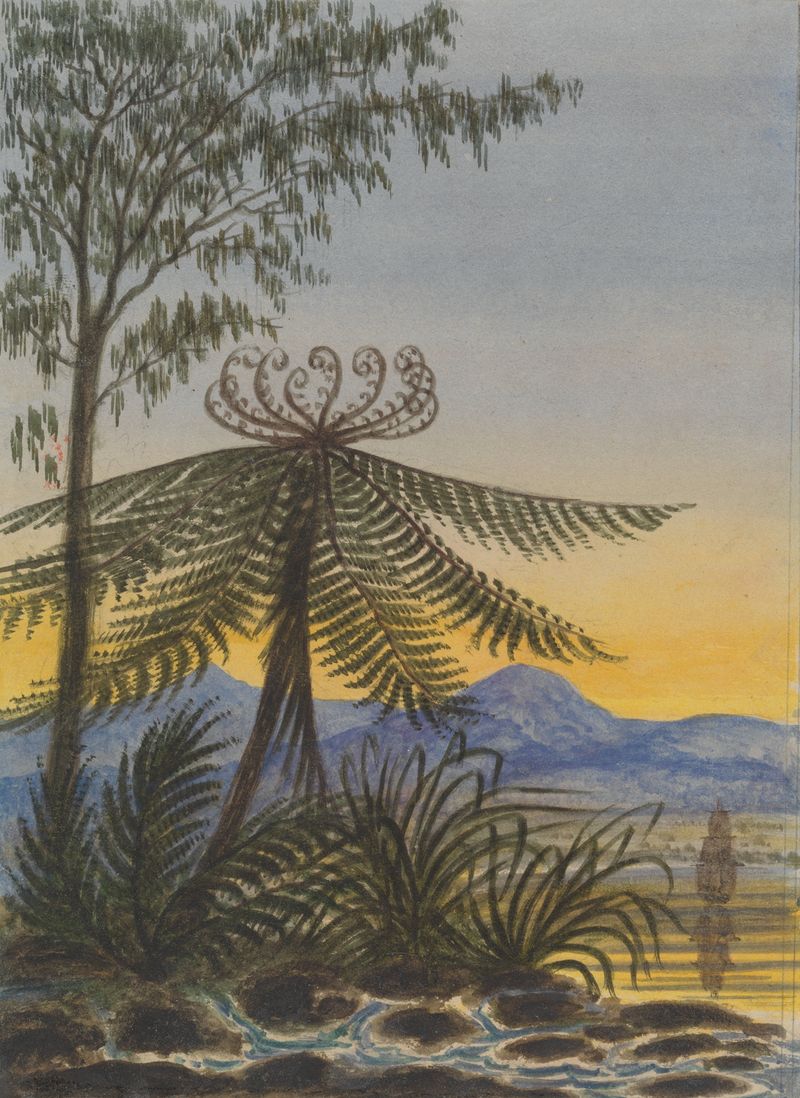
When did color learn to lie? In the world of art, colors often mask deeper truths about the human experience—truths that can stir the soul and spark rebirth. Focus on the vivid greens and blues that envelop the landscape, drawing your gaze toward the central figures. The Maori warrior stands tall, his traditional attire a striking contrast against the lush backdrop, embodying strength and resilience. Notice how the soft, warm light caresses the faces of the women beside him, illuminating their expressions—caught between reverence and challenge—as they engage with their heritage.
Each brushstroke reveals Gold's meticulous attention to detail, from the texture of the warrior's skin to the delicate patterns on the women's garments. Beneath the surface, the warrior symbolizes not only physical power but also the enduring spirit of a culture under threat. The juxtaposition of the vibrant landscape with the solemn expressions of the women hints at a deeper narrative of survival and identity. Each element is interwoven with layers of meaning, reflecting the coexistence of beauty and struggle, the weight of history carried forward through generations.
This moment encapsulates a cultural rebirth against the backdrop of colonization—a poignant reminder of resilience and dignity. In 1860, Lt. Gen. Charles Emilius Gold painted this work during a time of significant conflict in New Zealand, marked by tensions between Māori and European settlers.
As a British military officer, Gold was intricately connected to both the region's struggles and its beauty. This painting serves as a testament to his desire to capture the essence of a people and their land at a pivotal moment in history.