View Of Altai — History & Facts
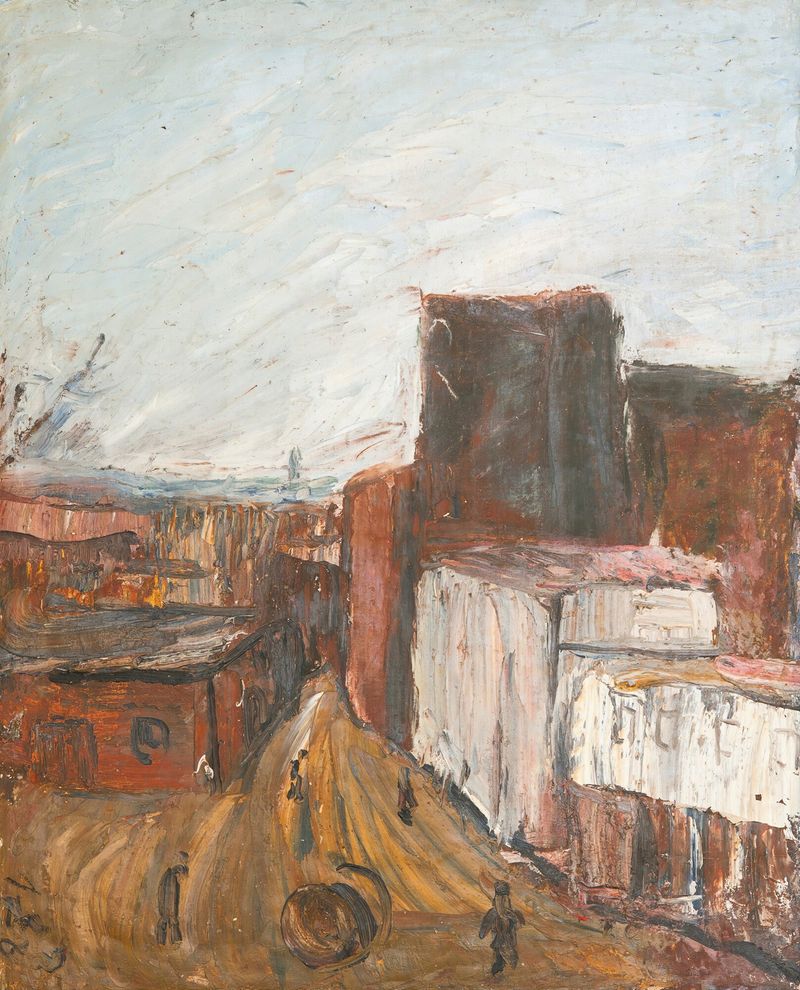
Can beauty exist without sorrow? In View Of Altai, a celebration of nature unfolds, inviting us to contemplate the ecstatic balance between joy and melancholy. Look to the left, where jagged mountain peaks rise majestically against the sky, their dark hues contrasting with the vibrant greens of the valley. The artist employs broad strokes and a vivid palette, capturing the essence of the landscape with fluidity and movement. Notice how the light dances across the surface of a crystal-clear river, mirroring the clouds above, which seem to whisper secrets of the earth’s vastness.
Each element in this composition breathes a sense of life, drawing the viewer deeper into the landscape. Yet, beneath the surface beauty lies a tension that speaks of solitude and the passage of time. The sweeping expanses evoke a sense of freedom, yet one can’t help but feel the weight of the untamed wilderness, a reminder of nature's indifference. The varying shades of blue and green symbolize the duality of ecstasy and despair, hinting at the complexities of existence that fill such landscapes with meaning.
Here, the harmony of nature is interlaced with the ache of isolation, creating a poignant emotional resonance. Aleksandrs Drēviņš painted this piece in the early 20th century, a period marked by a burgeoning interest in the natural world and a departure from traditional realism. Living in Latvia, he was influenced by the Romantic movement and the Symbolist artists of his time, reflecting a desire to express the spiritual and emotional dimensions of land. This work emerges from a context where art began bridging the gap between inner consciousness and outer reality, allowing viewers to explore the depths of their own feelings within nature's embrace.