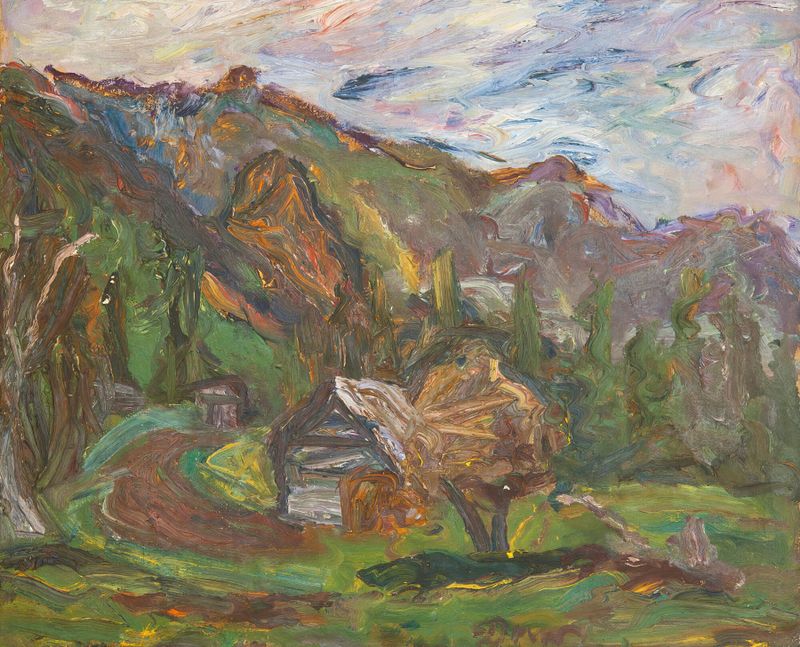
Street Scene — History & Facts
In the midst of daily life, hidden truths often lie beneath the surface, waiting for a keen observer to uncover them. A fleeting moment captured in time, Street Scene invites us to ponder the layers of existence that unfold within the mundane. Look to the center of the canvas, where pedestrians weave through the urban landscape, each figure a brushstroke of life and motion. The muted palette of grays and browns provides a somber backdrop, while vibrant splashes of color from their attire break through the monotony.
Notice how the gentle play of light glimmers off the cobblestones, creating a stage for shadows that dance dynamically with each step. This deliberate choice of composition draws our eye to the movement, as if we too are part of the scene, experiencing the rhythm of the street. Yet, beneath the surface, tensions emerge in the juxtaposition of isolation and connection. The figures appear absorbed in their private worlds, yet their proximity speaks of shared existence.
The city, a bustling entity, contrasts with their quietude, suggesting a deeper commentary on the human experience—how we often walk side by side yet remain emotionally distanced. Each detail, from a downturned gaze to a hurried stride, reflects a story waiting to be told, raising questions about belonging and solitude. In the early 20th century, during a time of rapid industrialization and societal change, the artist created this piece while immersed in the vibrant artistic circles of Europe. The world was shifting, and artists like him sought to capture the essence of modern life.
The emotional nuances encapsulated in this work reflect not only his personal observations but also the broader existential conversations that were taking place in the art world during that transformative era.