View of Charleston (View from the East) — History & Facts
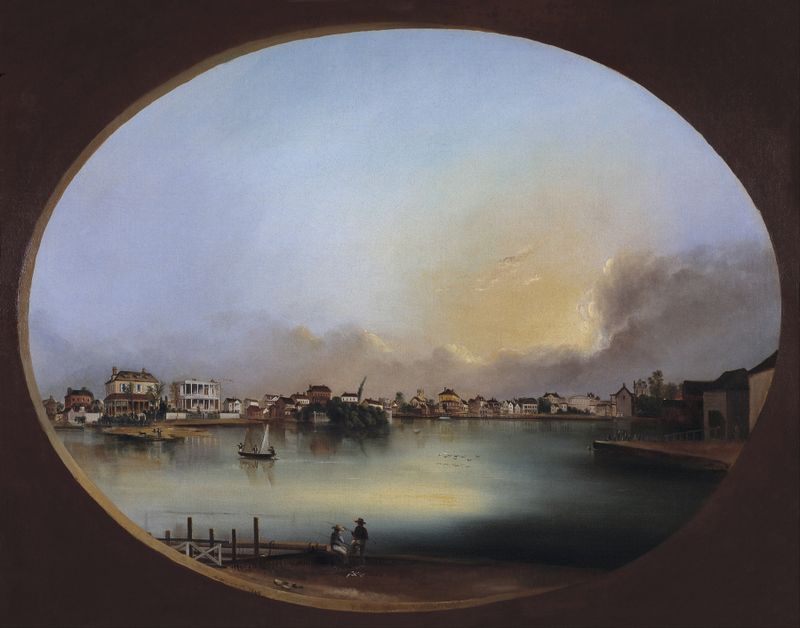
In the delicate interplay of hues, we find not just a landscape but a testament to faith in the beauty of the everyday. Look to the sweeping horizon, where the gentle blues of the sky mingle with the muted greens of the land. The eye is drawn to the sunlit rooftops, each brushstroke revealing warmth and vitality. Notice how the artist captures the play of light across the water—a brilliant reflection of the world above, beckoning the viewer to explore both the earthly and the spiritual.
The composition balances tranquility with life, a reminder of nature's presence amid the architecture of Charleston. Beneath the surface, this piece communicates a complex relationship between nature and humanity. The stillness of the city contrasts with the flowing river, symbolizing the constant push and pull of existence. There is a profound sense of hope woven into the landscape; the structures, though man-made, serve as vessels of aspiration.
Each element whispers stories of the past, inviting contemplation on the interconnection of faith and place. Henry Joseph Jackson painted View of Charleston (View from the East) in 1846 while living in Charleston, South Carolina. At this time, the city was thriving, with its rich cultural scene and the burgeoning influence of Romanticism in art. Jackson’s own journey reflected a blend of personal faith and a growing appreciation for the natural world, underscoring a pivotal moment in his career as he sought to capture the essence of his surroundings.