View of Charleston (View from the West) — History & Facts
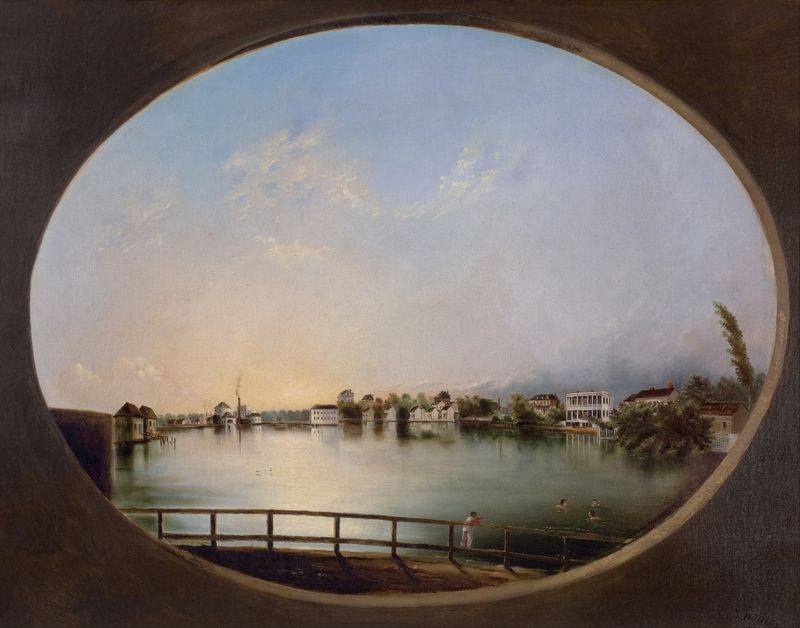
What secret hides in the quiet of the canvas? The serene landscape of View of Charleston (View from the West) invites us to unravel the delicate balance between nature and human creation, evoking a moment suspended in time. Look to the center of the composition, where the soft contours of the distant hills cradle the city with a warm embrace. Notice how the light bathes the buildings in a gentle glow, each structure rendered in harmonious tones of earthy ochre and muted greens. The artist employs a fine, almost ethereal brushwork to create the shimmering effect of water reflecting the sky’s pale blues, drawing the eye toward the horizon where land meets sky. Beneath the tranquil surface lies a subtle tension between the natural and the manmade.
The juxtaposition of the bustling city against the expansive landscape hints at the encroaching influence of civilization, yet the calm water suggests a yearning for serenity and balance. Small details, such as the wisps of clouds and the soft ripples on the water’s surface, speak to the fleeting nature of this harmony, reminding us that such moments are precious and rare. Henry Joseph Jackson painted this piece in 1846 while living in Charleston, a city undergoing significant growth and change. This period marked the rise of a vibrant artistic community, and Jackson, a prominent figure, sought to capture the essence of his surroundings amid the transformations of an emerging urban landscape.
His work reflects both a personal and artistic exploration of balance, resonating with the tensions of his time.