View of Constantinople (Istanbul) and the Seraglio from the Swedish Legation in Pera — History & Facts
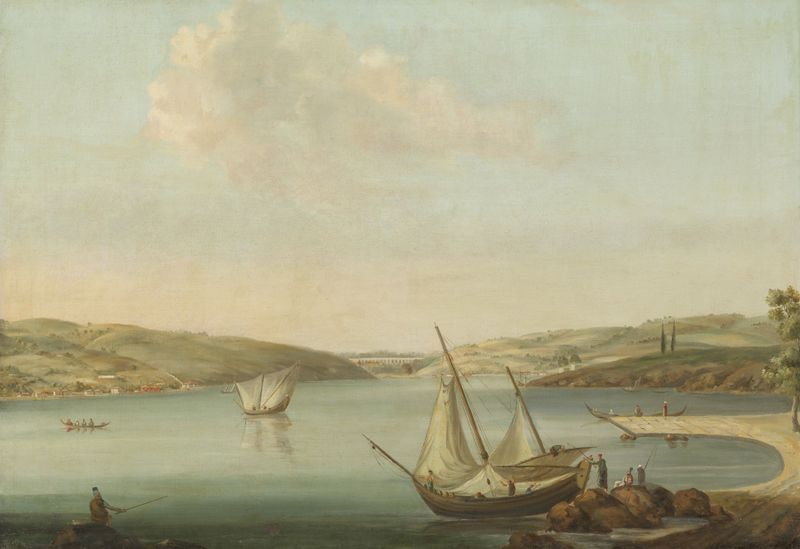
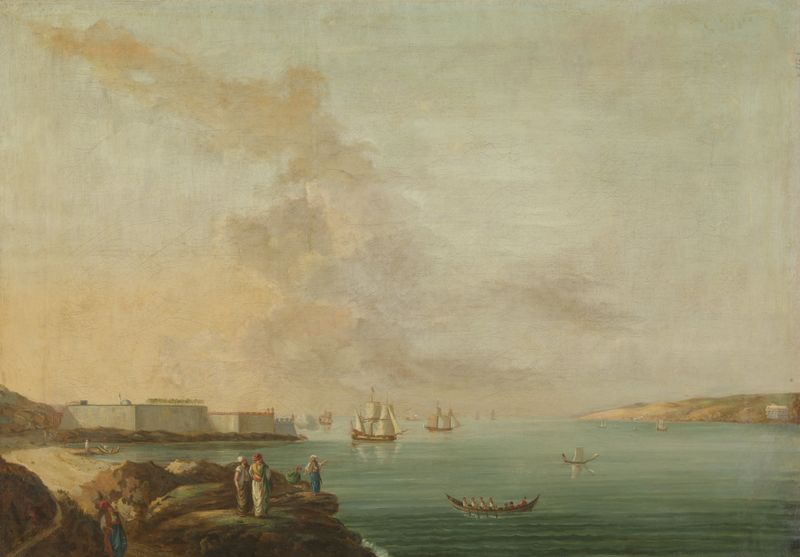
In the interplay of shadow and light, the cityscape reveals itself, a tapestry woven with history and life, where every stroke tells a forgotten story. Look to the left of the painting, where the subtle interplay of light caresses the majestic silhouette of the Hagia Sophia, its dome rising like a guardian over the sprawling city. The delicate shading enhances the contrast between the vibrant colors of the houses in the foreground and the muted tones of the distant hills. As you trace the horizon, notice how the brushwork captures the shimmering waters of the Bosphorus, a mirror reflecting the encroaching twilight, inviting viewers to ponder the duality of the day's end and the night's promise. Delve deeper into the composition, and you’ll discover the interplay of tranquility and vibrancy that defines the urban scene.
The shadows cast by the architecture, rich and enveloping, contrast sharply with the radiant sky, hinting at the lives unfolding beneath. Amidst these stark contrasts lies the suggestion of cultural convergence—East meeting West, tradition embracing modernity—encapsulating the essence of Constantinople as a nexus of diverse influences. Painted between 1770 and 1780, this work emerged during a pivotal time for the artist, who was living in the vibrant atmosphere of 18th-century Europe, where exploration and cultural exchange flourished. As the Enlightenment brought forth new ideas about art and society, the artist sought to capture the essence of a city that stood at the crossroads of continents, symbolizing both chaos and grace in its rich tapestry of life.