View of Ruins at the Bank of a River — History & Facts
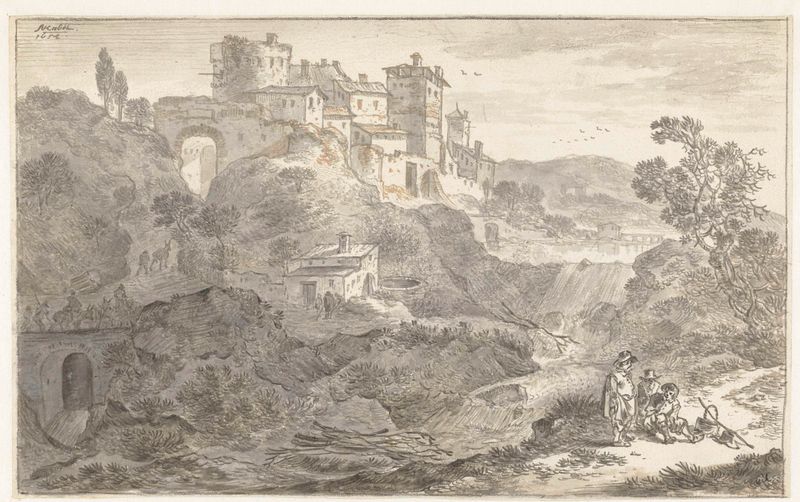
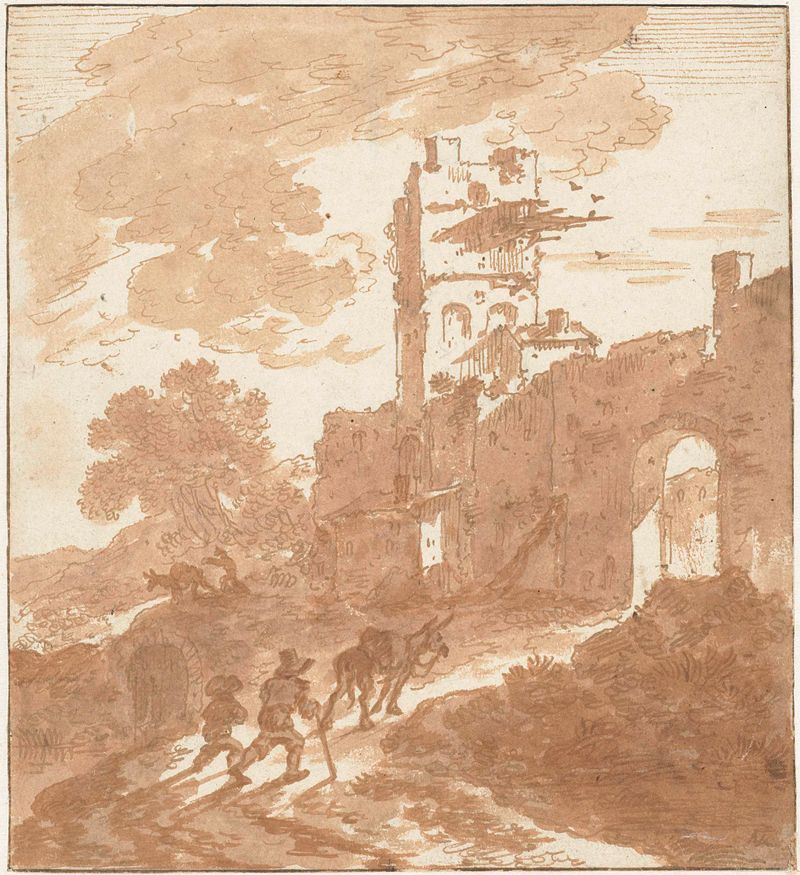
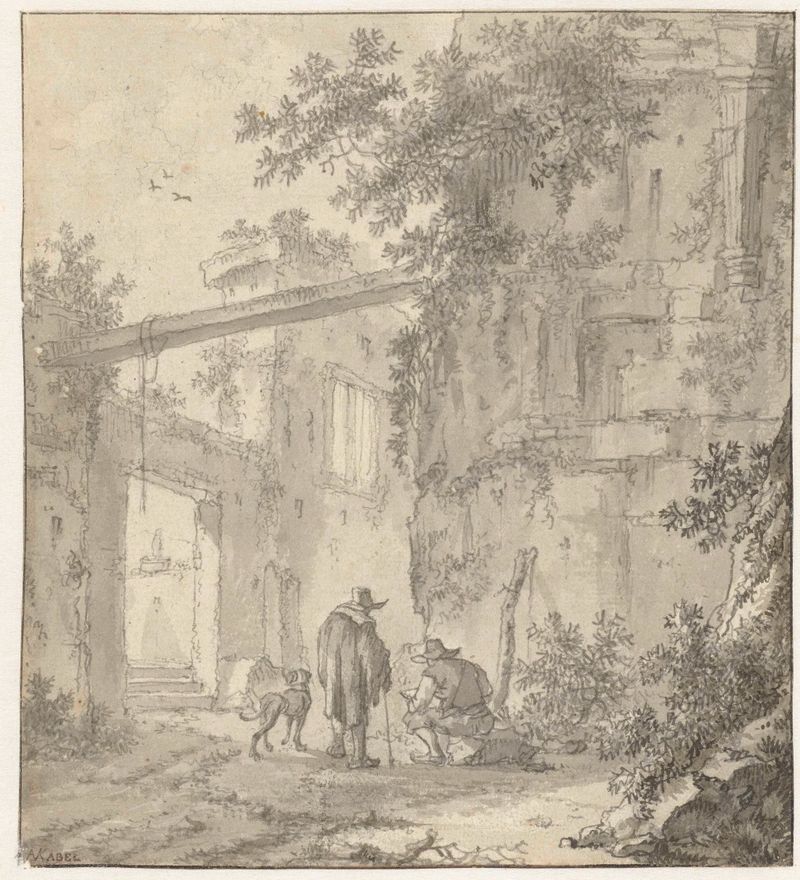
In the stillness of a moment, nature and human history converge in a tapestry of awe and reflection. Focus on the left side of the canvas, where the soft hues of fading sunlight bathe the ancient ruins in a warm, golden glow. The delicate brushwork captures the crumbling stones, entwined with tender vines, whispering secrets of the past. Notice how the river flows gently at the foreground, mirroring the sky’s subtle palette, creating a serene yet poignant harmony between the elements. The juxtaposition of decay and beauty resonates deeply, inviting contemplation about the passage of time.
The ruins, though fragmented, stand proudly against the serene backdrop, hinting at the stories that once unfolded within their walls. There’s an emotional tension in the way the river, a symbol of life, meanders past remnants of human endeavor, suggesting continuity amidst decline. Each detail, from the ripples in the water to the shadows cast by the stones, layers the narrative with a profound sense of melancholy and reverence. In 1658, Adriaen van der Kabel created this work while navigating the shifting artistic tides of the Dutch Golden Age.
Living in an era marked by a growing interest in landscapes and the sublime, he sought to evoke emotions through nature’s confrontation with human artistry. This piece reflects his engagement with the interplay of light and shadow, a hallmark of the period, while inviting viewers to ponder their own relationship with history.