View of Ancient Ruins with a Draughtsman, his Companion and a Dog — History & Facts
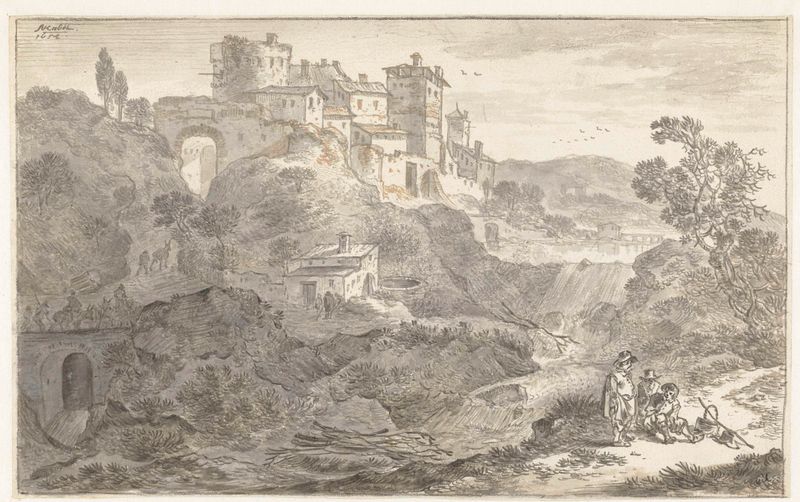
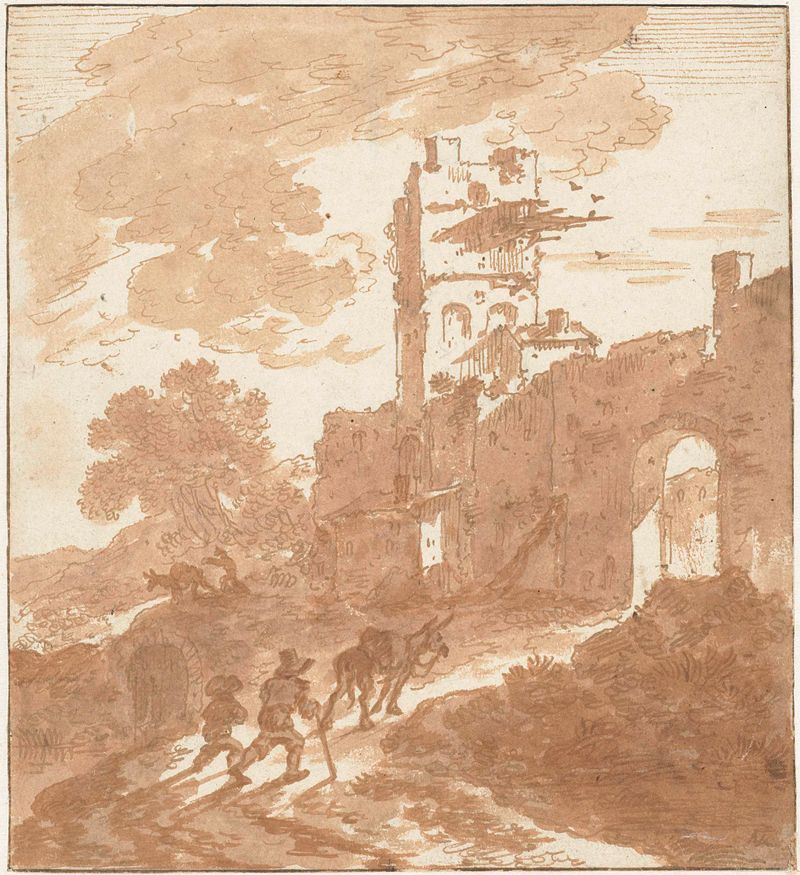
In the delicate interplay of paint, we find the echoes of creation itself—a moment held in time, beckoning us to explore its depths. Look to the right at the figure of the draughtsman, poised with a pencil, capturing the ancient ruins that rise majestically beyond him. Notice how the soft, muted colors—earthy ochres and lush greens—contrast with the stark, crumbling stones of the ruins, suggesting a dialogue between past grandeur and present decay. The light bathes the scene in a golden glow, illuminating the figures while casting long shadows that stretch across the landscape, inviting your gaze to wander further into the scene. As the draughtsman's companion gazes at the architecture, the dog at their feet suggests loyalty and companionship amidst the vastness of history.
The tension between the meticulous act of drawing and the monumental ruins hints at the transience of human endeavor in the face of time. This poignant juxtaposition evokes a deep sense of reverence for the past while highlighting the delicate balance between aspiration and the inevitability of decline. In the mid-17th century, Adriaen van der Kabel painted this work during a period ripe with interest in classical antiquities and landscape studies. Living in the Netherlands, he was part of a flourishing art scene that emphasized realism and detail, as artists sought to capture the essence of their surroundings and historical subjects.
This period was marked by both an appreciation for nature and an exploration of the human experience, reflecting the transformative spirit of the age.