View of the Coffee Plantation Marienbosch in Surinam — History & Facts
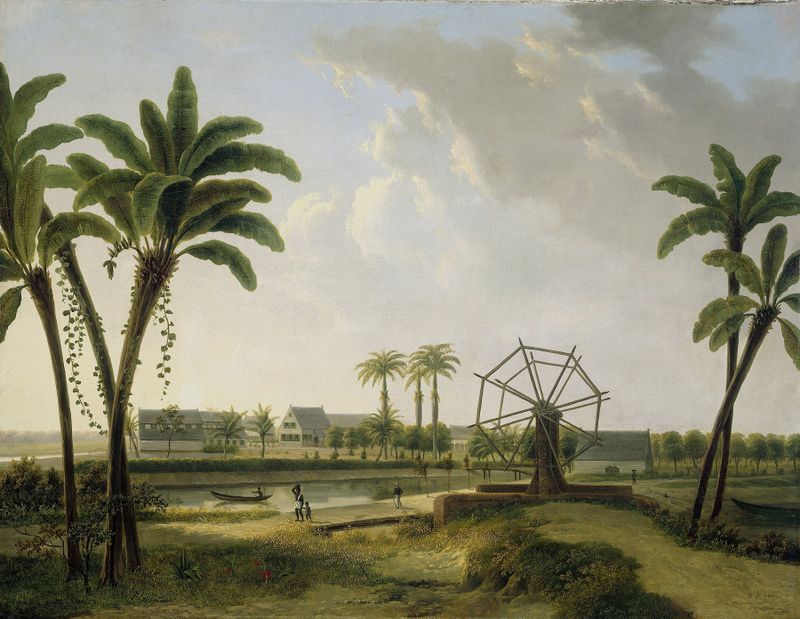
Did the painter know this moment would outlive them? In a world where time erodes the present, the stillness of a coffee plantation whispers of emptiness and echoes of lives untold. Focus on the expansive horizon that stretches across the canvas, where lush green foliage intermingles with earthy browns. The subtle warmth of sunlight washes over the scene, illuminating the intricate details of the coffee plants, each leaf glistening with a fresh dew. Notice how the composition draws the eye into the distance, leading us to the far-off hills, suggesting both abundance and an inevitable solitude. Hidden beneath the serene landscape lies a tension between cultivation and the void it creates.
The meticulously arranged rows of coffee plants symbolize labor and productivity, yet they evoke a sense of barrenness, as if nature is held captive by human ambition. The absence of figures in the scene amplifies the feeling of loneliness, hinting at the stories of those who toiled, their presence felt yet unseen. Willem de Klerk created this piece during the mid-19th century, a period when the coffee trade was booming yet fraught with the complexities of colonial exploitation. Living in Surinam, he painted while grappling with the intersection of beauty and emptiness in a landscape shaped by both nature and human hands.
This work stands as a testament to the duality of progress: the flourishing of crops overshadowed by the silence of those who cultivated them.