View of the Coffee Plantation Marienbosch in Surinam — History & Facts
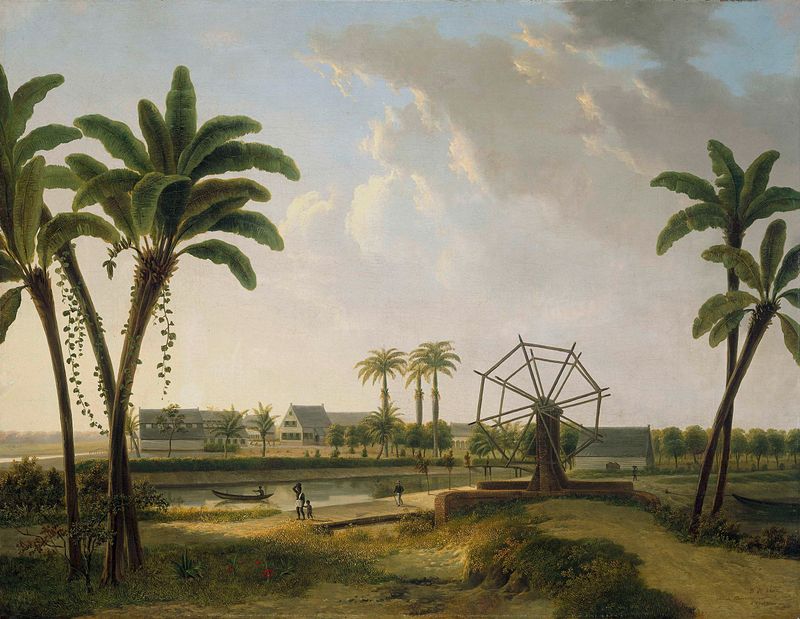
When did color learn to lie? In a world where nature's hues seem to tell the truth, the brush reveals a deeper, more complex narrative of transformation. Focus first on the interplay of light and shadow across the lush greenery, where deep emerald leaves shimmer under a vivid azure sky. The composition invites your gaze across the plantation, leading you through a tapestry of vivid oranges and browns that signify the coffee beans ripening in the sun. Notice how the artist has layered colors with precision, creating an illusion of depth and inviting the viewer to explore the pathways winding through the fertile land. Beyond its visual beauty, this artwork encapsulates the tension between paradise and labor, showcasing the duality of a landscape that nourishes both sustenance and exploitation.
The vibrant palette hints at the richness of the harvest, yet it also masks the darker realities of the plantations and the lives entwined within them. Small details, such as the distant figures working the fields, evoke a sense of the human experience, suggesting stories of both hardship and community. Willem de Klerk painted this scene in the mid-19th century, a time when European interest in exotic locales was growing, paralleled by the increasingly exploitative nature of colonial practices. Living in Surinam, he was surrounded by the coffee industry that defined the region's economy.
His choice to depict this lush landscape reflects both a love for his surroundings and a complex awareness of the social dynamics at play, providing a multifaceted insight into the realities of his time.