
View Of The Grote Kerk In Haarlem — History & Facts
In the stillness of time, a yearning emerges from a captured moment, echoing through the ages. This longing finds its voice in the intricate details of a Dutch landscape, where the past whispers softly, inviting us to step into its serene embrace. Focus your gaze on the towering spire of the Grote Kerk, its elaborate contours rising majestically against the sky. Notice how the light caresses the stonework, illuminating the texture and depth of each brick.
The harmonious blend of muted earth tones and the crispness of the blue sky creates a tranquil backdrop, drawing you closer to the church’s façade. Look closely at the bustling figures in the foreground, lending life to the scene — their movements are harmonious with the stillness of the structure behind them, a silent testament to time’s passage. Yet, amid this picturesque scene lies a tension between the sacred and the mundane. The towering church stands as a beacon of faith and history, while the everyday lives of the townsfolk unfold beneath its watchful gaze.
The juxtaposition of the grand architecture and the small, intimate details of daily life conveys a yearning for connection — between humanity and spirituality, the past and the present. Each brushstroke holds a story, urging us to reflect on our own relationship with the sacred. In 1695, Gerrit Adriaensz. Berckheyde painted this work while living in Haarlem, a city rich in artistic tradition.
The late 17th century saw a flourishing of Dutch painting, characterized by meticulous attention to detail and a deep appreciation for light and composition. Berckheyde, influenced by his contemporaries, sought to capture the essence of his city’s landmarks, creating a legacy that resonates with viewers even today.
More Artworks by Gerrit Adriaensz. Berckheyde
Browse all →
View of the Golden Bend in the Herengracht
Gerrit Adriaensz. Berckheyde
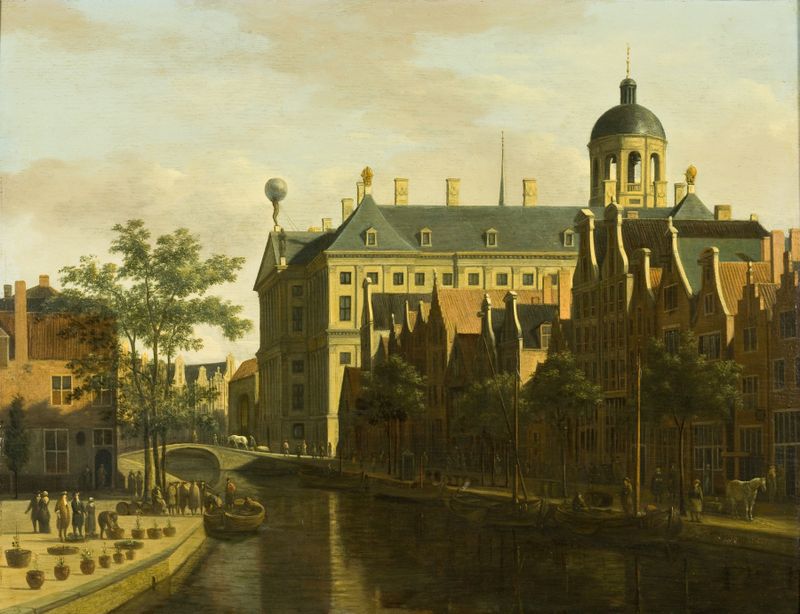
The Nieuwezijds Voorburgwal with the Flower and Tree Market in Amsterdam
Gerrit Adriaensz. Berckheyde
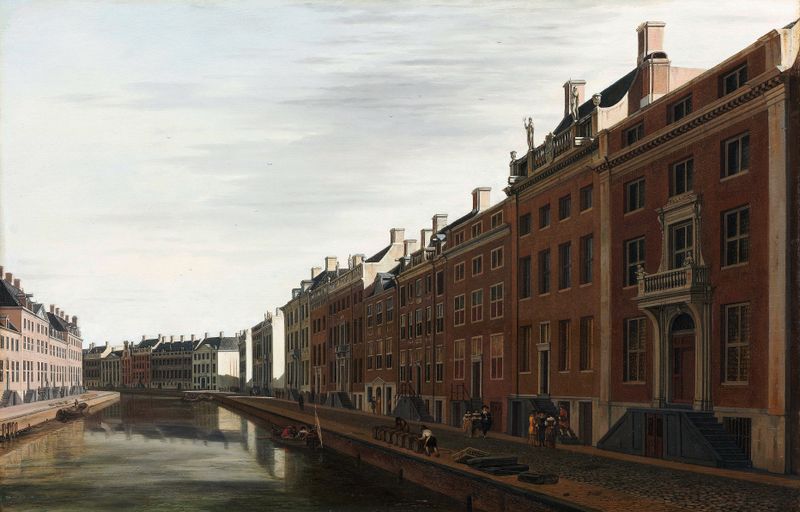
De Gouden Bocht in de Herengracht in Amsterdam vanuit het westen
Gerrit Adriaensz. Berckheyde
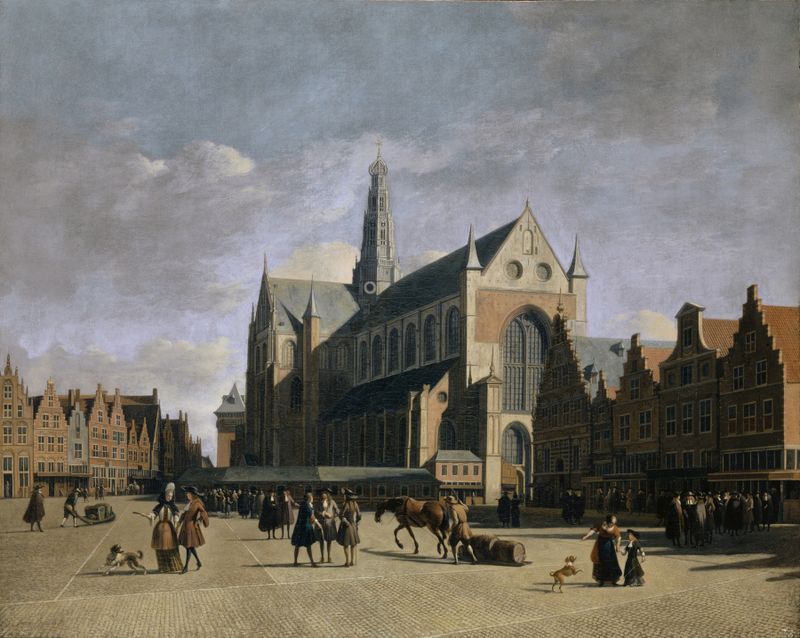
The Market Place in Haarlem
Gerrit Adriaensz. Berckheyde
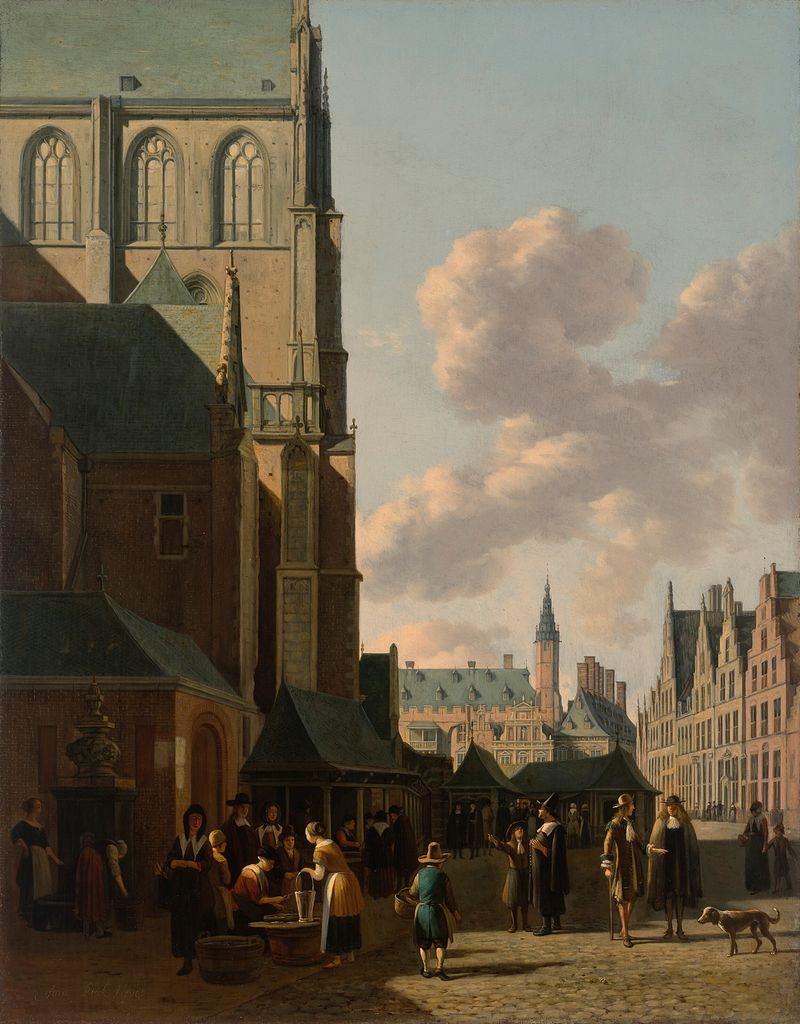
The Grote Markt, Haarlem, looking west, with the Grote Kerk (St Bavo’s) and the fish-market, the Town Hall beyond
Gerrit Adriaensz. Berckheyde
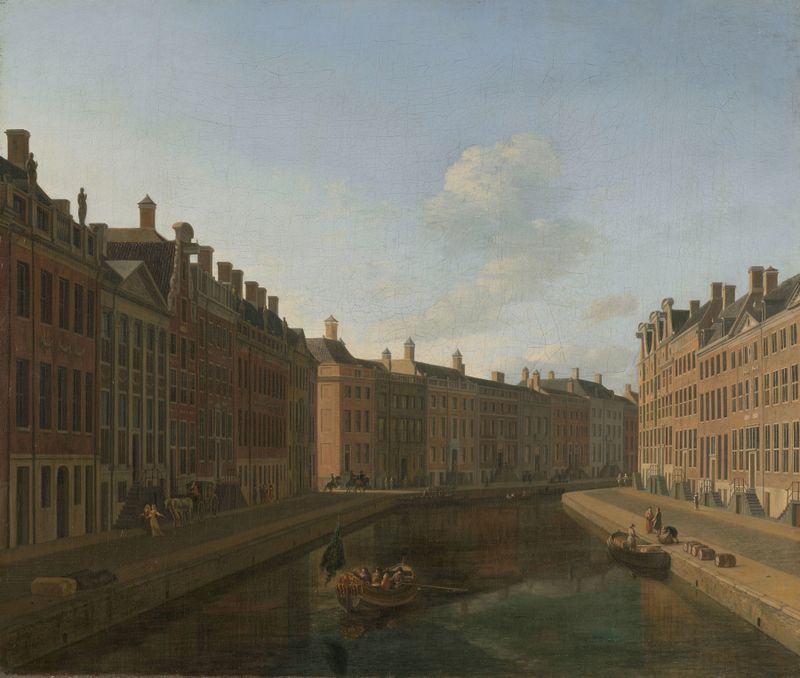
Gezicht op de Gouden Bocht in de Herengracht vanuit het oosten
Gerrit Adriaensz. Berckheyde

The Town Hall on Dam Square, Amsterdam
Gerrit Adriaensz. Berckheyde

The Town Hall in Amsterdam
Gerrit Adriaensz. Berckheyde
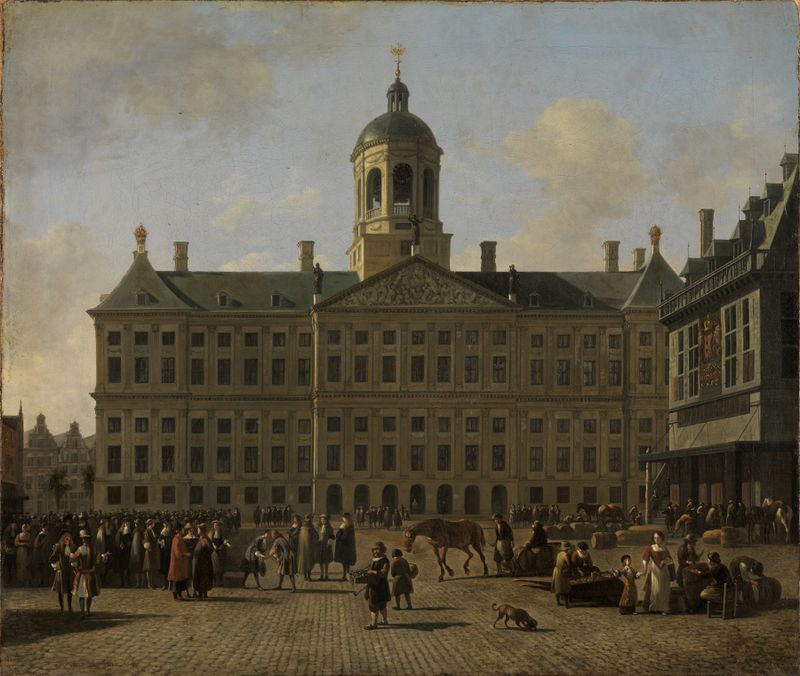
Der Damplatz zu Amsterdam mit dem Rathaus und der Waage
Gerrit Adriaensz. Berckheyde
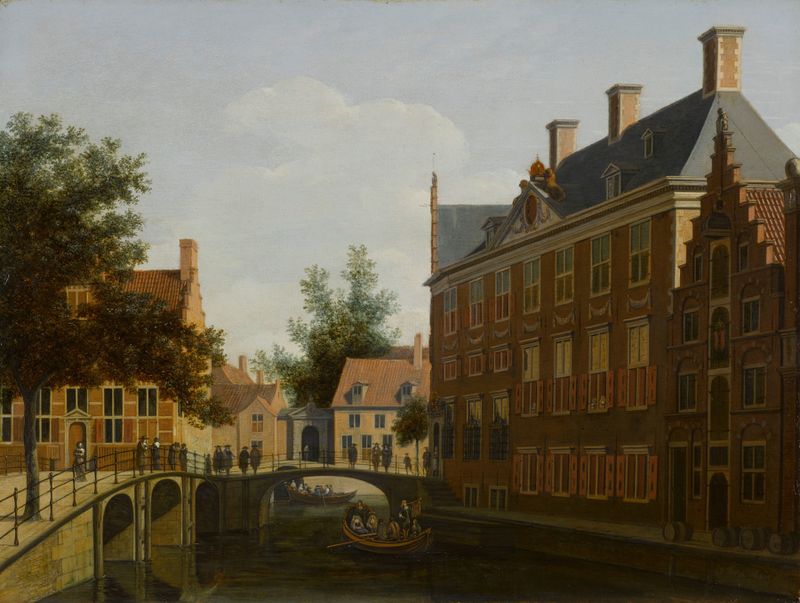
The Oude Zijds Herenlogement (Gentlemen’s Hotel) in Amsterdam
Gerrit Adriaensz. Berckheyde
More Architecture Art
Browse all →
The statue of Liberty
Frédéric Auguste Bartholdi

View of Houses in Delft, Known as ‘The Little Street’
Johannes Vermeer

View of Houses in Delft, Known as ‘The Little Street’
Johannes Vermeer

The Cathedral in Rouen. The portal, Grey Weather
Claude Monet

The yellow house
Vincent van Gogh

The Church in Auvers-sur-Oise, View from the Chevet
Vincent van Gogh