View of the Hudson River from the Catskills — History & Facts
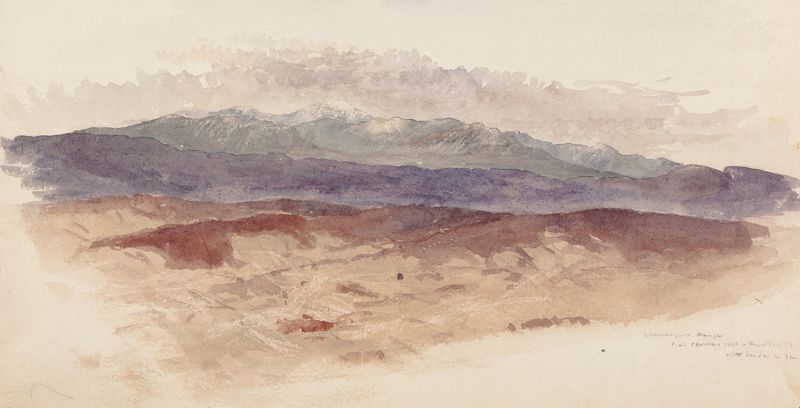
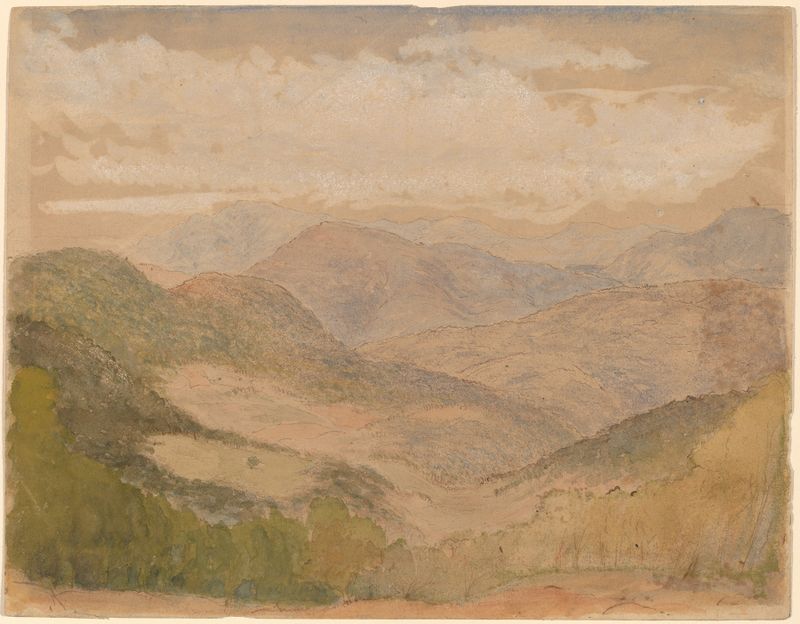
Who listens when art speaks of silence? In the gentle embrace of stillness, chaos lurks just beneath the surface, waiting to be uncovered. Look to the center of the canvas where the Hudson River sprawls, a meandering ribbon of life reflecting the subtle hues of twilight. The soft pinks and deep blues of the sky merge seamlessly with the water, creating a harmony that draws the eye effortlessly. Notice how the artist employs layered brushstrokes, depicting both the tranquil foreground of trees and the distant mountains, their rugged edges softened by atmospheric perspective.
This delicate balance of color and form invites the viewer to journey into the depths of nature's serenity. Yet, beneath this tranquil exterior lies an undercurrent of tension. The tranquil waters, while visually calming, are a reminder of the inevitable change and chaos that the natural world embodies. The mountains stand stoic, guardians to the river, but the clouds overhead hint at a brewing storm, symbolizing the unpredictability of life itself.
Each element — from the serene water to the looming mountains — intertwines to create a dialogue about the fragile balance between peace and tumult. In the 1870s, the artist was active in a period where American landscape painting was gaining prominence as a reflection of national identity. As Stanford White painted this work, he navigated the dynamic art scene shaped by the Hudson River School, emphasizing the beauty and complexity of the American wilderness. It was a time of exploration and discovery, where the tension between civilization and nature became a crucial theme, both for the artist and the country.