
View of the Via Appia — History & Facts
In the stillness of this moment, our eyes are drawn toward the pathways of time, where destiny flows like a gentle stream through the ages. Look to the right at the sun-drenched arches that line the ancient road, each stone imbued with whispers of history. Notice how the warm light bathes the landscape, illuminating the vibrant greens of the surrounding hills while casting deep, contemplative shadows. The composition, balanced yet dynamic, invites us into a dialogue with the past, as if we are standing on the Via Appia ourselves, feeling the pulse of centuries beneath our feet. Amidst the serene beauty lies a tension between the grandeur of nature and the weight of human history.
The winding road symbolizes life’s journey, suggesting that every step taken is laden with fate, while the distant horizon hints at the unknown futures that lie ahead. There’s a quiet melancholy here, as if the landscape knows the stories of those who have traversed it, reflecting the inevitability of time and the choices that shape our destinies. Robert Alott painted this piece in 1901, amidst a period of burgeoning interest in classical themes and a renewed appreciation for the beauty of ancient ruins. The artist, captivated by the historical significance of the Via Appia, was exploring the intersection of nostalgia and the modern world.
This artwork emerged during a time when artists were increasingly drawn to landscapes that spoke of timeless truths, seeking to evoke a profound sense of connection to the passage of time.
More Artworks by Robert Alott
Browse all →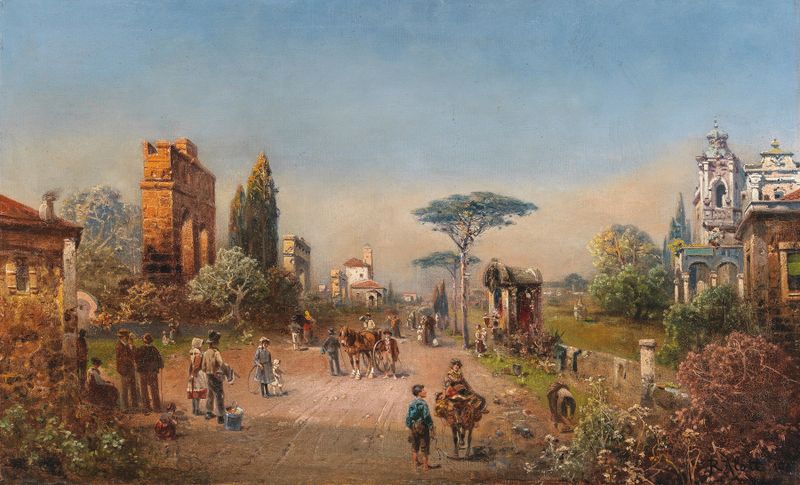
A View of the Via Appia
Robert Alott

Fisherfolk on the Neapolitan coast
Robert Alott

Südliches Capriccio
Robert Alott
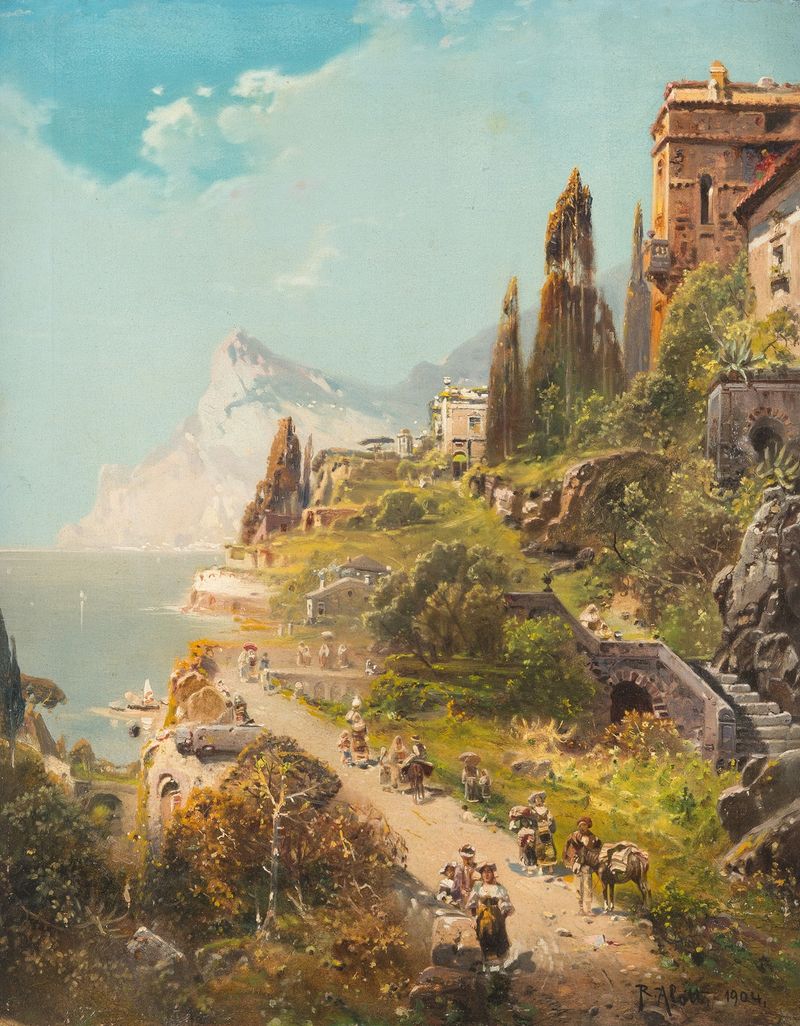
Riviera di Levante
Robert Alott
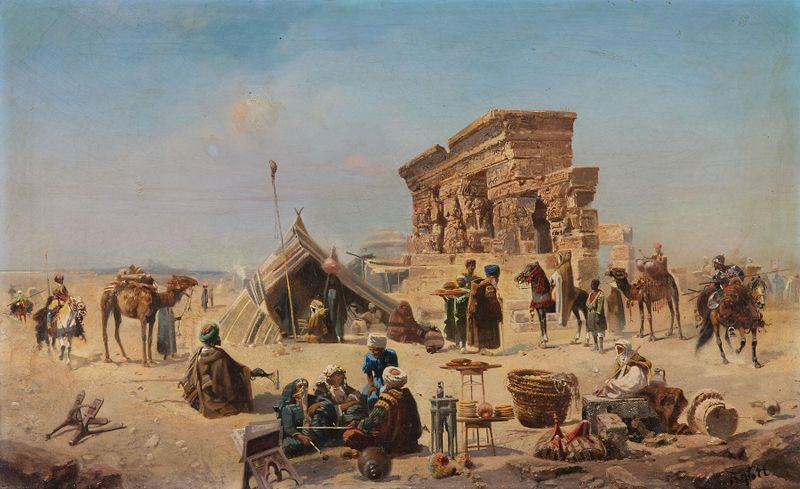
Orientalische Szene
Robert Alott

Süditalienische Szene
Robert Alott

Fischer an einer süditalienischen Küstenlandschaft
Robert Alott
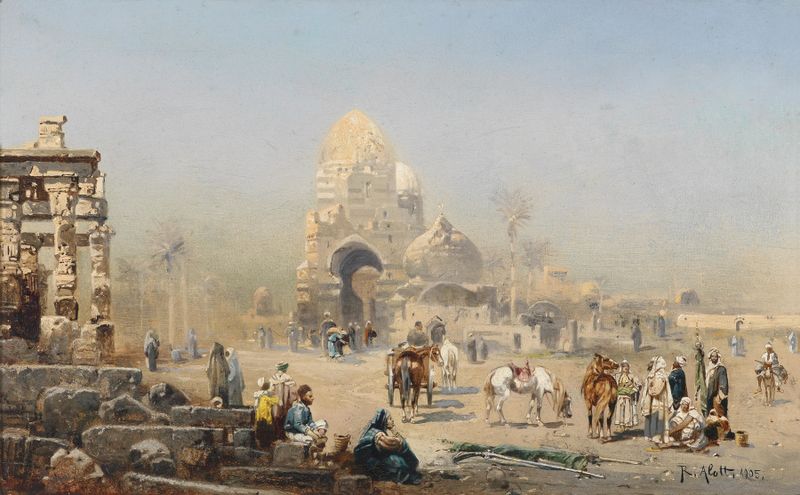
Orientalische Straßenszene
Robert Alott
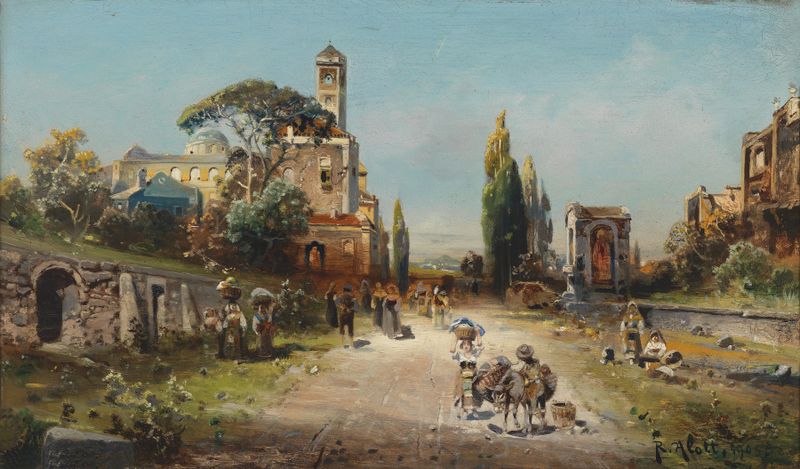
Via Appia
Robert Alott
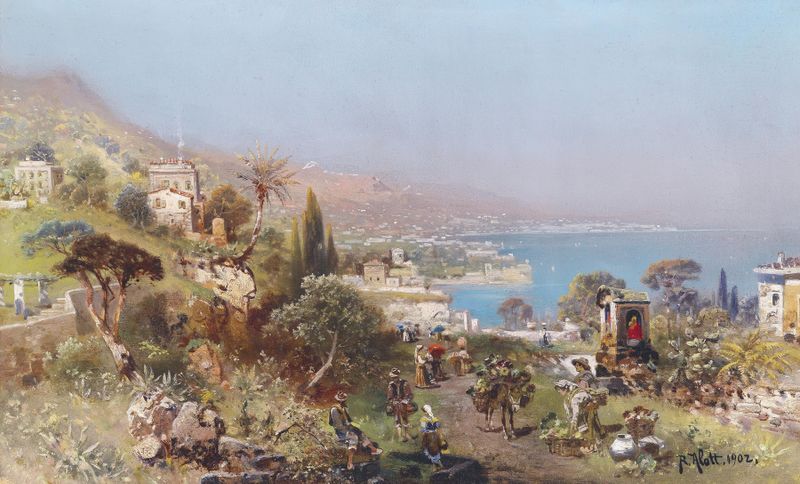
Reges Treiben in einer südlichen Hafenstadt
Robert Alott





