
A View of the Via Appia — History & Facts
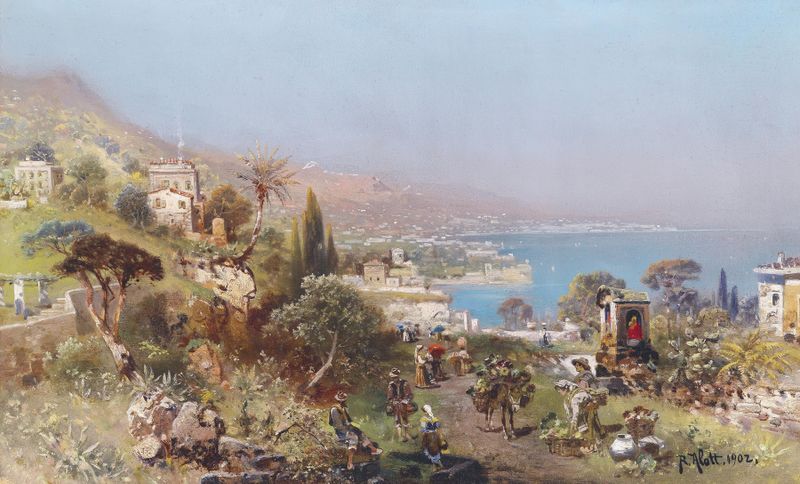
What if silence could speak through light? The whispers of time linger in the air, echoing the stories of past lives etched into the stones of the Via Appia. Look to the left, where a gentle play of light reveals the ancient road, its weathered stones glistening softly in the fading sunlight. The composition draws the eye along the receding path, beckoning the viewer to traverse the decay that has transformed this once-thriving route into a serene testament of history. The muted earth tones—ochres and russets—contrast with the vibrant greens of the overgrown vegetation, symbolizing nature's slow reclamation of what humanity has left behind. Beneath the serene surface lies a poignant tension—the juxtaposition of beauty and decay.
The dilapidated columns stand sentinel, embodying both the grandeur of a forgotten civilization and the inevitability of time's passage. Small details, like the cracks in the stone and the wildflowers pushing through, reveal a resilient spirit amidst ruin, inviting viewers to reflect on their own journeys through life and legacy. Robert Alott painted this work during a period that is not precisely documented, yet it speaks to the profound influence of 19th-century Romanticism and the fascination with ruins that characterized the era. Immersed in the artistic spirit of his contemporaries, Alott captured the Via Appia, a symbol of history, in a moment where nature and time converge, inviting contemplation on the transience of human endeavor.
More Artworks by Robert Alott
Browse all →
View of the Via Appia
Robert Alott

Fisherfolk on the Neapolitan coast
Robert Alott

Südliches Capriccio
Robert Alott
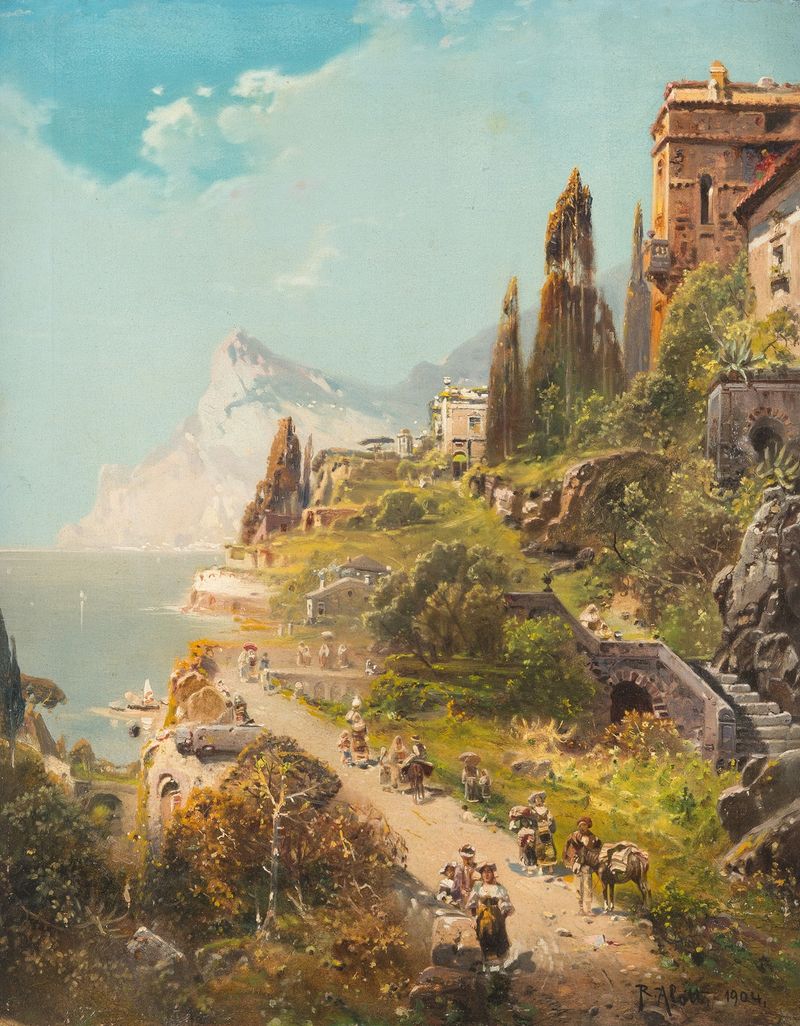
Riviera di Levante
Robert Alott
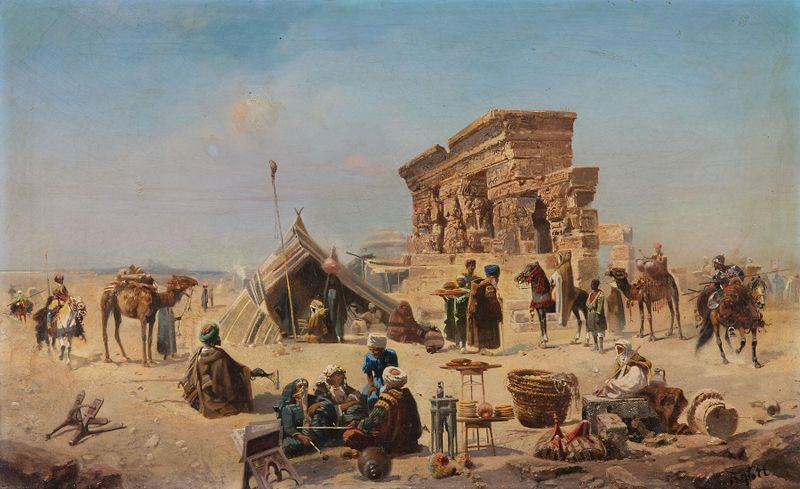
Orientalische Szene
Robert Alott

Süditalienische Szene
Robert Alott

Fischer an einer süditalienischen Küstenlandschaft
Robert Alott
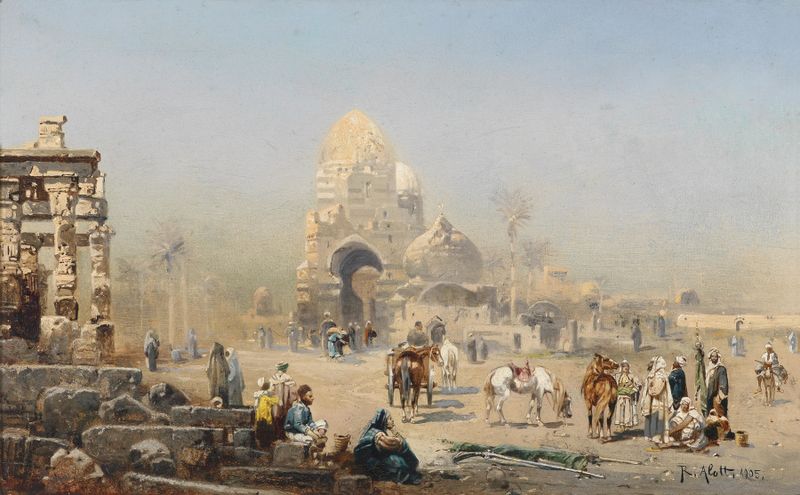
Orientalische Straßenszene
Robert Alott
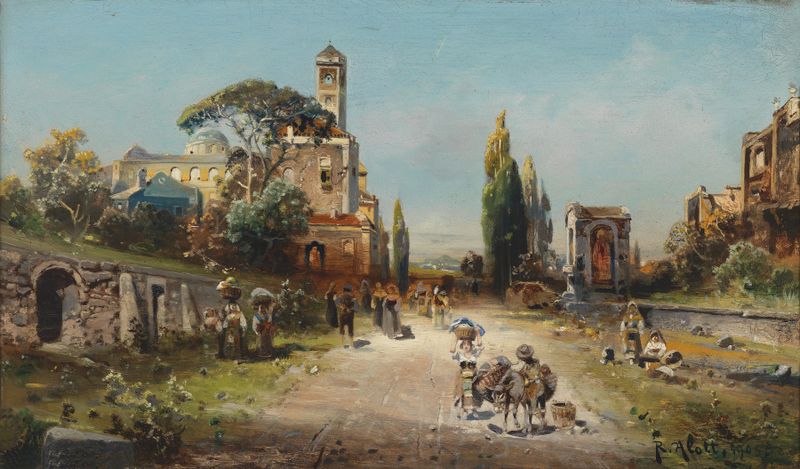
Via Appia
Robert Alott
Reges Treiben in einer südlichen Hafenstadt
Robert Alott





