View on the Thames at Batersea — History & Facts
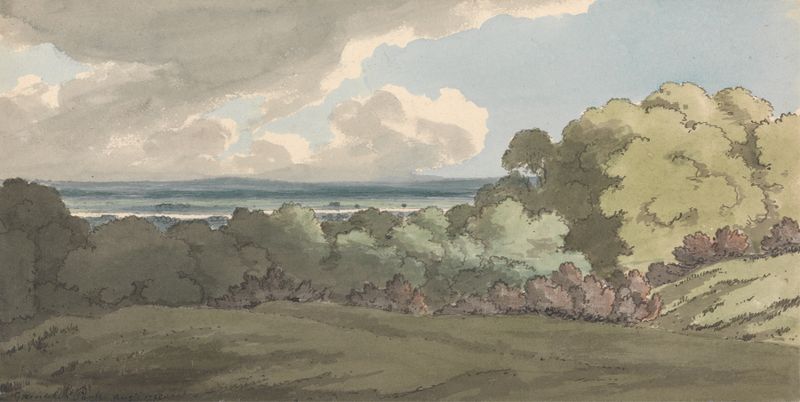
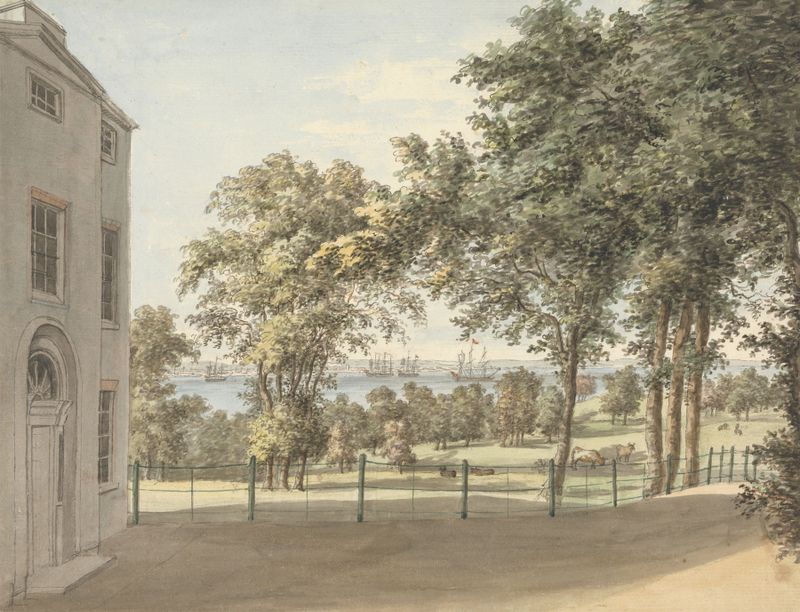
Where does light end, and longing begin? This question lingers in the air like the mist over the Thames, a bridge between the seen and the unseen, grounding us in the beauty of ephemeral moments. Look to the horizon where the river meets the sky, a gentle gradient of blues and soft grays that seem to pulse with a life of their own. The surface of the water reflects the scattered clouds above, each ripple a whisper of longing, drawing the viewer into a contemplative silence. Notice how the silhouettes of the distant boats are softened by the haze, suggesting both presence and absence, while the foreground hints at lush greenery, vibrant yet restrained, inviting exploration. The painting captures a tension between tranquility and yearning.
The muted palette echoes the somber tone of nostalgia, evoking memories of what once was or what could be. Each brushstroke seems to hold a breath, a moment suspended in time. The play of light and shadow creates a dialogue between the natural world and human emotion, reminding us that longing often resides in the spaces between reality and desire. Sherlock painted this scene during an undefined period, likely amidst the transitions of the early 20th century, a time ripe with change in the world of art and society.
His work reflects the growing fascination with the Impressionist movement, emphasizing atmosphere and mood over precise detail. While specifics about his life remain elusive, it’s clear that his engagement with the landscapes of his time captured both the beauty and the melancholy inherent in the human experience.