Villa italienne — History & Facts
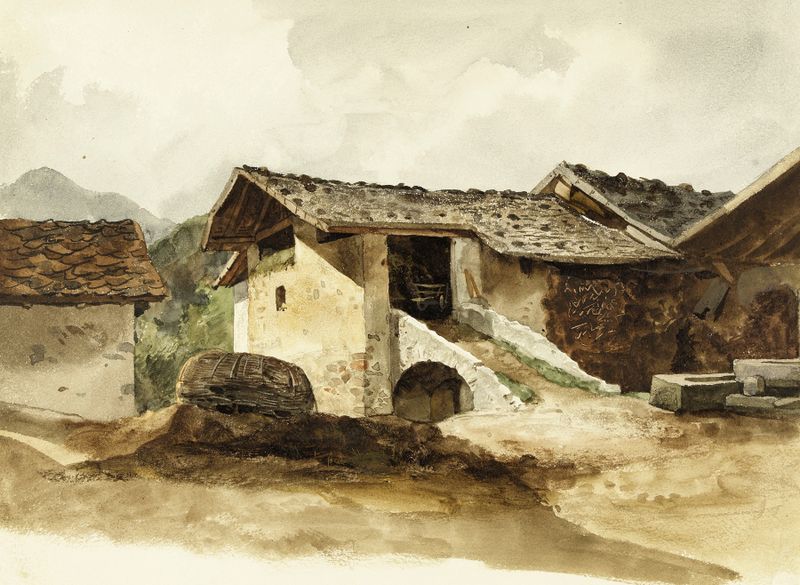
Did the painter know this moment would outlive them? In the gentle embrace of soft light and shadow, Villa italienne beckons us into a realm where time stands still, capturing the elusive dance of memory and stillness. Look to the left at the archway, where it frames a glimpse of the garden beyond, contrasting the delicate strokes of green foliage with a warm palette of ochres and terracottas. The sunlight plays upon the villa’s façade, illuminating textures that breathe life into the structure, while shadows pool in the nooks and crannies, hinting at stories untold. Notice how the composition draws your eye inward, creating a sense of intimacy with the scene, as if inviting you to step through the arch and into a sun-drenched afternoon. Yet, beneath this idyllic exterior lies a tension between permanence and transience.
The soft shadows cast by the villa suggest the passage of time, whispering of days spent in languid leisure, yet the firm architectural lines assert a stubborn endurance against the fading light. The harmony of nature and man-made beauty reflects a deeper commentary on the fragility of existence, evoking a bittersweet nostalgia for moments that might slip away unnoticed, yet remain indelibly marked by warmth and light. René Marjolin painted Villa italienne during a period rich with exploration of light and form in early 20th-century France. Although the exact date of this work is unknown, Marjolin was surrounded by a wave of artistic innovation, influenced by the Impressionists and their focus on capturing fleeting moments.
His time spent in the South of France provided not just inspiration but also a canvas for experimentation with color and shadow, a hallmark of his style and a reflection of his life experiences in a changing world.