Vue d’une ferme — History & Facts
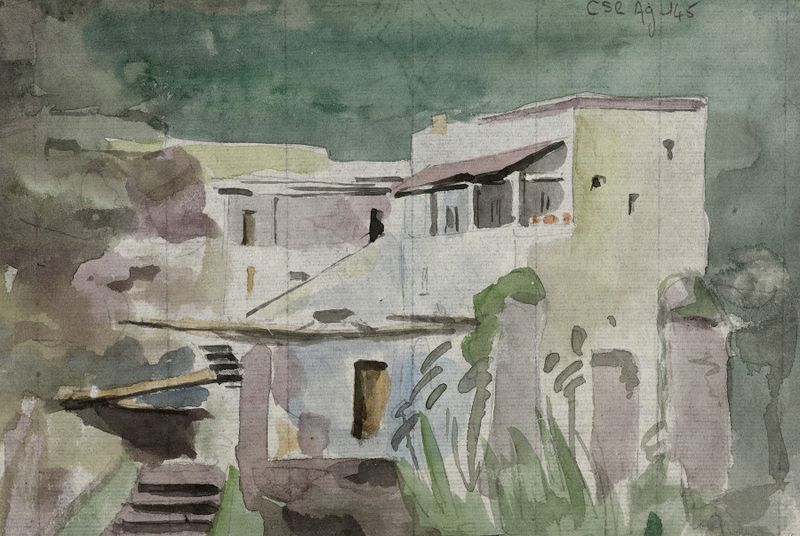
Can paint confess what words never could? In Vue d’une ferme, the canvas breathes a deep longing, echoing the unspoken stories of rural life, where the heart yearns for connection to the land. Look to the center, where the farmhouse stands resolutely amidst swathes of golden fields. The warm ochres and muted greens envelop the scene, bathing it in a nostalgic glow. Notice how the horizon blurs with the gentle strokes of the sky, suggesting a world just out of reach—timeless yet fleeting.
The composition draws the eye toward the inviting door, as though beckoning the viewer to step inside the rural narrative. Beneath the surface, the painting reveals contrasts between solitude and community. The farmhouse, a silent guardian of experiences, stands alone yet surrounded by nature’s embrace. The interplay between the vibrant colors of the fields and the earthy tones of the structure evokes a complex relationship between man and nature—a longing for harmony amidst the isolation of rural existence.
This contrast whispers of stories untold, of lives woven into the very fabric of the landscape. René Marjolin created this work in the early 20th century, a period marked by significant shifts in French society and artistic expression. Living in a time of rapid urbanization, Marjolin sought refuge in the pastoral scenes of his homeland. His connection to the countryside was not just a retreat from modernity, but a celebration of a simpler, more profound existence, reflecting the collective nostalgia of an era caught between tradition and change.