Village Coast — History & Facts
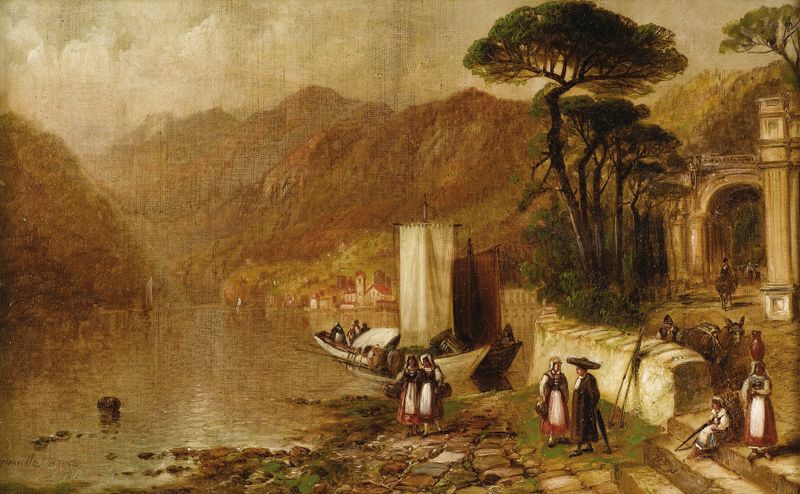
What secret hides in the quiet of the canvas? In the stillness of Village Coast, an unsettling beauty lingers, whispering of memories lost to time. Look to the left at the worn wooden boats, their textures almost tangible, weathered by years of relentless tides. The muted palette of browns, greys, and greens evokes a haunting stillness, while a gentle light bathes the scene, casting long shadows that hint at a forgotten story. Notice how the horizon blurs, merging sea and sky into a soft, melancholic embrace, guiding your gaze toward the distant coast where decay and nature intertwine. The subtle contrasts in this work are profound.
A lush, verdant foreground is met with a crumbling pier, embodying the tension between life and decay. The tranquility of the landscape belies a deeper underlying sorrow; the boats seem abandoned, perhaps symbols of human endeavor that has succumbed to the passage of time. This interplay of vitality and ruin invites contemplation on the cycles of life, the impermanence that defines both nature and human existence. Granville Perkins painted Village Coast during a transformative period in American art between 1875 and 1900.
Emerging from the shadow of the Hudson River School, he sought to capture the essence of landscape with a focus on realism and emotional resonance. The late 19th century saw a growing interest in local themes and narratives, reflecting a shift in artistic consciousness as artists began to explore the subtleties of their environments in a rapidly changing world.