Village homestead — History & Facts
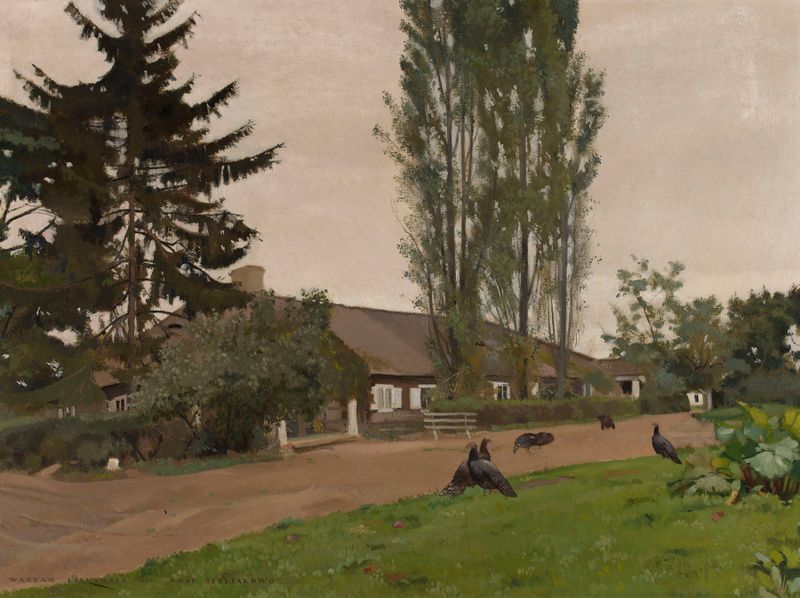
What secret hides in the quiet of the canvas? The stillness of Village Homestead invites you to linger, revealing layers of life beneath its surface. Look to the center where the homestead stands resolute against a backdrop of lush greenery. The earthy tones of the building, with its muted reds and browns, blend harmoniously with the verdant foliage, creating a sense of belonging. Notice how the light gently caresses the thatched roof, casting soft shadows that stretch across the ground, suggesting a time caught just before dusk.
The artist’s brushstrokes breathe texture into the scene, inviting you to feel the warmth of the sun-soaked earth beneath your feet. Yet, amidst the tranquil facade lies an emotional tension. The contrast between the home and the encroaching wilderness hints at a delicate balance between civilization and nature. There’s a whisper of nostalgia in the way the homestead is framed; it stands as a solitary monument, perhaps reflecting the resilience of rural life in an ever-changing world.
The sparse surroundings evoke a sense of isolation, yet the vibrant life of the homestead pulsates with untold stories of its inhabitants. In 1934, Wacław Bielawski painted this piece during a time when Poland faced economic challenges and social changes. Living in the post-war atmosphere, his focus on the countryside and its simple beauty connects to a larger movement in art, where artists sought solace in rural themes amidst the chaos of modernity. This painting stands as a testament to resilience, capturing a moment of peace in a world on the brink of transformation.