Manor house in Šeštokai — History & Facts
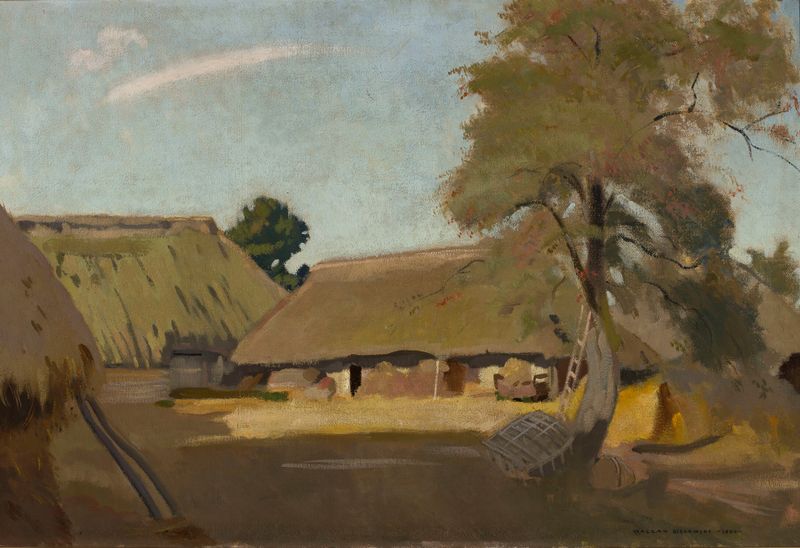
Can beauty exist without sorrow? In the quietude of Manor house in Šeštokai, the dreamlike essence of a bygone era unfolds, inviting contemplation of joy interlaced with melancholy. Look to the center, where the grand manor stands, its elegant façade bathed in soft sunlight that reflects a history more complex than its serene exterior suggests. Notice the juxtaposition of vibrant greens surrounding the structure, each brushstroke rich with life yet tinged with an inescapable stillness. The delicate interplay of light and shadow creates a sense of depth, drawing the eye into the painting’s tranquil heart, while the crisp blue sky looms overhead, suggesting both freedom and the weight of the past. Within this pastoral scene lies a narrative of contrasts—the sturdy manor, a symbol of aspiration and legacy, suggests human endeavor, while the enveloping landscape speaks to nature's timeless dominion.
The soft curves of the rolling hills cradle the building like a protective embrace, yet they also evoke a quiet foreboding; the beauty of the scenery holds the fleeting nature of happiness. Each blade of grass whispers of dreams fulfilled and lost, reminding us that even the most idyllic settings carry the weight of unspoken stories. In 1934, Wacław Bielawski painted this work in a Poland grappling with its identity between tradition and modernity. Straddling the line between realism and impressionism, his art reflected a deep understanding of the emotional landscape of his time.
As the world around him shifted, he sought solace in the beauty of the familiar, capturing moments that straddled both the ethereal and the tangible.