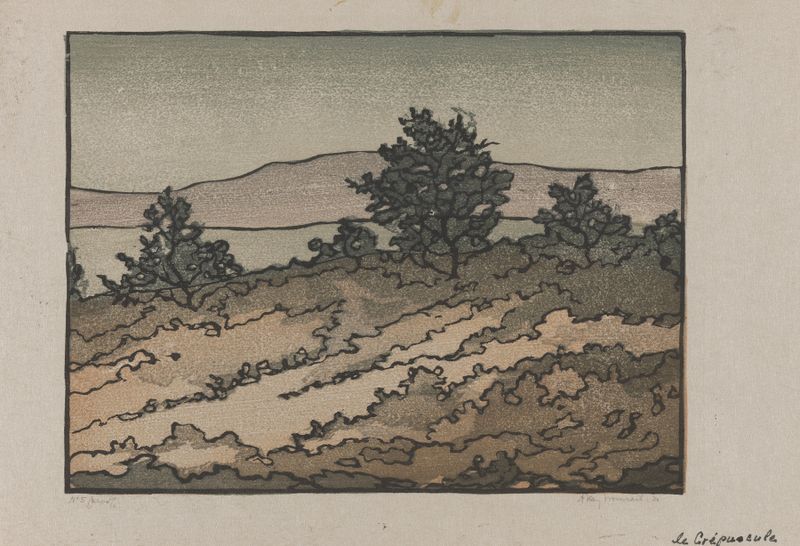
Village Lane at Night — History & Facts
In the delicate interplay of light and shadow, Village Lane at Night embodies a harmonious balance that invites reflection and stillness. Focus on the gentle glow emanating from the lamppost, casting soft halos along the cobblestone path. Notice how the muted blues and purples of the twilight sky envelop the village, while the warm yellow hues of the light create a contrast that draws the eye. The composition leads you down the lane, where the buildings stand in quiet solidarity, their windows offering glimpses into lives and stories untouched by the night’s embrace. As you explore further, consider the tension between solitude and community.
The empty lane suggests a moment of pause — perhaps a breath before dawn breaks. Shadows whisper secrets, suggesting the unseen lives that linger just beyond the frame. This subtle contrast between light and dark reflects the balance of existence, where moments of solitude are cradled within a broader tapestry of connections. Andrew Kay Womrath created Village Lane at Night circa 1920, during a time when the post-war art world was exploring new depths of emotion and representation.
Painting in England, Womrath was influenced by the emerging modernist movements, yet he retained a commitment to capturing intimate, everyday scenes. This piece is emblematic of his ability to blend the lyrical with the ordinary, creating a tranquil yet profound commentary on life.