Village on the Bank of a River — History & Facts
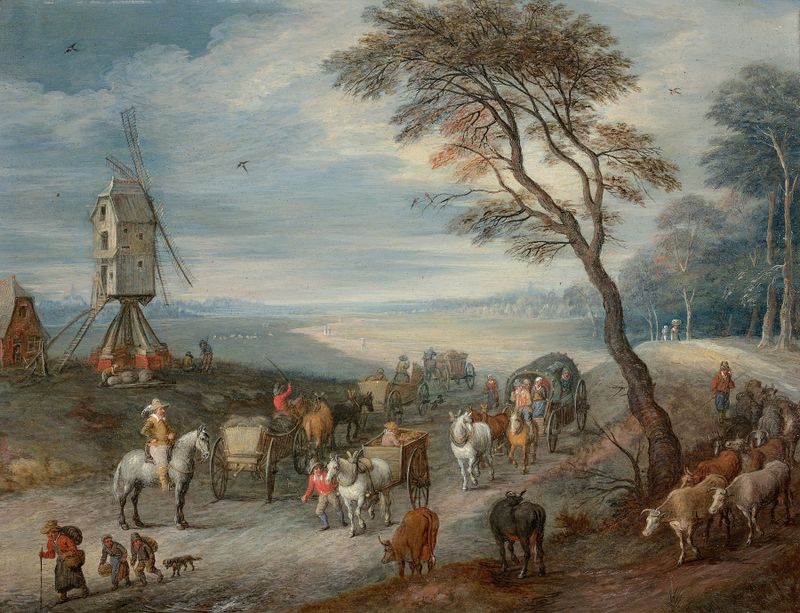
What secret hides in the quiet of the canvas? Beneath the surface of tranquility lies a world marked by the passage of time, hinting at decay and renewal entwined in an eternal dance. Look to the left at the gentle curve of the river, where the water reflects a soft, muted palette of greens and browns. The houses, nestled against the bank, are painted with a delicate touch, their rustic facades seemingly crumbling yet imbued with a sense of belonging. Notice how the light dappled on the foliage creates an interplay of shadow and warmth, inviting your gaze deeper into the scene.
The composition draws the eye along the water’s edge, revealing the contrast between the vibrancy of life and the inevitable wear of ages. Within this landscape, the juxtaposition of nature and human presence speaks volumes. The fading rooftops signify a community steeped in history, while the lush greenery suggests a life force that persists despite the ravages of time. The serene river, a silent witness to this passage, mirrors the cycle of decay and regeneration, an eternal reminder that beauty often resides in imperfection.
Each element contributes to an underlying tension: the fragility of existence set against the steadfast continuity of nature. Joseph van Bredael painted this scene in 1723, during a period when he was deeply engaged with the Flemish landscape tradition. Living in Antwerp, he was influenced by the Baroque movement, which sought to capture both the grandeur and subtleties of nature. The world of art was evolving, with an increasing focus on realism and the everyday lives of people, which is echoed in the careful details of this work, offering a window into the artist's reflection on a changing world.