Le départ pour le marché, près d’un moulin — History & Facts
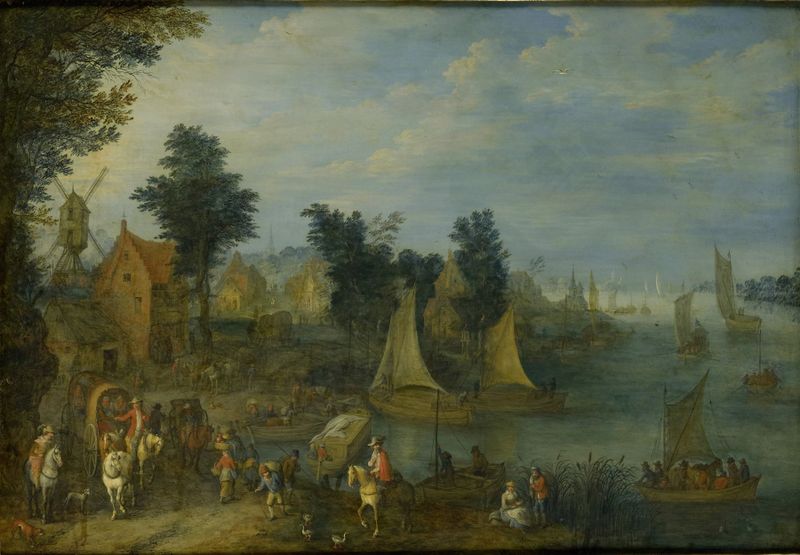
Nostalgia clings to the air in a moment captured, where the past whispers through colors, inviting us to explore the echoes of a simpler time. Focus first on the vibrant palette, where shades of green and gold swirl together like a gentle breeze through the trees. The sun spills its warmth across the scene, casting soft shadows that dance beneath the elegant windmill. Notice how the figures, a blend of peasants and merchants, gather in animated conversation, their gestures conveying a shared anticipation of the day ahead.
The artist’s delicate brushwork brings forth the texture of fabric and the gleam of metal, creating a sensory tapestry that draws the viewer in. Yet beneath this idyllic surface lies a tension between the hustle of daily life and the serene landscape. The contrasting elements of human activity and pastoral tranquility symbolize the intersection of progress and tradition. Each figure’s expression seems to hold stories of their own, hinting at dreams and desires that extend beyond the canvas, while the windmill stands as a steadfast reminder of the passage of time and the cycles of life. Joseph van Bredael created this work in the early 18th century, a period rich with the emergence of the Flemish Baroque tradition.
Living in the flourishing art community of Antwerp, he was influenced by his contemporaries and the changing dynamics of society, where commerce and culture began to intertwine more intimately. This piece reflects the artist's mastery in capturing daily life, while also echoing the broader shifts that were reshaping the world around him.