Ville au moulin près du canal en hiver — History & Facts
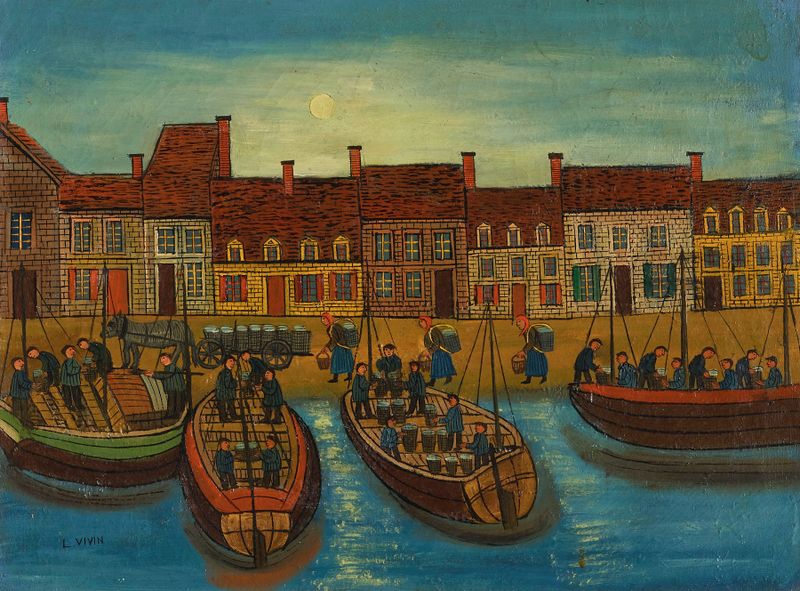
When did color learn to lie? In a world rife with ambiguity, art dares to bridge truth and illusion, revealing the divine in the mundane. Look to the left, where deep blues and soft whites harmonize to suggest a serene winter evening. The gentle strokes create a shimmering canal, reflecting the skeletal trees and the distant mill, inviting the viewer to linger in this tranquil winter landscape. Notice how the light seems to dance across the water’s surface, casting a spell that blurs the lines between reality and dream.
Vivin’s palette, rich with icy hues, captures the essence of winter’s quiet beauty while hinting at a deeper emotional resonance. Upon closer inspection, one discerns the interplay between solitude and community; the empty path invites contemplation, while the presence of the mill signifies industriousness, bridging the gap between nature's stillness and human endeavor. The skeletal branches seem to reach for something beyond the horizon, suggesting longing or the search for divine connection in a world governed by seasons. The painting becomes a dialogue between what is seen and what is felt, evoking a sense of quiet reverence. This artwork emerged during a pivotal time in the artist's life, when he was developing his unique style influenced by post-impressionism.
Created in the early 20th century, Vivin was navigating the changing landscape of art, moving towards a more expressive use of color and form. The world was rapidly evolving, and he sought to capture not only the physicality of his subjects but also their emotional and spiritual essence, reflecting the broader artistic movements of his era.