Nuit de pleine lune — History & Facts
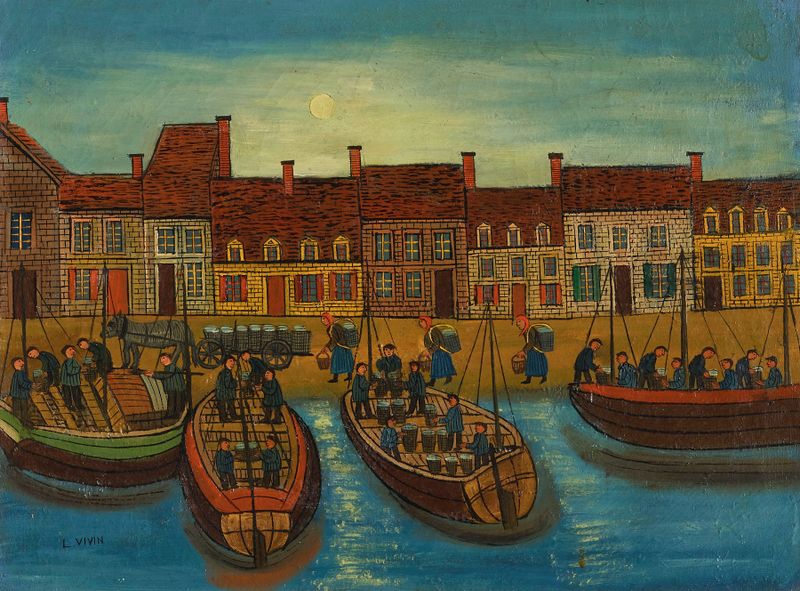
In the world of art, light serves as both guide and guardian, revealing the hidden depths of our emotions and experiences. Look to the canvas where vivid hues of deep blues and soft whites swirl together, echoing the enchanting essence of a moonlit night. The luminous orb shines down from above, casting an ethereal glow that dances across the tranquil landscape, revealing the silhouettes of trees and the gentle ripples on a placid body of water. Notice how the artist employs brushstrokes to create a rhythmic harmony, blending colors that breathe life into the scene while shaping the very atmosphere around it. Delve deeper into the painting’s emotional core, where contrasts lie between the vibrancy of the moonlight and the shadowy recesses of the surrounding environment.
The celestial body symbolizes hope and clarity, while the darkened landscape evokes a sense of stillness and introspection. This interplay between light and shadow invites viewers to reflect on their own inner worlds, suggesting that in moments of silence, one often finds profound truths. In the late 19th century, Louis Vivin produced Nuit de pleine lune during a time when Impressionism was reshaping the artistic landscape. Living in Paris, an epicenter of innovation, he sought to convey the beauty of a fleeting moment, capturing the magic of illumination against night’s mystery.
The artist, drawing from his surroundings, embraced color and light to explore emotional landscapes, often reflecting his own search for meaning in a rapidly evolving world.