
Voile blanche, voile rouge en Bretagne — History & Facts
When did color learn to lie? This question echoes through the mesmerizing interplay of hues, inviting reflection on the ecstasy captured within the canvas. Here, the artist unveils a world beyond mere representation, where the vibrant embrace of colors transforms perception and emotion. Focus first on the bold juxtaposition of the white and red sails, fluttering against the deep blue expanse of the ocean. The sailboats, bursting with life, seem to dance upon the water’s surface, each stroke brimming with energy.
Notice how the sunlight plays across the waves, infusing the scene with a radiant glow that captures the moment’s ephemeral beauty. The artist’s palette, rich and diverse, creates a symphony of color, as if each hue were a note in a larger melodic composition. Delve deeper, and you’ll find a subtle tension beneath the surface. The vibrant red and the serene white not only represent the contrast between passion and tranquility but also evoke the duality of nature itself—chaotic yet harmonious.
As the viewer’s gaze wanders, the undulating movement of the water reflects life's ever-changing rhythm, while the distant coastline suggests a sanctuary, a longing for connection and peace. Each element is meticulously woven together, revealing layers of meaning that speak to the heart. Henry Moret painted this work around 1910 while living in Brittany, a region that profoundly influenced his artistic evolution. During this period, he became immersed in the vibrant Impressionist movement, drawing inspiration from the surrounding landscapes and local culture.
His exploration of color and form reflected not only his personal journey but also the larger shift in the art world towards greater emotional expression and abstraction.
More Artworks by Henry Moret
Browse all →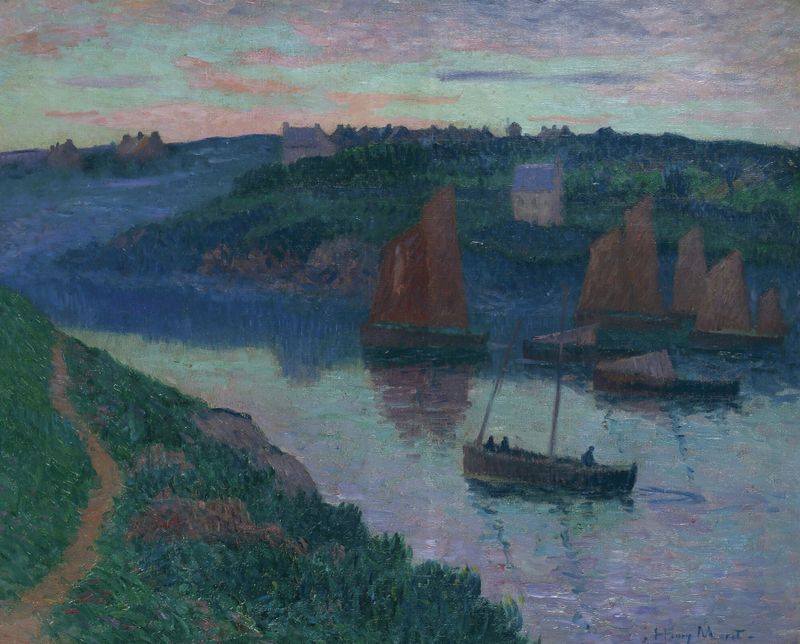
Bateaux De Pêche En Bretagne
Henry Moret
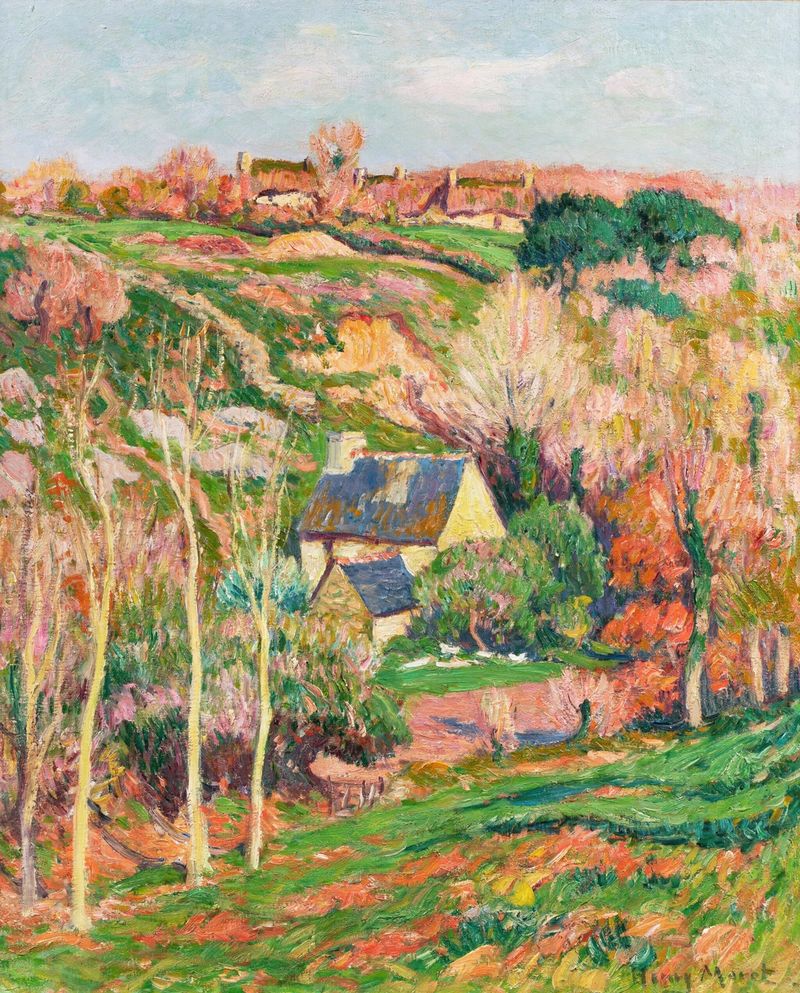
Fermes en Bretagne
Henry Moret
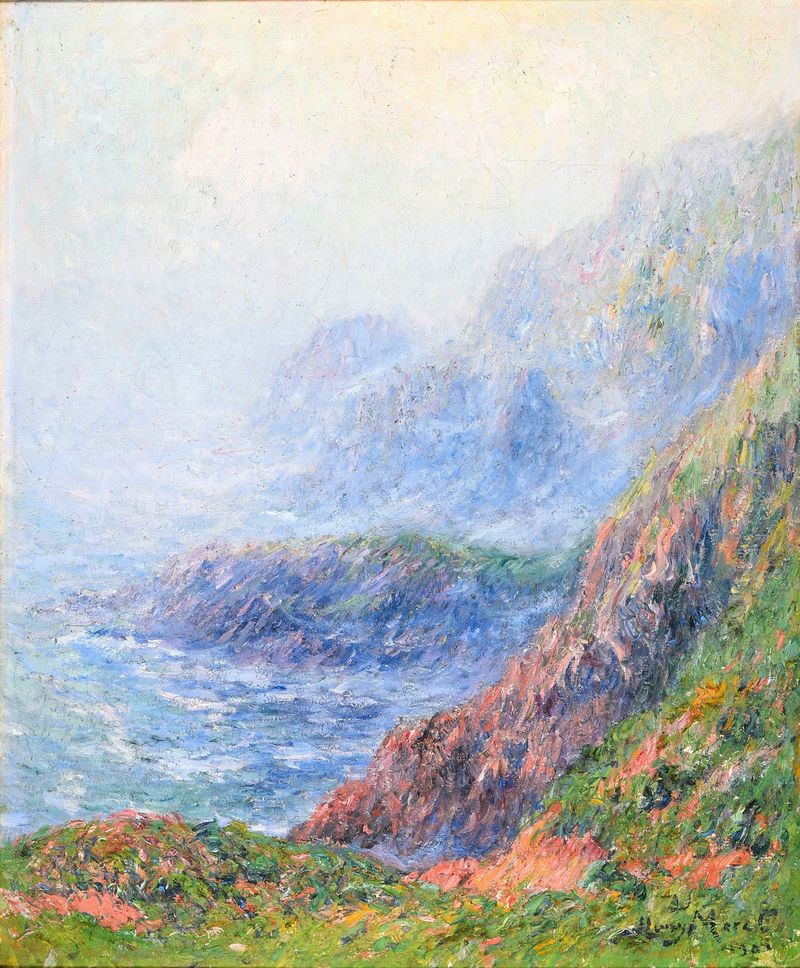
Matinée brumeuse à Ouessant
Henry Moret
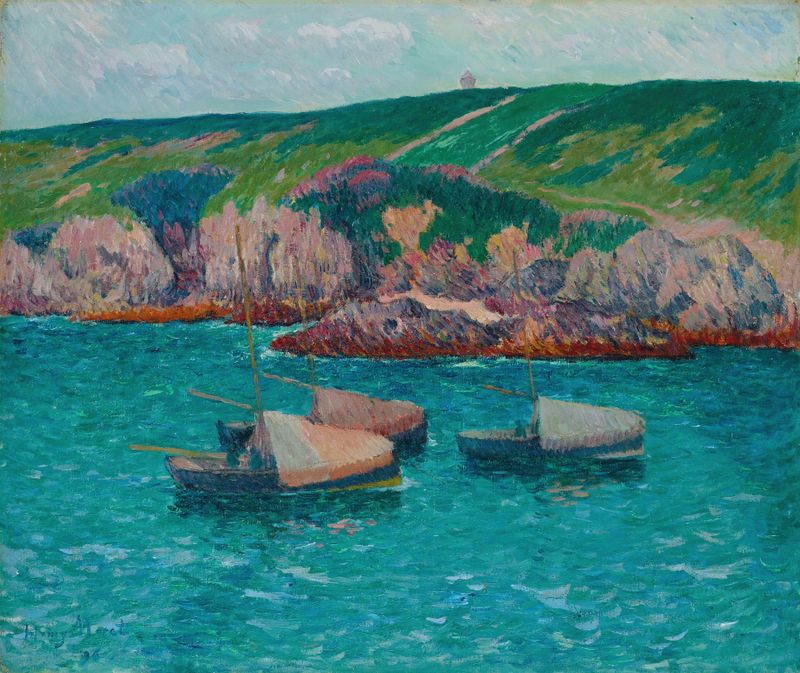
Les Barques à Doëlan
Henry Moret
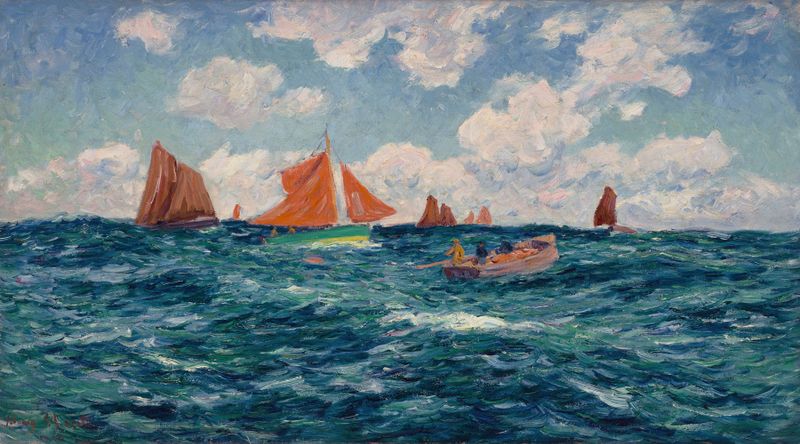
Pêcheurs au large
Henry Moret
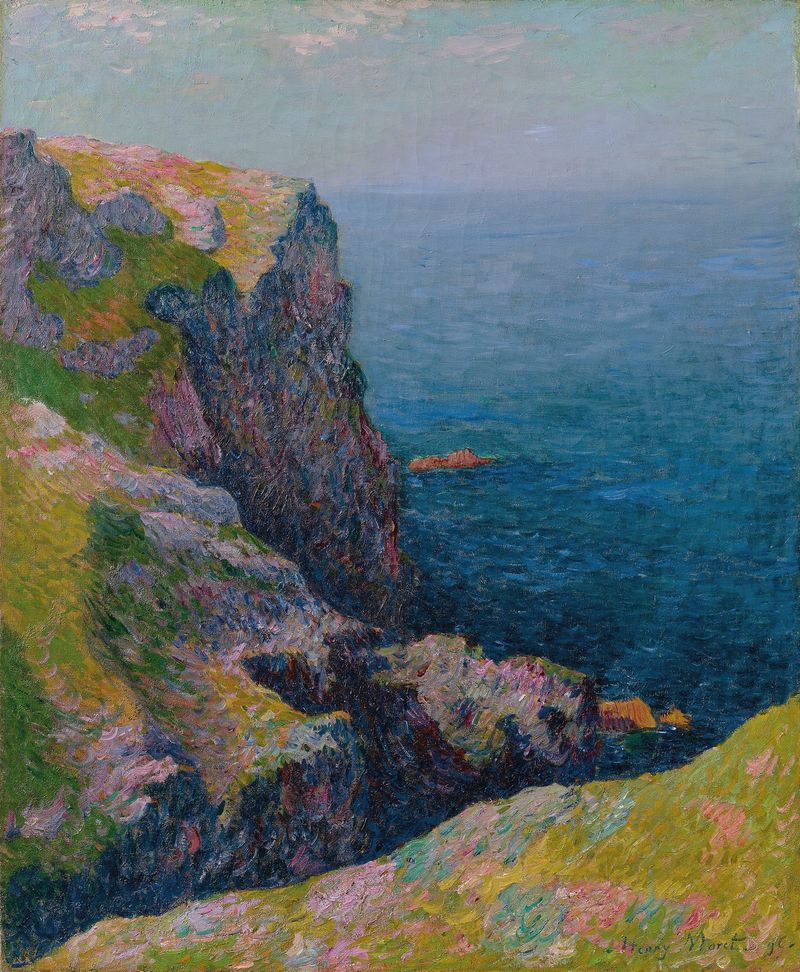
Ile de Groix, Pointe de l’Enfer
Henry Moret
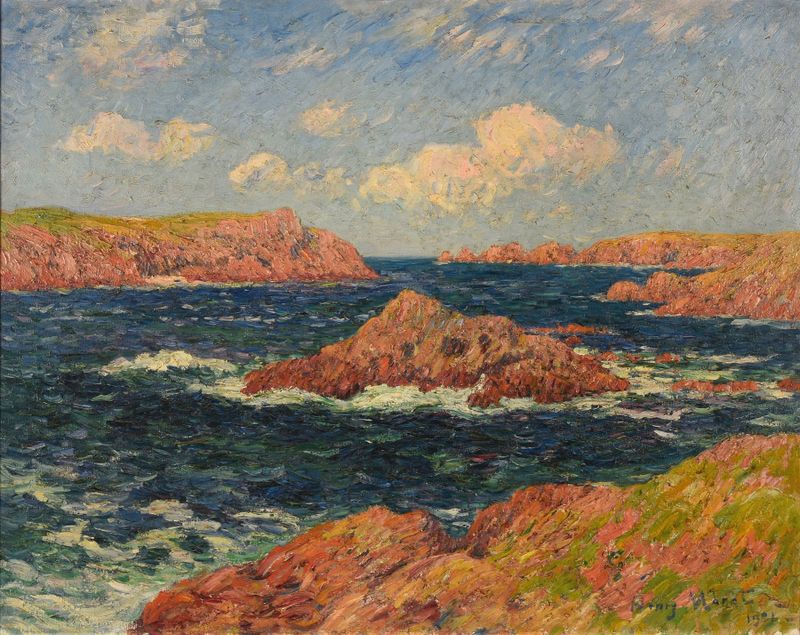
L’Ile de Kerellec (Ouessant)
Henry Moret
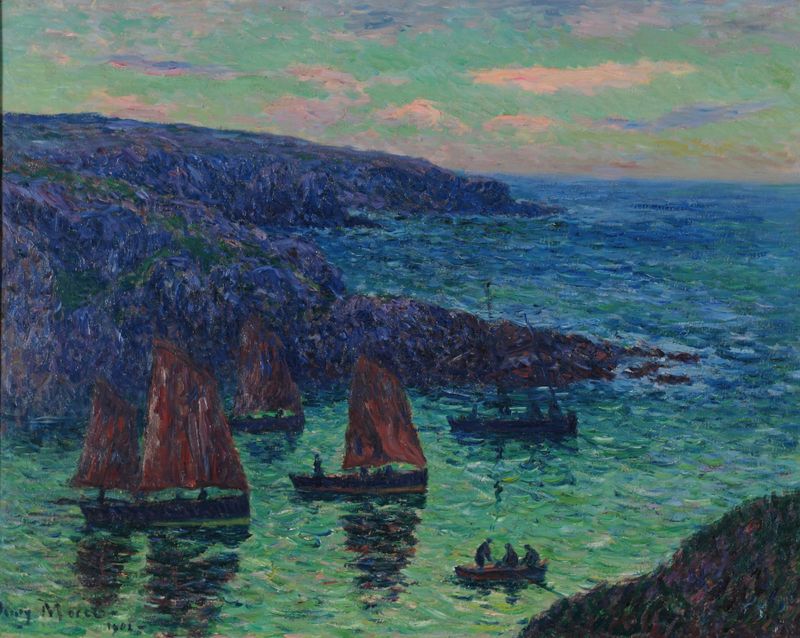
Le soir à Douëlan
Henry Moret
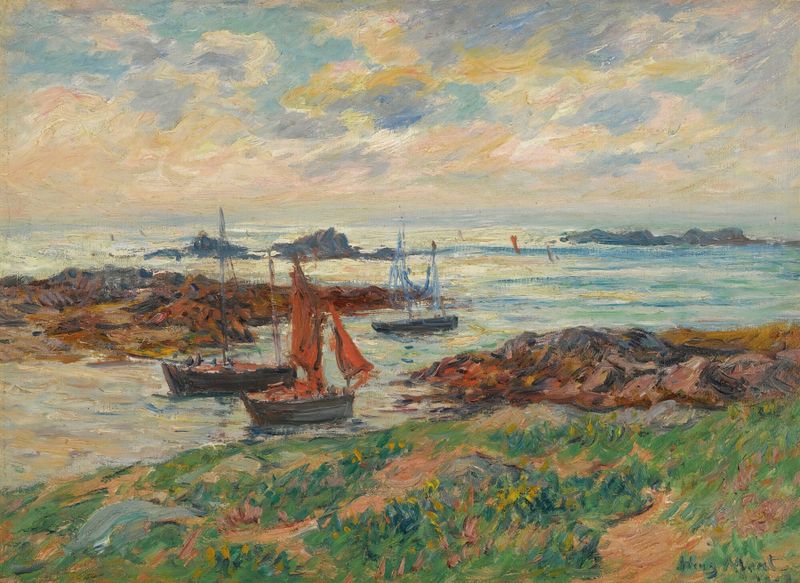
Les Glénans, Finistère
Henry Moret
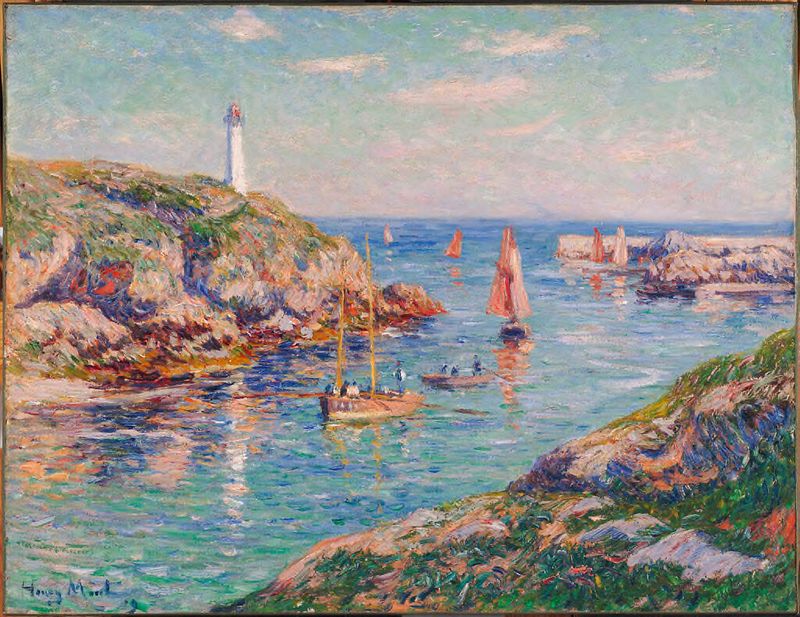
The Port of Douvelan
Henry Moret





