Volcanic Landscape — History & Facts
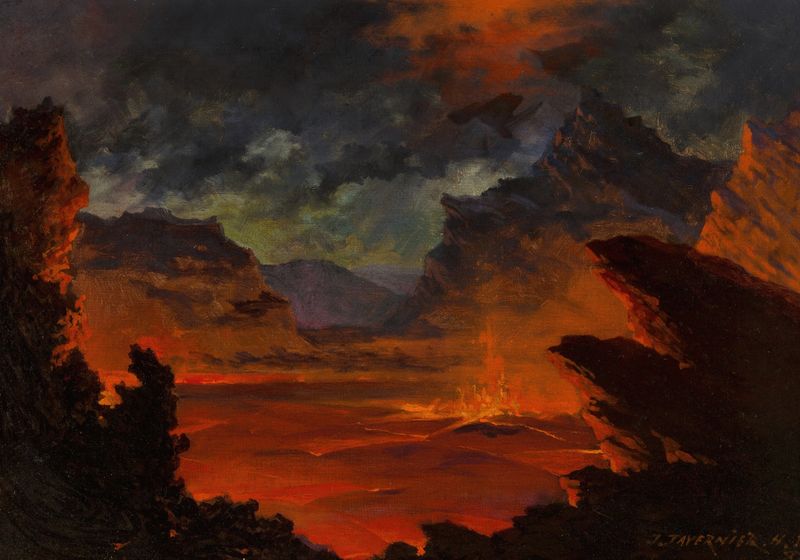
Where does light end, and longing begin? In Volcanic Landscape, the dance of fiery hues blurs the line between beauty and destruction, evoking the transient nature of existence. Look to the center of the canvas, where molten lava flows down the mountainside, its vibrant oranges and reds pulsating with energy. The surrounding landscape frames this radiant eruption, painted in deep, earthy tones that contrast dramatically with the inferno. Notice how the light from the lava illuminates the clouds overhead, casting otherworldly reflections that seem almost alive, capturing the viewer's gaze and inviting them into the heart of the chaos. In this tumultuous scene, the interplay of light and shadow reveals a deeper narrative of mortality.
The vibrant lava symbolizes both creation and destruction, suggesting that beauty often arises from chaos. The stark silhouettes of the landscape echo the fragility of life amidst nature’s overwhelming power, prompting introspection on our own existence against the backdrop of a magnificent yet unforgiving world. Jules Tavernier created Volcanic Landscape in 1886, during his time in Hawaii, where he was captivated by the region's volcanic activity. This period marked a significant moment in the art world, as artists began shifting towards realism and the exploration of nature's raw forces.
Tavernier's intimate observation of the volcanic landscape not only showcases his technical skill but also reflects the fascination with the sublime that defined the late 19th century.