Vollschiff ‘Ferdinand Brumm’ vor der Steilküste von Dover — History & Facts
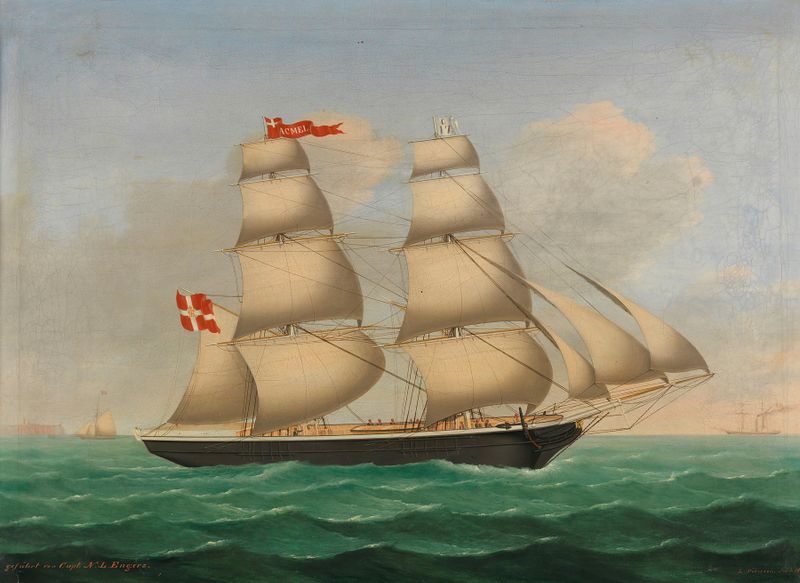
In a world where chaos reigns, the ocean churns with a ferocity that belies the serene beauty of its surface. Look to the left at the towering cliffs of Dover, etched in ghostly whites and greys, their ruggedness stark against the calm blues of the sea. The ship, Ferdinand Brumm, commands the central space, its sails billowing with a fierce wind. Notice how sunlight dances across the waves, illuminating the crests while casting deep shadows in the troughs, suggesting both tranquility and turmoil.
The composition draws the eye toward the ship, yet the cliffs loom like silent guardians, embodying a tension that whispers of unseen dangers lurking just beneath the surface. Beneath the harmony of colors lies an underlying chaos, as the juxtaposition of the ship’s vibrant presence against the ominous cliffs hints at a struggle for survival amid nature’s indifference. The vessel, although majestic, appears as a mere speck in the vastness of the sea, echoing the fragility of human endeavor against the might of the elements. Each brushstroke captures the tumult of the moment—the stirring air, the precarious balance of life on the waves, and the persistent threat of the unyielding cliffs. In 1857, Lorenz Petersen painted this scene during a period of maritime exploration and industrial change in Europe.
Working in Hamburg, he captured both the beauty and the peril of sailing, reflecting the anxieties of an era marked by technological progress yet tempered by the stark realities of nature. This painting serves as a reminder of the delicate dance between man and the wild, a narrative woven into the fabric of his time.