
Vue de la cathédrale de Mantes-la-Jolie — History & Facts
In the realm of art, transformation often lies in the delicate balance between light and shadow, inviting the viewer to explore layers of meaning that might initially remain hidden. Look to the left of the canvas, where the intricate spires of the cathedral rise against a sky dappled with soft hues of pink and lavender. The light glistens on the stone façade, accentuating its texture and the meticulous brushwork that lends a sense of movement. Notice how the clouds swirl above, enveloping the structure in an ethereal embrace, drawing the eye toward the horizon where earth meets sky.
The composition is a harmonious blend of natural and architectural elements, guiding you deeper into the scene. Yet beneath this serene visage lies a contemplation of change. The juxtaposition of the imposing cathedral against the fleeting clouds speaks to the tension between permanence and impermanence. Each brushstroke suggests not merely the beauty of the scene but the inevitable passage of time, as the cathedral stands witness to countless transformations.
The gentle play of light hints at the emotional weight carried by the stones, whispering stories of devotion, struggle, and resilience. During the late 19th century, when this piece was created, Boggs was deeply engaged with plein air painting, capturing the nuances of light in his surroundings. Living in France, a hub of artistic innovation, he was influenced by both Impressionist ideals and the emerging fascination with capturing transient moments. This period saw a culture shifting towards a greater appreciation of the ephemeral, reflecting a broader societal evolution that resonated deeply with the artist’s own explorations of transformation.
More Artworks by Frank William Boggs
Browse all →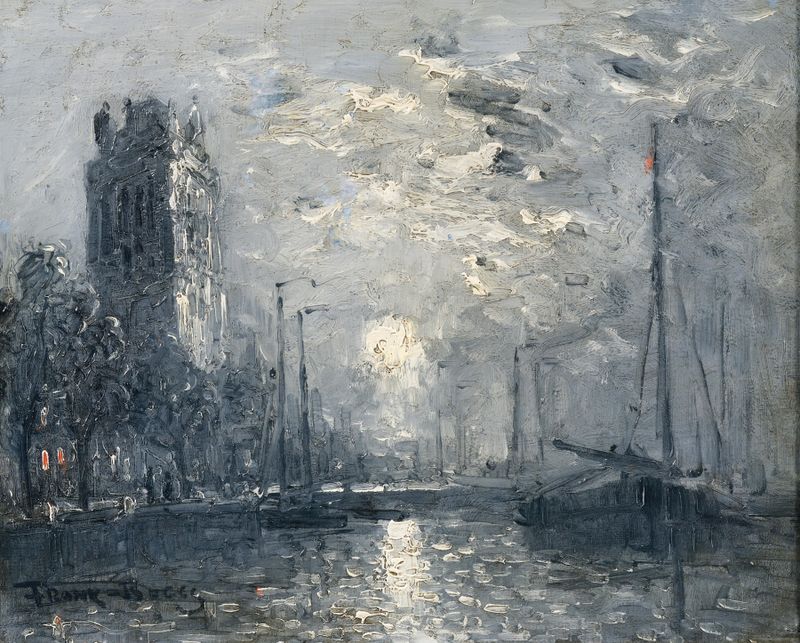
More Architecture Art
Browse all →
The statue of Liberty
Frédéric Auguste Bartholdi

View of Houses in Delft, Known as ‘The Little Street’
Johannes Vermeer

View of Houses in Delft, Known as ‘The Little Street’
Johannes Vermeer

The Cathedral in Rouen. The portal, Grey Weather
Claude Monet

The yellow house
Vincent van Gogh

The Church in Auvers-sur-Oise, View from the Chevet
Vincent van Gogh