Vue de Sinneringen — History & Facts
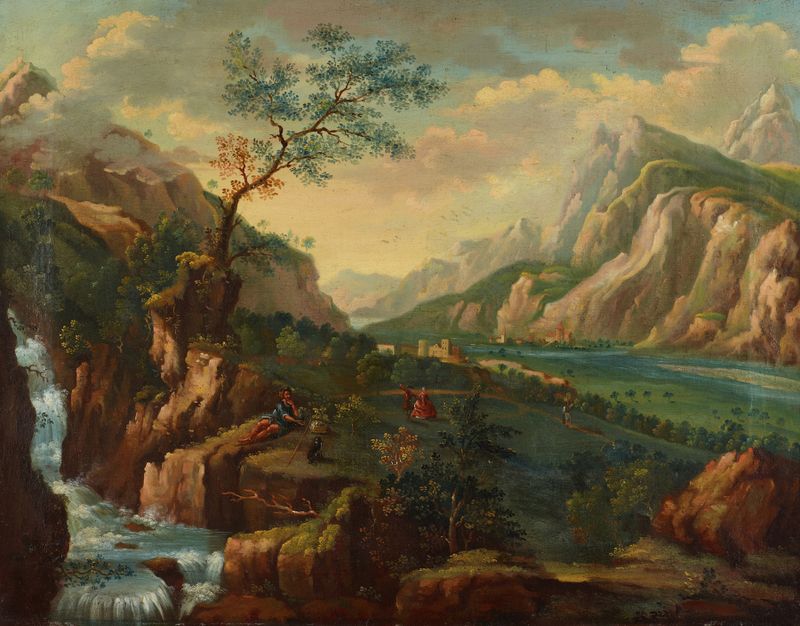
What if silence could speak through light? In the tranquil emptiness of Vue de Sinneringen, the absence of noise resonates like a haunting melody, echoing the madness that lingers just beneath the surface of serene landscapes. Look to the left, where the soft hues of twilight subtly blend into the canvas. The delicate interplay of muted greens and gentle blues captures an almost otherworldly stillness, while the brushstrokes present a sense of unhurried motion. Notice how the light pours over the horizon, illuminating the distant trees and casting elongated shadows that draw the viewer deeper into the scene, inviting contemplation and introspection. Yet, beyond the beauty lies a discord.
The juxtaposition of the tranquil landscape against the chaotic undercurrents of nature evokes a sense of isolation and disquiet. Each element, from the winding path to the distant hills, suggests a journey with an uncertain destination, a reflection of the artist's own tumultuous thoughts. The vibrant, yet restrained palette hints at the thin line between serenity and madness, offering viewers a glimpse into the psychological complexities that the natural world can conceal. Created during a time of burgeoning artistic experimentation, this piece emerged from the mind of Johann Caspar Ulinger, whose work often reflected the tensions of his era.
Painted in the early 19th century, a period marked by both romanticism and the stirrings of modernity, the artist sought to capture the sublime qualities of nature while grappling with his own artistic identity. In this work, he skillfully melds the beauty of the landscape with an underlying sense of unease, masterfully showcasing the duality of existence.