Ein schöner prospect in dem sargansser Land — History & Facts
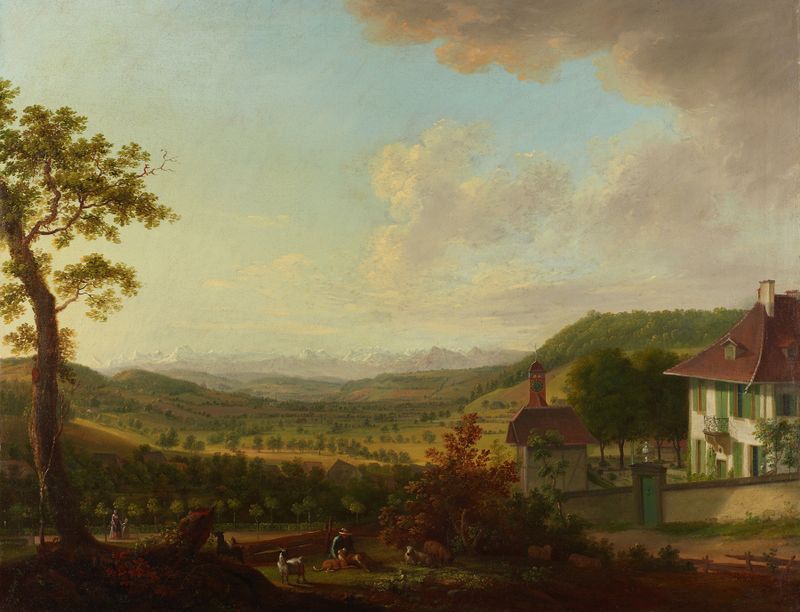
When did color learn to lie? In a world where hues often mask harsh realities, the interplay of light and shadow reveals deeper truths beyond the surface. Look to the right at the vibrant greens and blues that swirl together, capturing the lush landscape of the Sarganserland. The artist employs a delicate balance of soft brushstrokes and clear outlines, creating a harmonious blend of natural beauty and artistic finesse. Notice how the light falls upon the rolling hills, lending a sense of depth and movement to the scene.
It's as if the viewer can almost feel the gentle breeze rustling the foliage, inviting them to step into this tranquil oasis. Deeper meanings lie embedded within the composition. The juxtaposition of serene nature and the hints of human presence suggests a dialogue between humanity and the wilderness, a reminder of our connection to the earth. The reflective quality of the colors alludes to both the joy and melancholy of fleeting moments, where beauty exists side by side with impermanence.
Each stroke breathes life into the artwork, revealing not only the landscape but the emotions that echo within it. Johann Caspar Ulinger created this piece during a time when Romanticism was on the rise in Europe, celebrating nature and individual experience. Though the exact date remains unknown, it is likely painted in the early 19th century, amidst a growing appreciation for scenic beauty and reflection in art. Ulinger’s work reflects these artistic trends while also encapsulating his unique vision of the world around him.