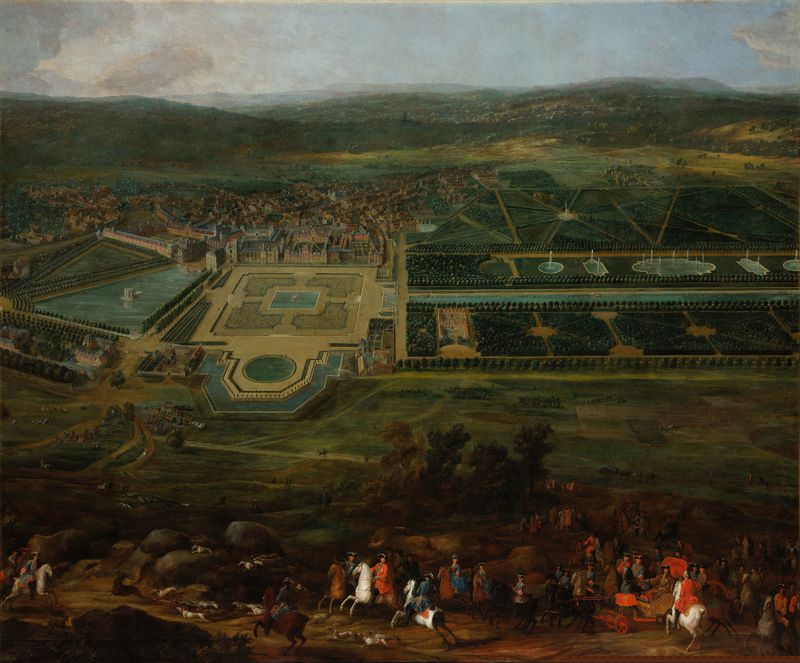
Vue du Château Neuf de Saint-Germain-en-Laye avec le départ pour la chasse — History & Facts
Within its painted confines lies a narrative of betrayal, obscured beneath layers of serene beauty. Here, the enduring landscape and the grand chateau quietly whisper secrets of fleeting trust and silent conflicts. Look to the horizon where the elegant lines of the château rise against a backdrop of gentle greens and soft blues, drawing your gaze upward. Notice how the light bathes the building in a warm glow, contrasting the cool shadows that creep along the foreground.
The meticulously rendered trees frame the scene, their leaves dancing in the breeze, while the dynamic brushstrokes evoke a sense of movement and anticipation, hinting at what lies just beyond the serene surface. This piece captures a moment of tranquil elegance, yet there’s an undercurrent of unease. The juxtaposition of the pristine setting and the poised figures preparing for the hunt belies an inherent tension — a foreshadowing of conflict where beauty often conceals betrayal. The hunters, poised and ready, evoke a sense of foreboding, suggesting that the thrill of the chase may mask darker intentions lurking beneath the canvas. During the time this was created, Pierre-Denis Martin was navigating the complexities of 18th-century France, a period marked by both artistic flourishing and societal upheaval.
The world of art was shifting, as the Rococo style gave way to Neoclassicism, and Martin found himself at the crossroads, capturing the opulence of the nobility while grappling with the underlying tensions of his time. The landscape before us, then, becomes more than mere scenery; it reflects an interplay of art, ambition, and the unspoken betrayals of the human heart.