View of the Château de Fontainebleau — History & Facts
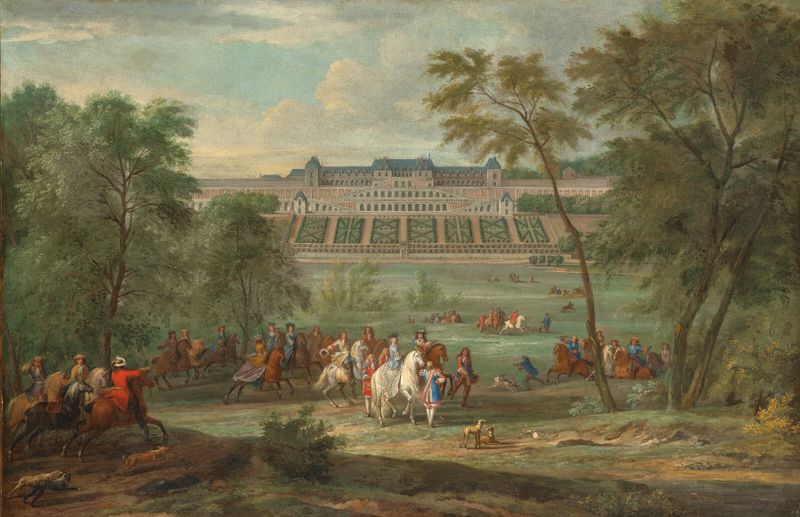
Could beauty survive in a century of chaos? The question lingers like a whisper, hovering over the tranquil expanse captured in this painting, where serenity defies the tumult of the age. Look to the foreground, where the lush greenery unfurls like nature’s own tapestry, vibrant and inviting. The Château de Fontainebleau rises majestically in the background, its elegant architecture softened by the flourishing flora that encircles it. Notice how the play of light dances upon the façade of the château, highlighting intricate details and casting gentle shadows that evoke a sense of time suspended.
The palette of soft greens, warm earth tones, and cool blues creates a harmonious atmosphere, inviting the viewer to lose themselves in this bucolic vision. Yet beneath this façade of tranquility lies a deeper narrative. The juxtaposition of the château's grandeur against the surrounding wildness speaks to the tension between human achievement and the untamed beauty of nature. The painting evokes a longing for peace amidst the encroaching chaos of political unrest and social upheaval—reminding us that beauty can be a refuge, even in the darkest of times.
The careful arrangement of elements leads the eye to wander, as if beckoning us to explore the connections between civilization and the landscape that cradles it. In the early 18th century, Pierre-Denis Martin created this work during a period marked by the aftermath of the War of Spanish Succession and the evolving artistic trends of French Rococo. Living in a world where the balance of power was shifting, Martin’s focus on idyllic landscapes reflected not only his personal aesthetic but also the collective yearning for stability and beauty amidst uncertainty.