
Vue Du Temple De Jupiter Et De L’acropole — History & Facts
In the wake of revolution and upheaval, art serves as a portal, preserving the essence of a world that shifts beneath our feet. Focus on the ancient ruins at the center; the majestic Temple of Jupiter rises with a quiet dignity, its weathered columns bathed in a soft, golden light. Look closely at the interplay of shadows and highlights—a whisper of sunlight dances across the stone, suggesting both the weight of history and the fleeting nature of time. The distant Acropolis looms, its silhouette a testament to endurance against the backdrop of a serene sky, inviting contemplation of human achievement amidst chaos. This painting encapsulates a deep emotional tension: the juxtaposition of ruin and radiance.
The crumbling structure, rich in narrative, speaks to the passage of time and the fragility of power, while the vibrant hues of the sky evoke hope and resilience. The small figures in the foreground, dwarfed by the monumental architecture, remind us of humanity's transient place in the grand narrative of history—caught between triumph and decay. In 1804, the artist was navigating a landscape of personal and political transformation. Recently returned from a period in Italy, he was deeply influenced by the neoclassical movement, which mirrored the revival of interest in ancient cultures amidst the ongoing changes in France.
As Europe grappled with the fallout of revolution, his work served not only as a reflection of artistic trends but also as a commentary on the enduring legacy of civilization.
More Artworks by Lancelot-Théodore Turpin de Crissé
Browse all →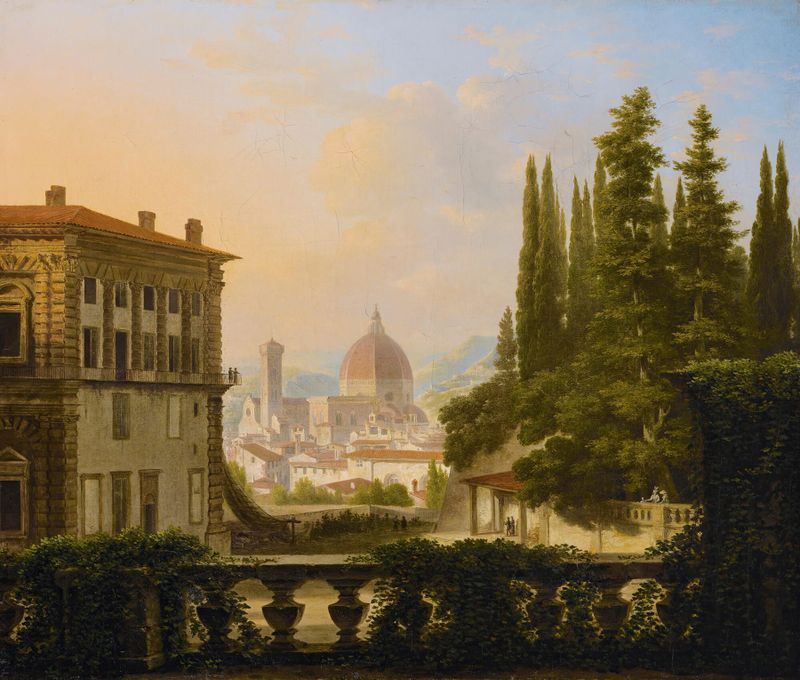
More Architecture Art
Browse all →
The statue of Liberty
Frédéric Auguste Bartholdi

View of Houses in Delft, Known as ‘The Little Street’
Johannes Vermeer

View of Houses in Delft, Known as ‘The Little Street’
Johannes Vermeer

The Cathedral in Rouen. The portal, Grey Weather
Claude Monet

The yellow house
Vincent van Gogh

The Church in Auvers-sur-Oise, View from the Chevet
Vincent van Gogh