Waikato River — History & Facts
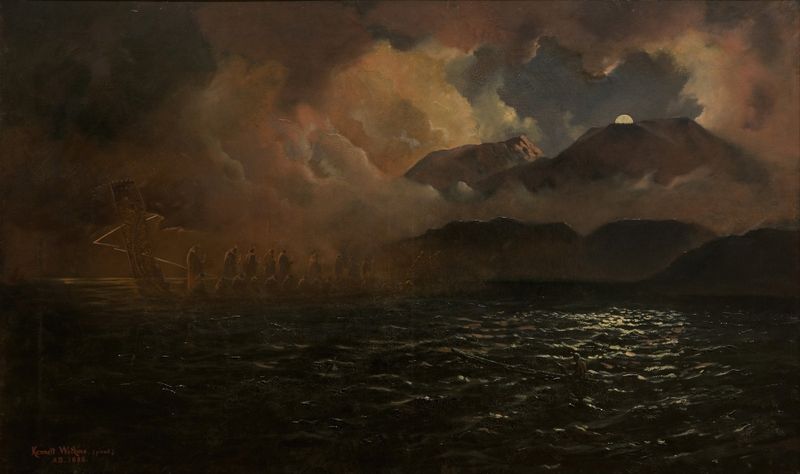
When did color learn to lie? In a world where beauty often masquerades as truth, the vibrancy of nature can obscure deeper realities beneath its surface. Look to the swirling blues and greens, where the water glistens under an unseen sun, beckoning you to explore its depths. The brushwork is fluid, capturing the rhythmic movement of the river as it winds through the landscape. Notice how the colors blend seamlessly, creating a tapestry that invites the eye to dance across the canvas, while hints of gold and ochre suggest the warmth of an afternoon glow, breathing life into the scene. Yet, beneath this stunning façade, the interplay of light and shadow reveals a tension between tranquility and turmoil.
The striking contrast between the shimmering water and dark, looming trees hints at a hidden narrative, perhaps one of change or disruption. This duality prompts reflection on the essence of beauty: is it merely a surface to be admired, or does it conceal the complexities of existence beneath? Kennett Watkins created this piece during a period marked by the exploration of natural landscapes and their intimate connection to human emotions. Although the exact date remains unknown, Watkins was part of a broader movement that sought to capture the essence of nature's tranquility amid a rapidly changing world.
His work reflects a time when artists increasingly turned to the environment as a subject, emphasizing both its aesthetic charm and deeper resonances.