Waikato River with figures — History & Facts
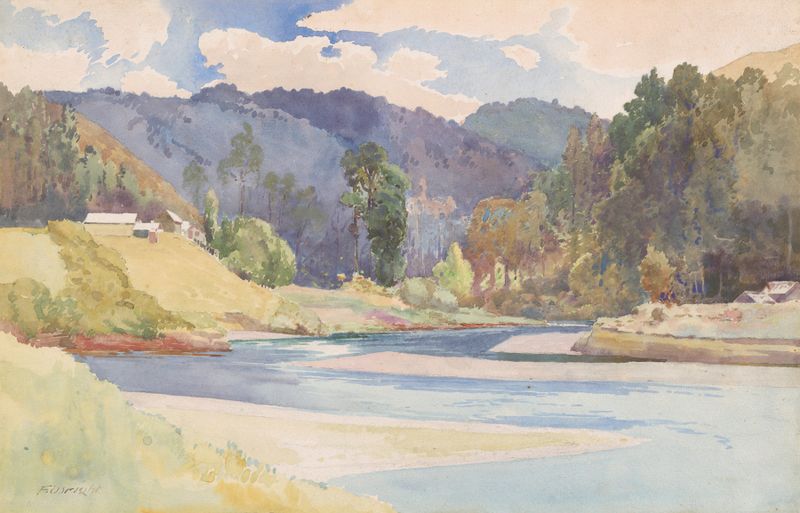
Could beauty survive in a century of chaos? This question lingers as we gaze upon the serene landscape crafted by Frank Wright in Waikato River with Figures. Look to the left at the gentle curve of the river, its surface shimmering with the soft light of the day. The figures, small yet purposeful, meander along the banks, their presence a whisper against the vastness of nature. Notice how the lush green foliage contrasts with the cool blues of the water, a delicate balance that Wright achieves through vibrant strokes and an impressionistic touch.
The interplay of light and shadow invites the viewer to step closer, drawing them into a moment suspended in time. As the eye wanders, subtle details emerge: a fleeting reflection of the figures in the water, hinting at their transient connection to this landscape; the tension between the burgeoning life around and the quiet solitude of the scene suggests a deeper narrative of awakening and discovery. The river, a symbol of continuity, flows silently, bridging the past and the future, evoking a sense of hope amidst the uncertainty of the era. In 1885, Wright painted this piece during a period marked by significant artistic transformation in New Zealand and beyond. The country was grappling with rapid changes as colonial influences intertwined with indigenous culture, and artists were beginning to explore new forms of expression.
Wright, influenced by these dynamics, sought not just to portray a scene but to capture the essence of the landscape as a living entity, reflecting his personal journey and the broader cultural awakening of the time.