
Waipoua — History & Facts
Who listens when art speaks of silence? In Waipoua, Nicholas Chevalier invites us into a sanctuary of stillness, where the grandeur of nature transcends mere representation, echoing the ecstasy of untouched wilderness. Focus first on the towering trees that dominate the composition, their forms rising majestically against the serene backdrop. Observe how the interplay of light and shadow creates a dappled effect, drawing your gaze upward through the foliage. The rich greens and earthy browns are interspersed with delicate highlights, suggesting a vibrant ecosystem alive with the pulse of nature.
The meticulous detail in the bark and leaves reveals Chevalier's commitment to capturing the essence of the Waipoua Forest, making it feel both intimate and monumental. Within this tranquil scene lies a deeper emotional resonance. The towering kauri trees symbolize endurance and time, standing as silent witnesses to centuries of history. The stillness of the forest invokes a sense of awe, contrasting the ever-present chaos of human life.
Here, the viewer is invited to contemplate their own existence amidst the vastness of nature—a quiet reminder of the balance between humanity and the natural world. Chevalier created this work in 1868 during his travels in New Zealand, a period defined by exploration and discovery. The artist was deeply influenced by the Romantic movement, which celebrated the sublime beauty of landscapes. At this time, he sought to document the extraordinary flora and fauna of the islands, merging scientific curiosity with artistic expression—a pursuit that would ultimately elevate his work within the art community of his era.
More Artworks by Nicholas Chevalier
Browse all →
Coast near Dunedin
Nicholas Chevalier
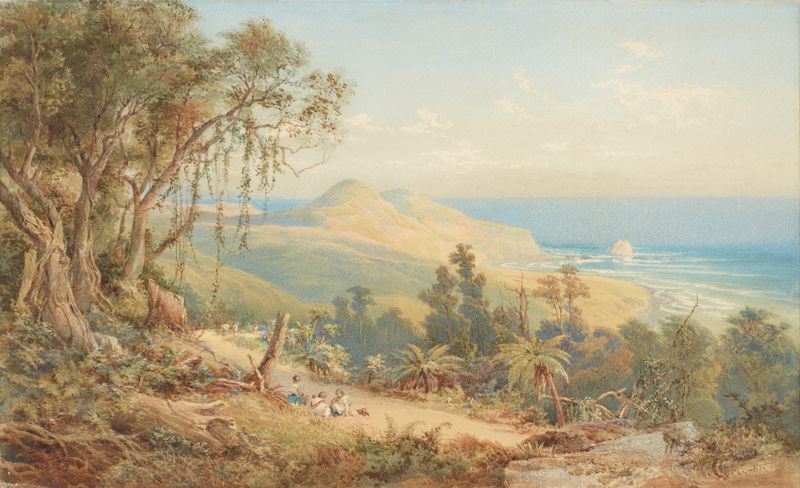
Sandfly Bay, Otago
Nicholas Chevalier

Buckler Burn at the head of Wakatipu Lake
Nicholas Chevalier

Mr MacKellar’s Station, the Waimea Plains, Southland
Nicholas Chevalier
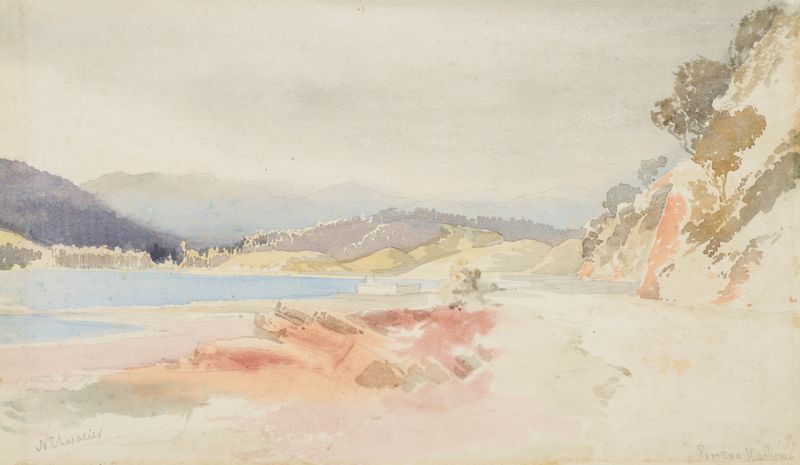
Porirua Harbour
Nicholas Chevalier
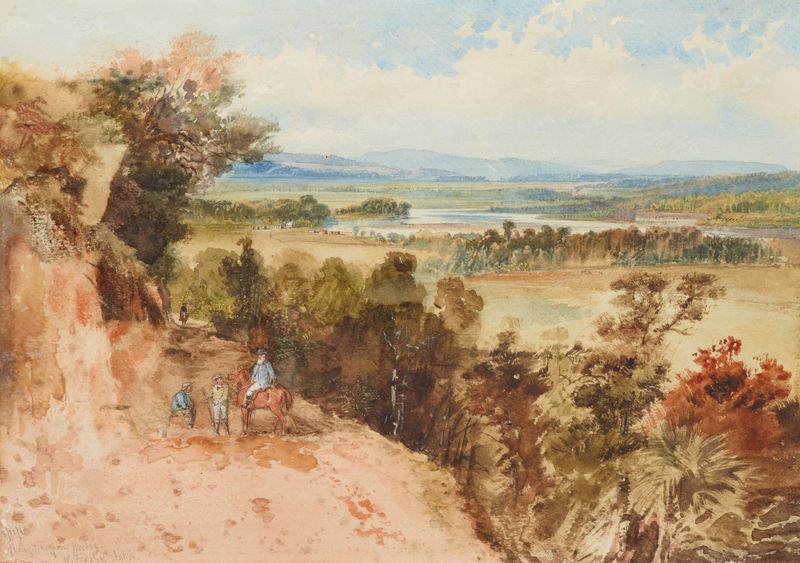
Rangitikei from Westoe, W. Fox Esq’s Station
Nicholas Chevalier

The Upper Rangitikei
Nicholas Chevalier
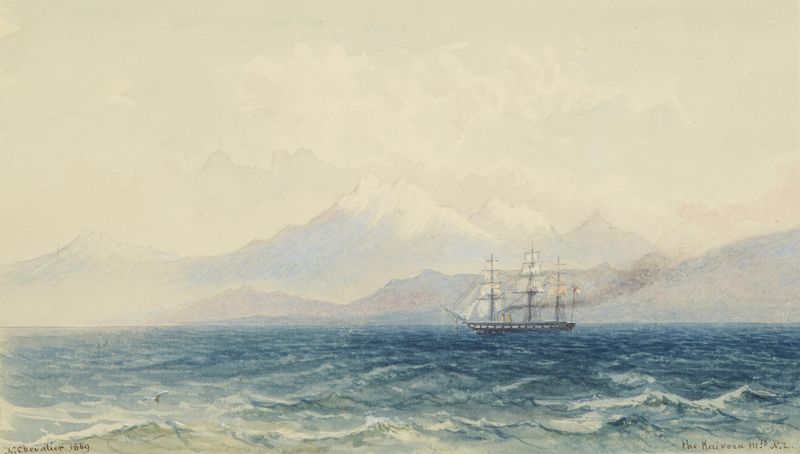
The Kaikoura Mountains, N.Z.
Nicholas Chevalier

Upper Hutt Valley
Nicholas Chevalier

The Tararua Mountains and the Waipoua River
Nicholas Chevalier





