Waldeinsamkeit — History & Facts
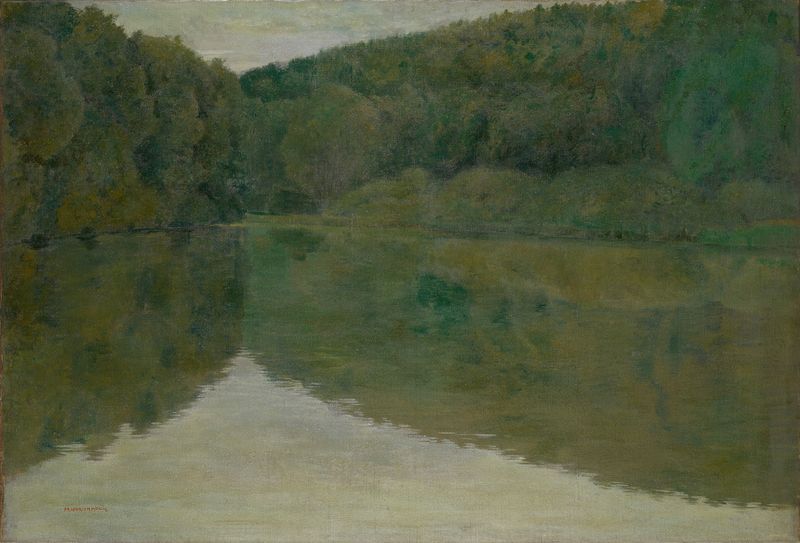
Could beauty survive in a century of chaos? In Waldeinsamkeit, the artist invites us to ponder this question, immersing us in an elegiac moment that celebrates solitude and the haunting power of memory. Look to the center, where a lone figure stands amid towering trees, their trunks reaching skyward as if to touch the heavens. The dappled sunlight filters through the leaves, casting intricate patterns on the forest floor, which is awash in greens and browns. The brushwork is delicate yet expressive, reflecting both the serenity and complexity of the natural world.
The figure's posture, slightly hunched, suggests contemplation, while the surrounding foliage creates an intimate embrace, a sanctuary away from the tumult of daily life. As you linger, notice the contrasts within the piece: the stillness of the figure juxtaposed with the vibrant life of the forest, and the light that dances among the shadows, embodying the tension between presence and absence. The artwork evokes nostalgia—a longing for an elusive connection to nature, and perhaps to a simpler time. The solitude depicted here speaks to a universal desire for reflection, a moment of pause in an ever-accelerating world. Friedrich König painted Waldeinsamkeit in 1901, during a period of transformation in the art world, characterized by the rise of modernism and the growing intrigue with emotional and psychological depth.
Living in Germany, König was surrounded by the shifting cultural landscape, as artists began to explore the complex interplay between humanity and nature, a theme that resonates deeply in this work.