Der stille Teich — History & Facts
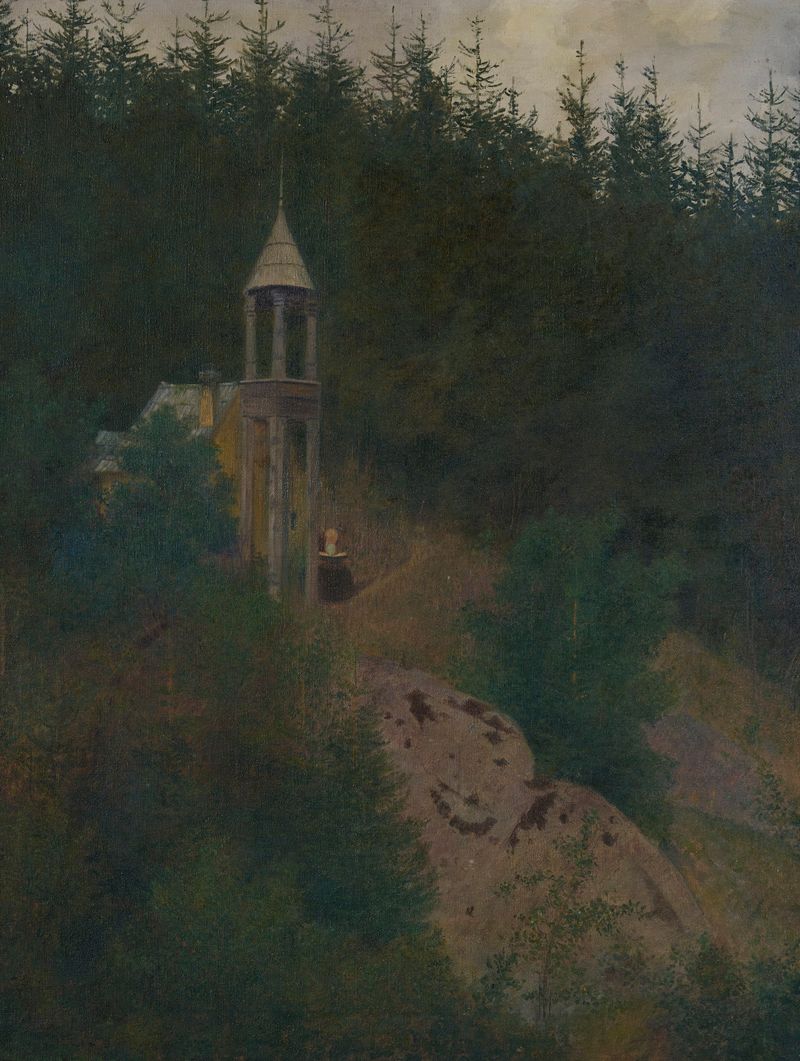
In the delicate interplay of time and tranquility, we find a moment suspended, where the essence of existence quietly unfolds. Focus on the soft, muted palette that defines the canvas. In the foreground, a serene pond reflects the overhanging branches, their leaves just beginning to blush with the hues of early autumn. Notice how the gentle ripples disrupt the surface, a reminder of time’s passage against the stillness of the scene.
The composition invites the viewer to linger, drawing the eye toward the distant horizon, where a haze of warm light blurs the boundary between water and sky. The painting speaks of contrasts: the stillness of the pond juxtaposed with the subtle movement of foliage, as if nature itself is holding its breath. Each element is rendered with meticulous care, revealing a deeper meditation on the ephemeral nature of life. The tension between light and shadow reflects an inner dialogue—an invitation to ponder the moments that slip away, yet remain imprinted on the canvas of our memory. Created in 1910, this work emerged during a transformative period for its creator, who was grappling with the changes in the art world, particularly in Germany.
König was influenced by a burgeoning interest in Impressionism, which sought to capture the fleeting effects of light and atmosphere. At that time, he was exploring themes of introspection and solitude, making Der stille Teich a poignant reflection of his artistic evolution amidst an era of profound change.