
Wash house on the banks of the Nive in Bayonne — History & Facts
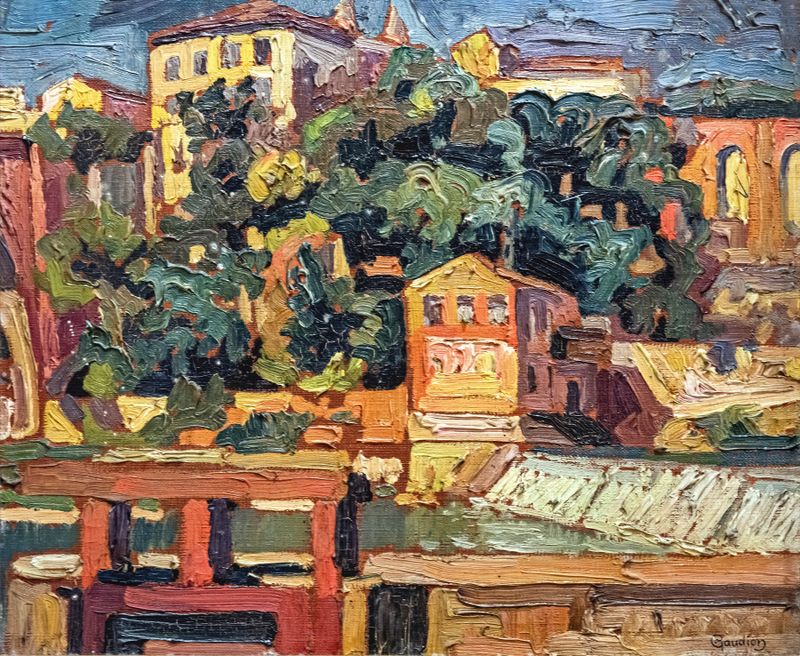
In the ephemeral nature of beauty, each brushstroke captures moments that flutter like leaves in a breeze, defying the relentless march of time. Look to the soft, curved lines of the wash house, nestled delicately along the banks of the Nive. The artist’s palette whispers of blues and greens, imbuing the water with a sense of tranquility. There, reflections ripple gently in the surface, while sunlight dances upon the walls of the structure, creating a luminous interplay of light and shadow that beckons the eye.
The composition, a harmonious blend of architecture and nature, invites viewers to linger, to breathe in the scene and feel the pulse of life. Yet beneath this serene facade lies an intricate narrative. The juxtaposition of the wash house against the flowing river embodies the tension between human industry and the natural world. The sturdy stone walls stand resolutely as a testament to human endeavor, while the murmuring water flows freely, a reminder of time's unyielding passage.
The softness of the landscape contrasts with the sharp angles of the building, suggesting a fragile coexistence that speaks to the transient beauty of life. Georges Gaudion painted this scene during a time when Impressionism was blossoming, likely in the late 19th century while living in France. Known for his delicate landscapes, Gaudion's work often reflected the changing relationship between humanity and nature. As he captured this idyllic moment, he contributed to the burgeoning narrative of Impressionism — one that celebrated the beauty of the everyday and the fleeting moments of light that define our world.
More Artworks by Georges Gaudion
Browse all →
Courtyard of a Moroccan riad
Georges Gaudion

House behind the trees
Georges Gaudion
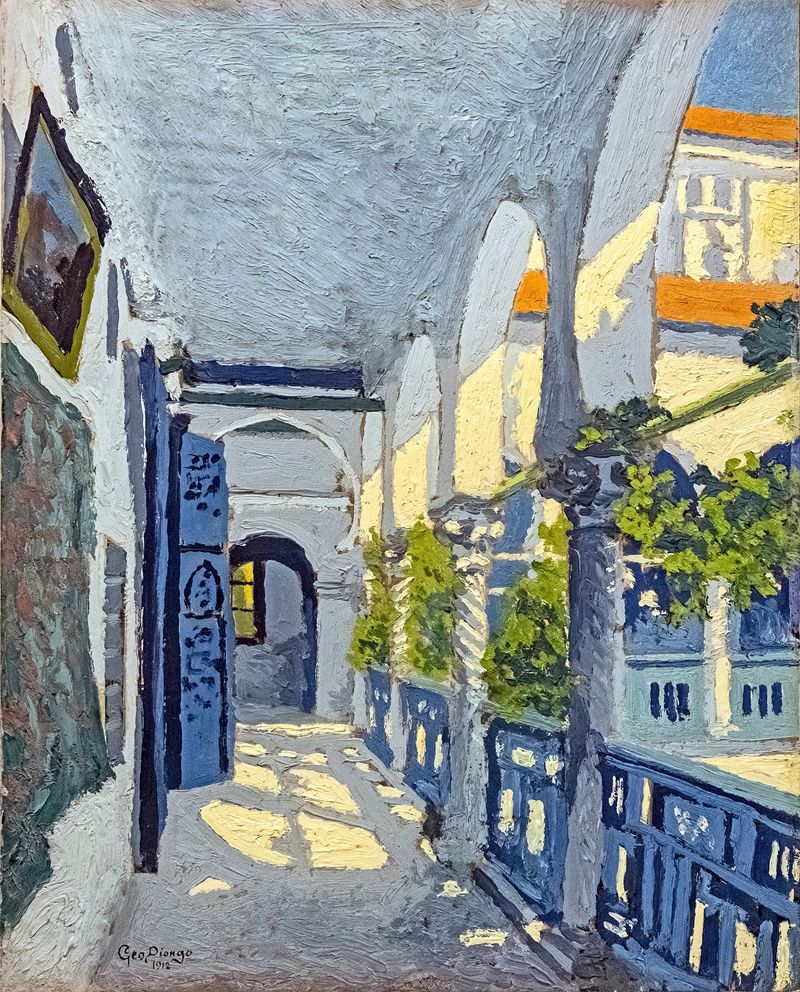
Gallery of a Moroccan riad
Georges Gaudion
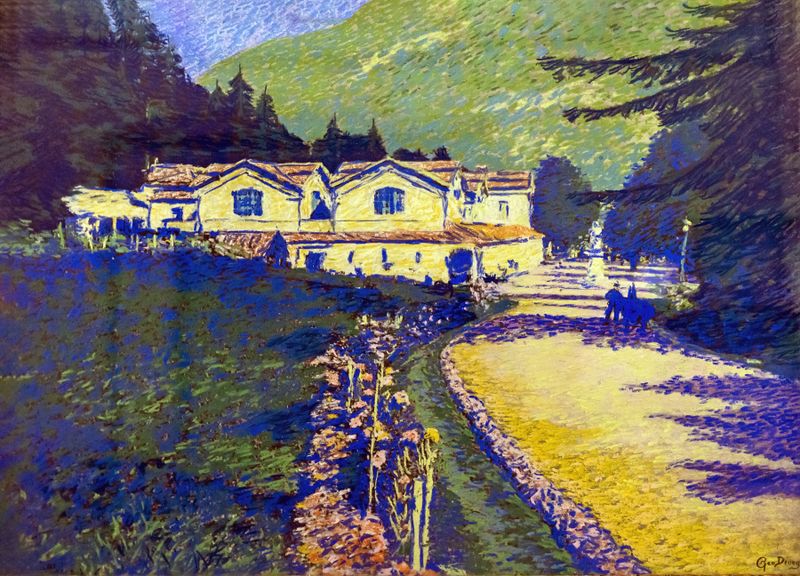
The thermal baths of Luchon
Georges Gaudion

Houses in Puycelsi
Georges Gaudion
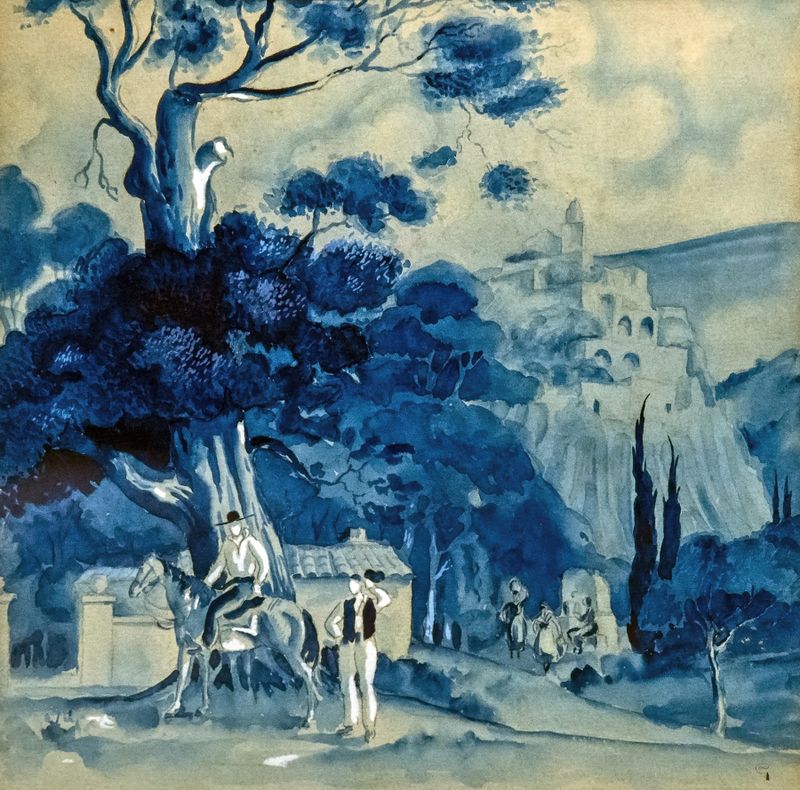
Spanish landscape
Georges Gaudion
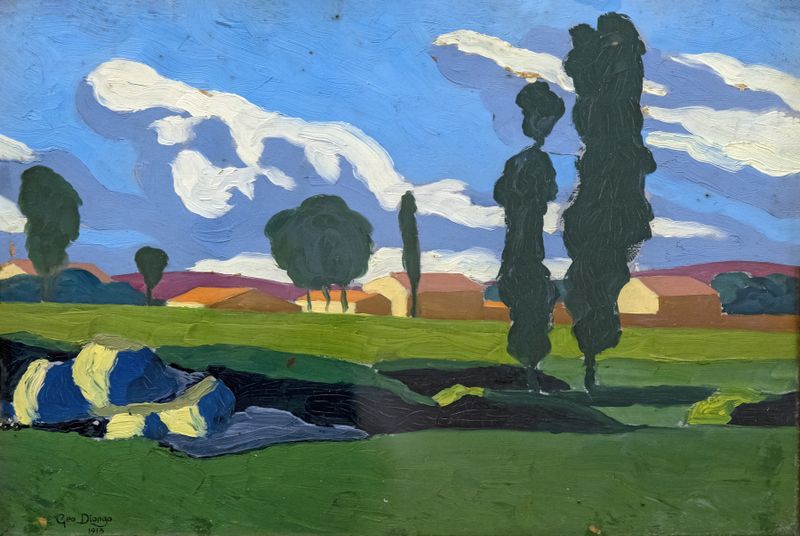
Poplar landscape
Georges Gaudion
The mill and the Castagne in Rabastens
Georges Gaudion

Boats at the Bazacle in Toulouse
Georges Gaudion

Le domaine de Touny-les Roses à Lagrave
Georges Gaudion





